An unfinished levee and a rising river
In mid-January 2008 heavy rain sent the Warrego River rising towards Charleville in south-west Queensland.
The town knew the danger well: in the record flood of April 1990 more than 1,000 homes were inundated. Work on a permanent Warrego levee had begun in 2004, but it was not yet finished. A post-event study of the Charleville flood notes two gaps in the levee – and no protection at all against Bradley’s Gully, the tributary that runs through the town.
Bradley’s Gully rose first. Around 30 homes and 15 commercial premises had to be evacuated, and the town’s attention turned to the river.
Building the Charleville flood barrier overnight
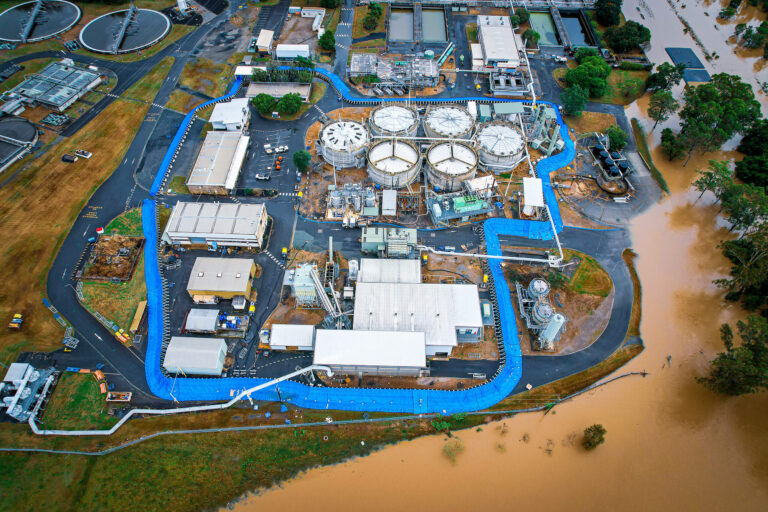
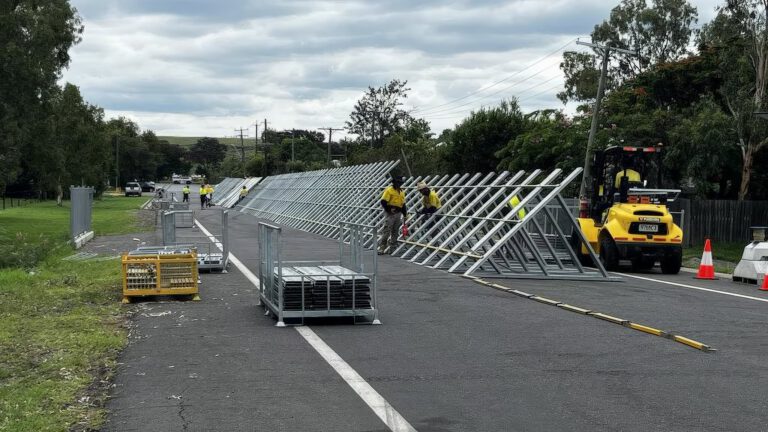
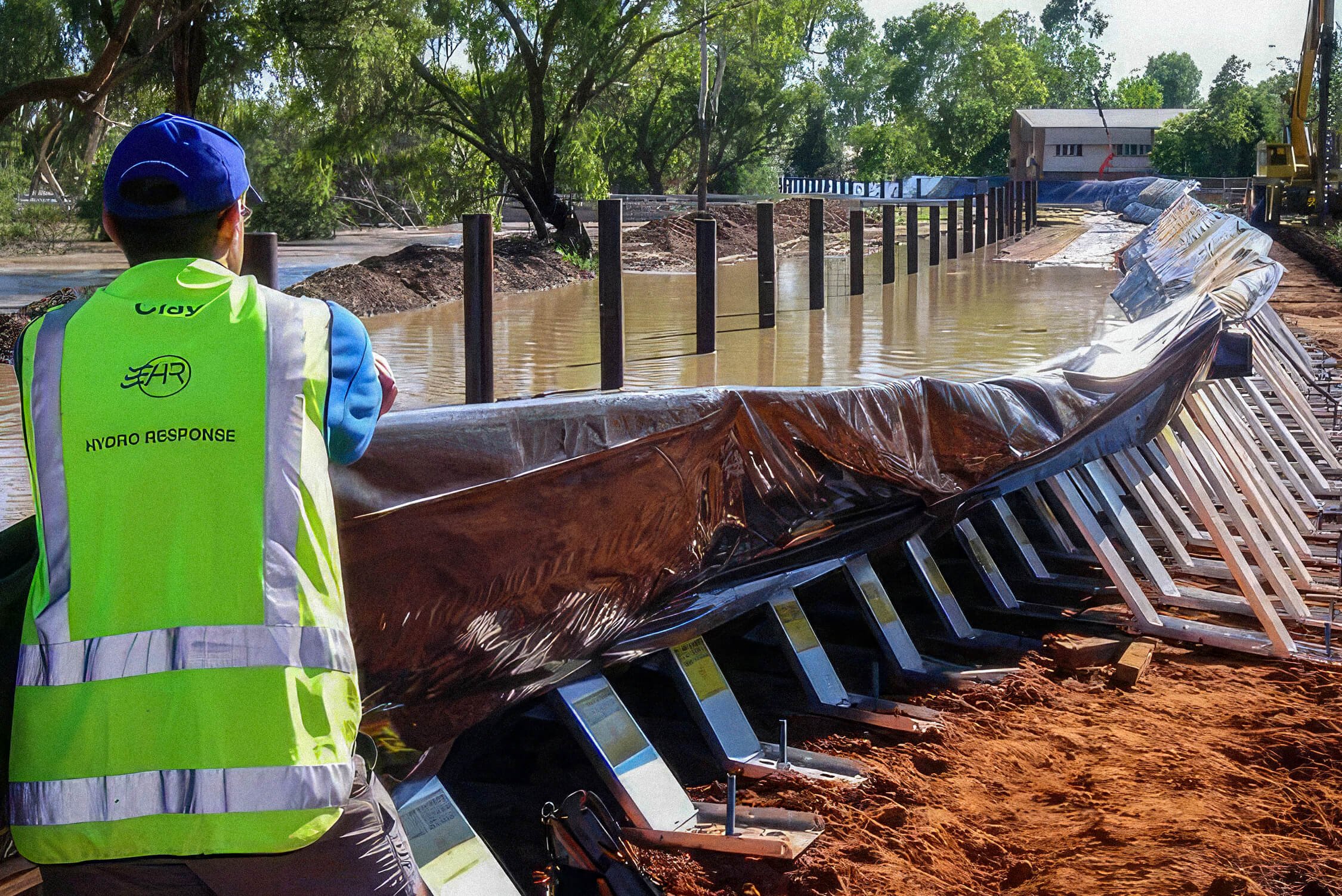
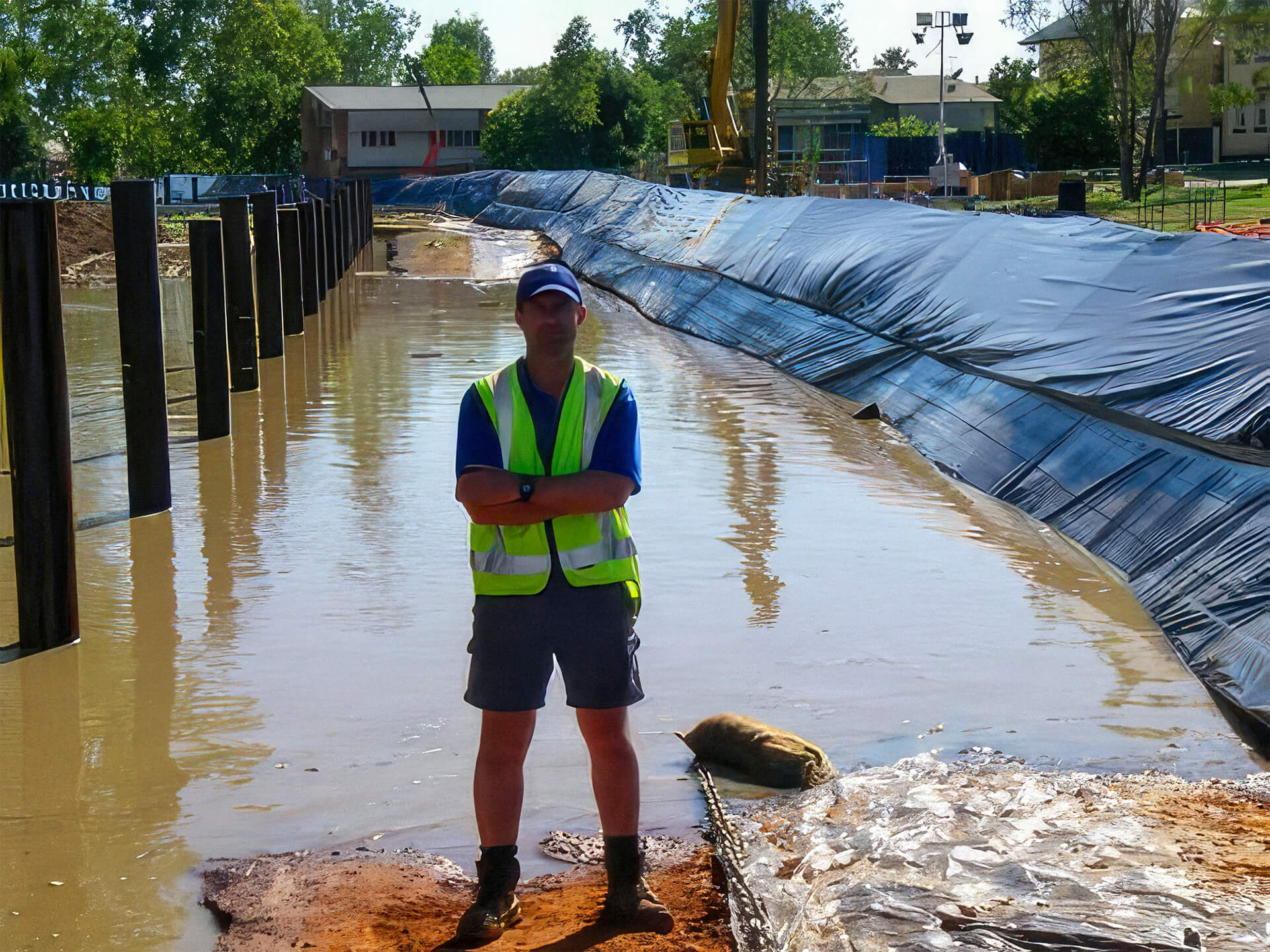
Emergency Management Queensland decided to fill the two gaps with a temporary flood barrier system. According to the Queensland Government, barrier equipment was flown in from New South Wales on an Australian Defence Force Hercules, and two temporary levees – 300 m and 75 m long – were in place by 5 am on 19 January 2008. Local SES members, council staff, community volunteers, NSW SES personnel and New Zealand flood specialists all helped with the installation.
According to Geodesign, Clay Griffin led the company’s part of the deployment, working with his team and local volunteers through the night to get the barrier up in time.
Waiting for the Warrego to peak
On 20 January Prime Minister Kevin Rudd and Queensland Premier Anna Bligh visited Charleville, and Rudd praised the local flood effort. The Warrego peaked on 22 January at just over 6 m on the town gauge.
The gaps in the levee held
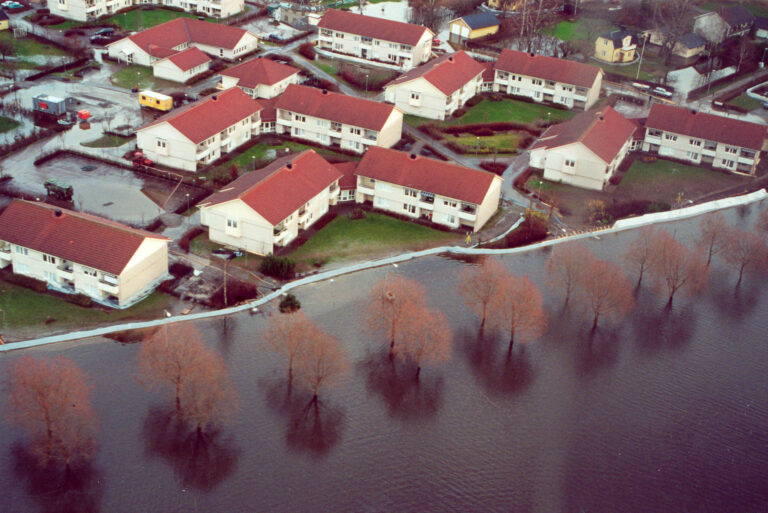
The temporary sections held and the Warrego stayed out of the town behind the levee. An ABC News report from Charleville summed it up:
The levee bank that they had here, this played a critical part in how things went today… it did its job and it held back the tide.
Recognition and the next test
One resident put it more simply: “It really has saved our bacon this time.”
In June 2008 the Queensland Government credited the temporary barriers with sparing Charleville the kind of inundation seen in 1990 and 1997, and announced that it would buy one kilometre of temporary flood barriers of its own. Geodesign states that the team’s work in Charleville was also recognised with an award from the Queensland Department of Emergency Services. The levee’s next big test came four years later, when the Warrego rose even higher in February 2012.
What UK asset owners can take from Charleville 2008
Charleville is an Australian case, but its lesson applies to any UK scheme still under construction: the gaps in an unfinished defence are the weak point, and a plan to close them should exist before the forecast turns. Write that plan into your emergency response arrangements for flooding, and make sure your chosen flood barrier system can be delivered and installed in the time you have. Geodesign’s current Heavy Duty barriers are built for higher water levels, and you can read more about the company behind them.