A riverside headquarters on the Seine
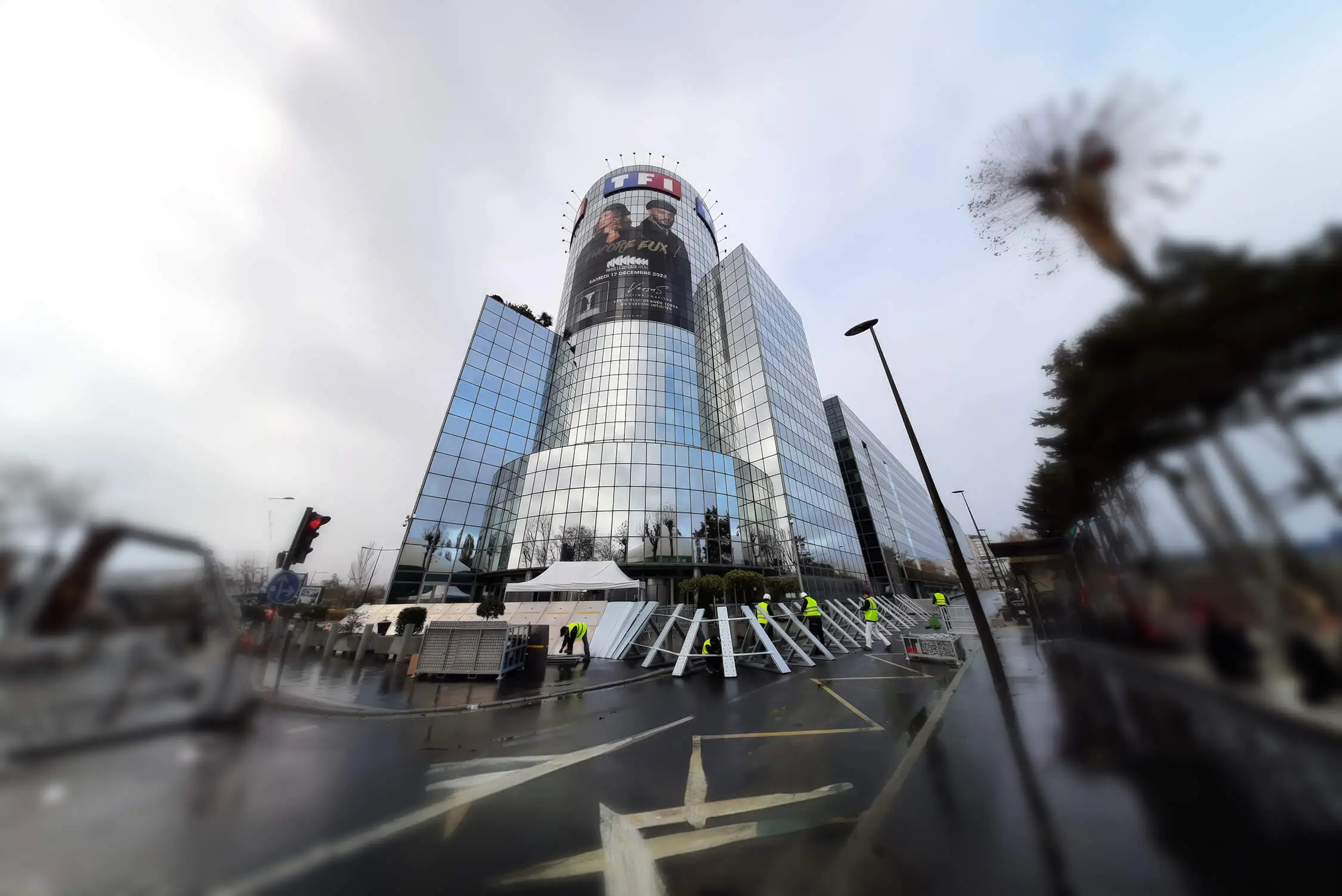
The TF1 Tower stands at the corner of Quai du Point-du-Jour and Avenue Le-Jour-se-Lève in Boulogne-Billancourt, on the south-western edge of Paris, and has been the broadcaster’s headquarters since 1992.
The building is 59 m tall, with 14 floors and a total floor area of around 45,000 m², and its cylindrical, glass-clad form makes it a landmark on the quayside.
Its position beside the Seine also means that river flooding is a real business continuity risk. For a broadcaster that must stay on air, losing access to its main building during a flood is not an option, so TF1 decided to invest in its own deployable protection.
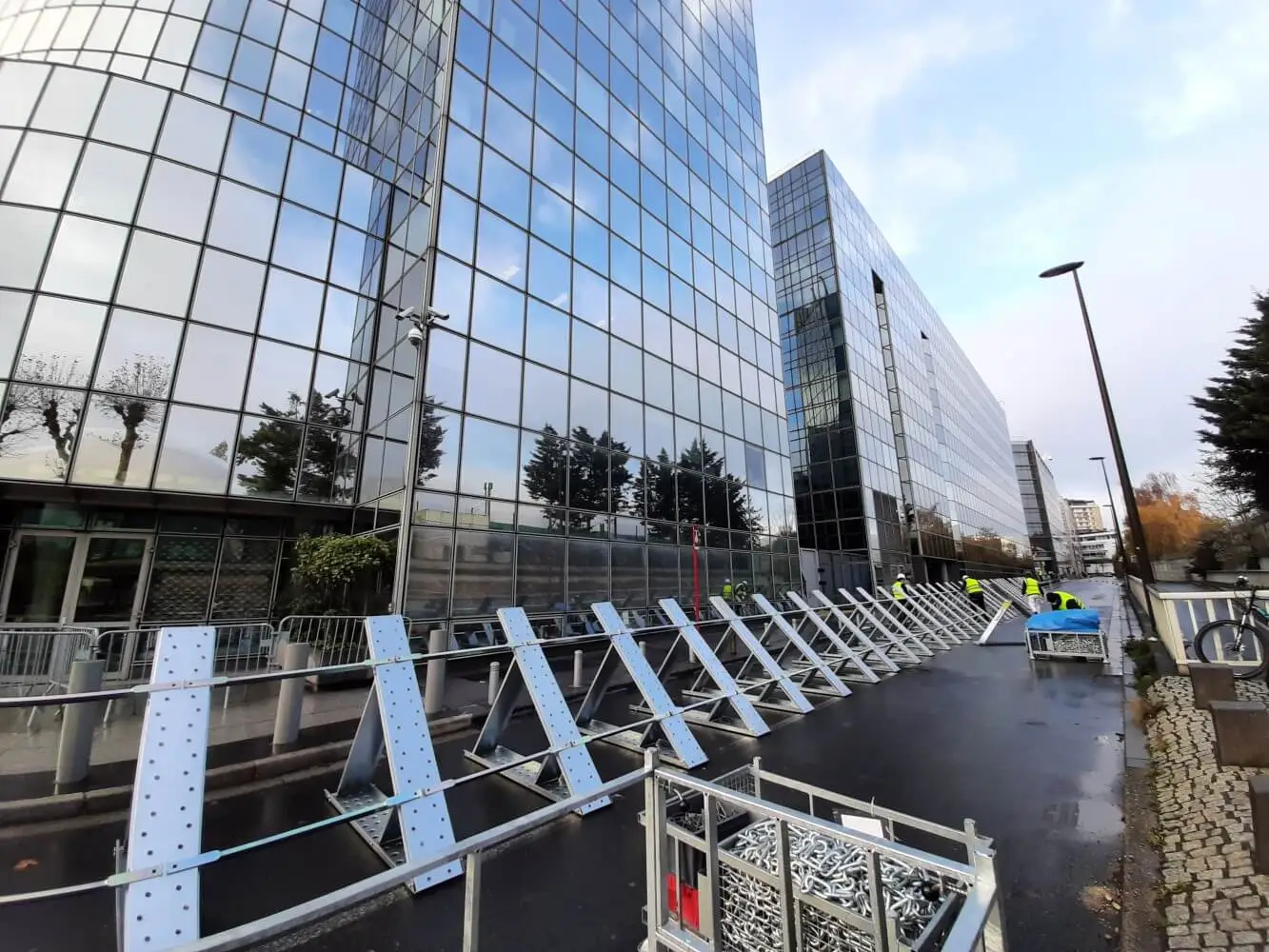
Choosing the Heavy Duty C152
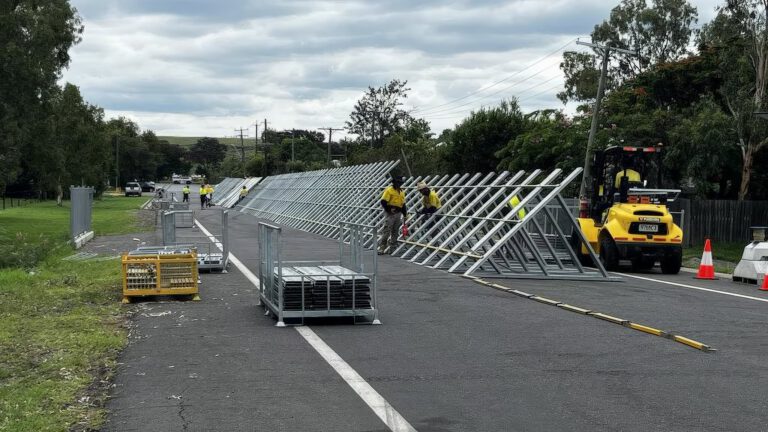
TF1 chose the Heavy Duty C152, a steel barrier with a protection height of 1.52 m, developed for severe flood conditions. The system combines a durable steel structure with components that can be assembled without specialist tools, and it can be reused from one event to the next, making it a cost-effective alternative to sandbags.
Like other commercial flood barriers, it is designed to be stored on site and put up only when a flood threatens. Once in place, the frames and membrane form a continuous temporary wall that holds back the water under substantial pressure.
The flood barrier training day
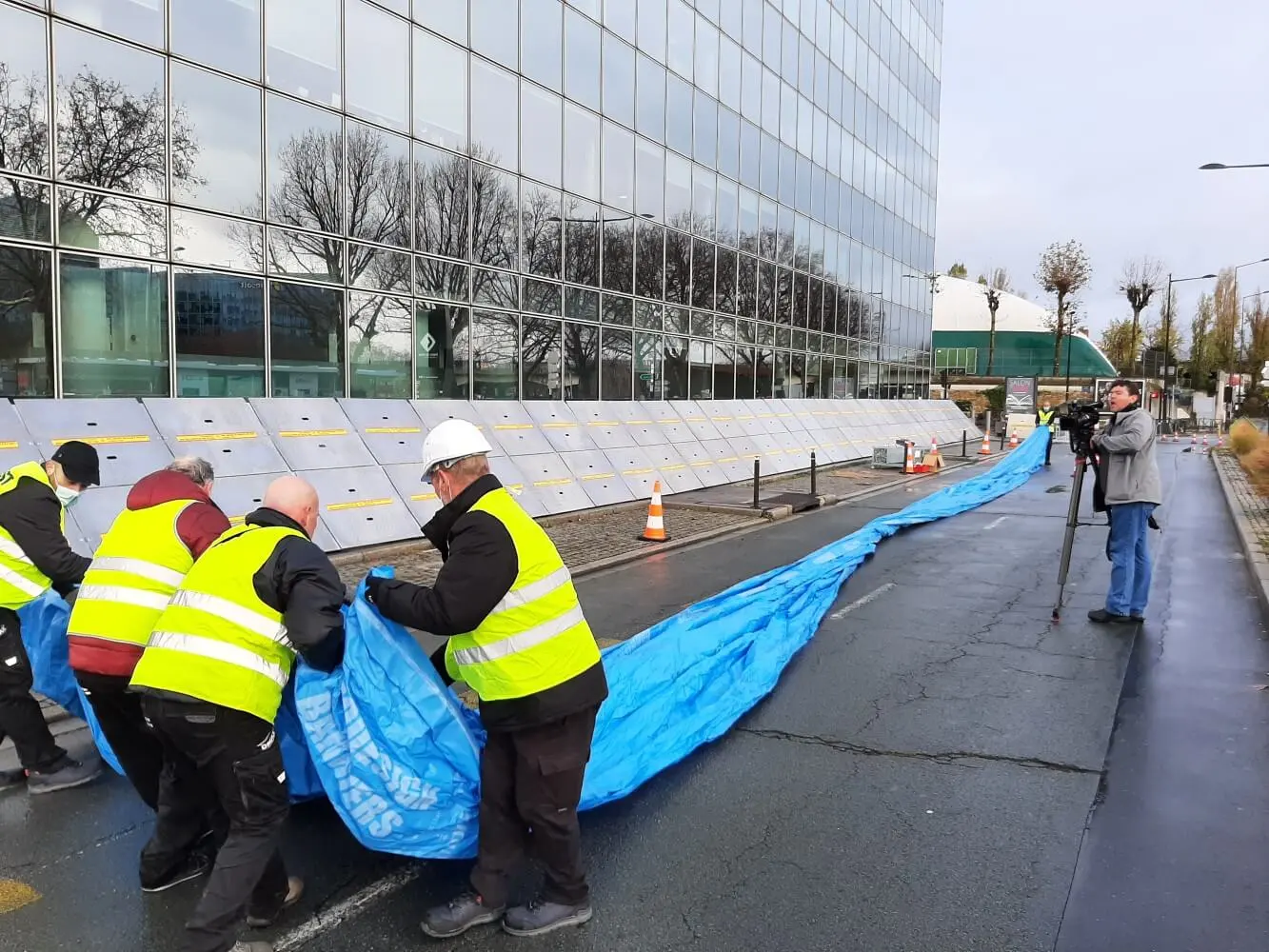
In November, TF1 ran a flood barrier training exercise with its newly purchased barriers around the base of the tower. The aim was twofold: to teach the site’s technical teams how to set up the system, and to check how well the line would protect the building if the Seine rose.
During the session, the teams placed the steel frames along the pavement and rolled out the membrane over the structure.
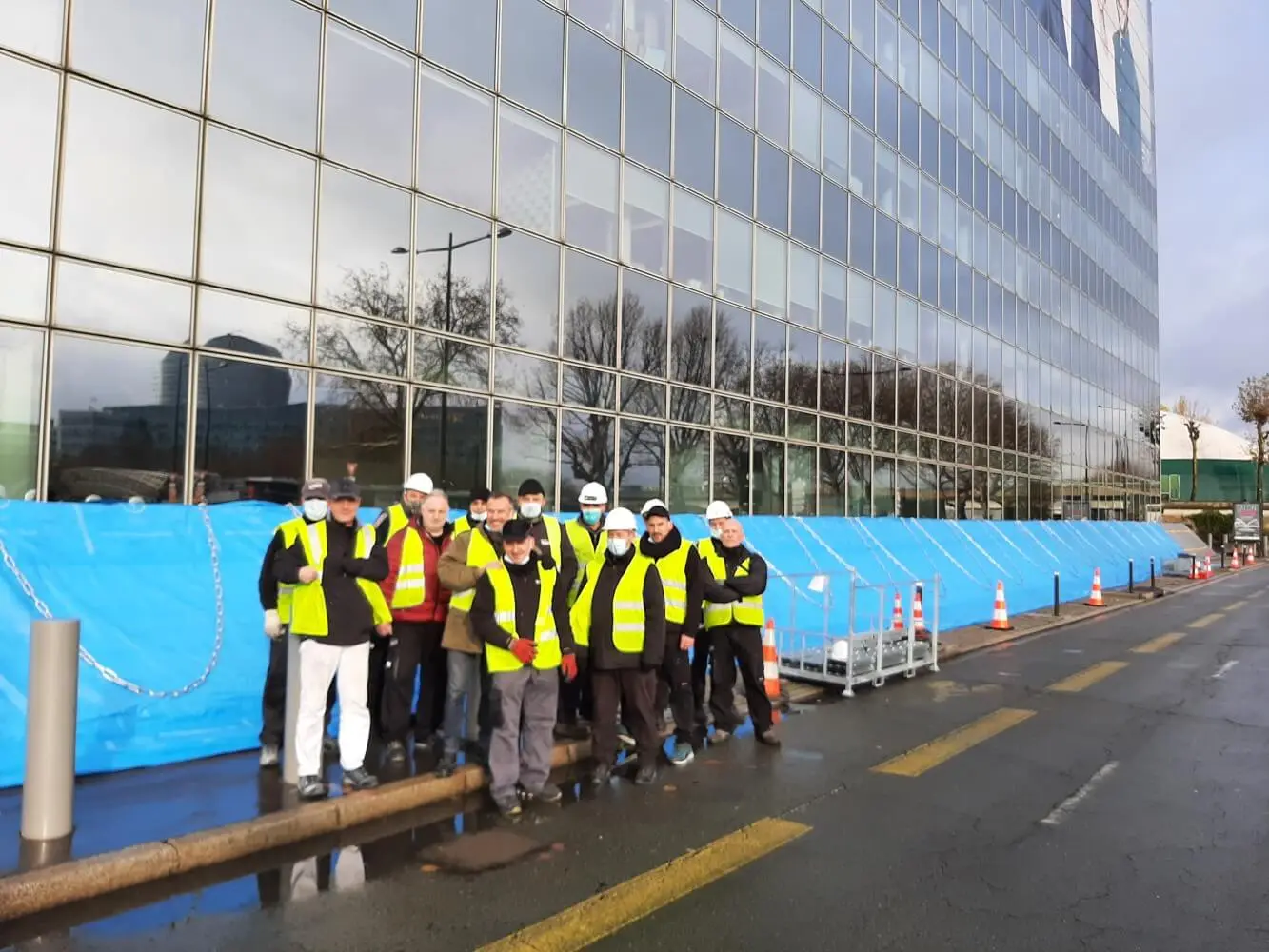
A team ready to deploy
TF1 now has both the equipment and a team that has built the barrier line in practice. By combining the purchase with hands-on training, the broadcaster has taken a practical step towards keeping its operations running if the Seine floods.
What UK site managers can take from this
For any UK business with a riverside head office, data centre or studio, the lesson from TF1 is that barriers only protect a building if staff can deploy them under pressure. Build the training into your site flood emergency plan, repeat it regularly, and speak to our team about a layout and training programme for your own site.