The risk: floodwater and electricity substations
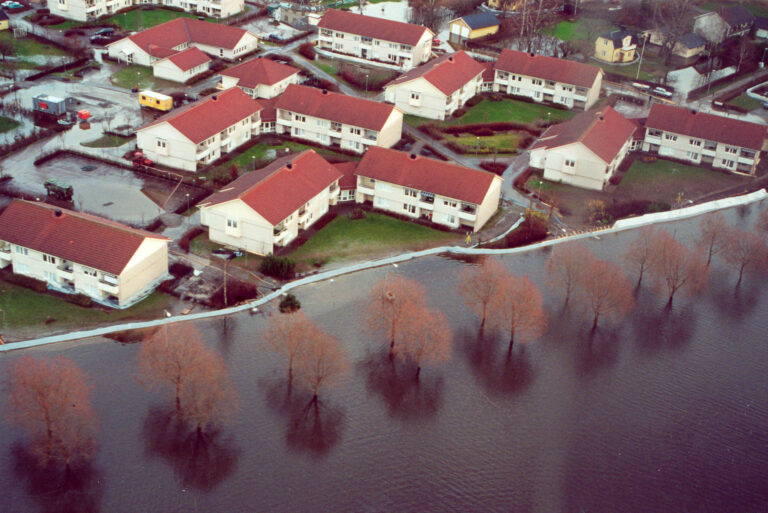
A flooded substation can cut power to thousands of homes and businesses at once.
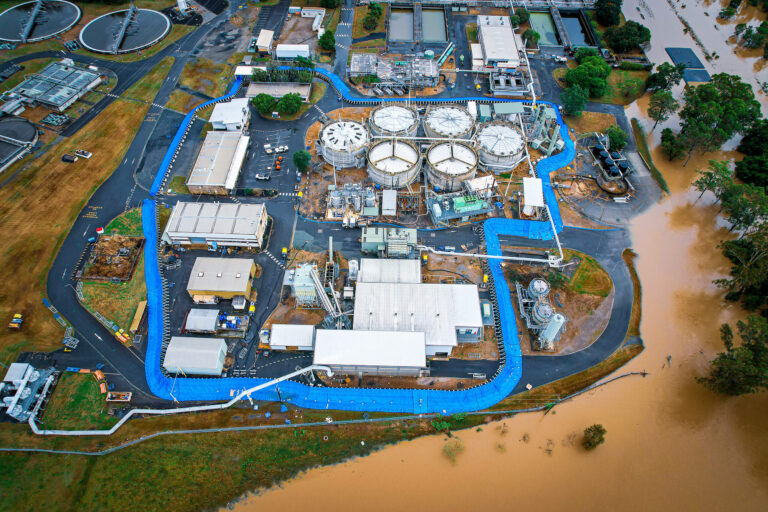
The floods of July 2007 showed how close that can come. At Walham in Gloucestershire, rising water surrounded a National Grid substation. According to Geodesign, its barrier, working together with pumps, helped stop the water reaching the switch rooms through underground cable ducts, and supply was maintained for hundreds of thousands of people. According to Geodesign, the Walham substation flood response prompted the network operator now known as UK Power Networks to look at temporary barriers for its own network.
As the distribution network operator for London, the South East and the East of England, UK Power Networks serves around 8 million homes and businesses. Several of its primary substations sit in flood-prone areas, including sites in Hertfordshire.
Substation flood protection starts with a warning
The company’s emergency preparations begin with information. John Gibbs, Contingency Planning Manager at UK Power Networks, explained: “We subscribe to the Environment Agency Flood Warning Direct System, which sends us an email about a substation at risk. We then liaise with the flood Information duty officer in the Environment Agency, who informs us of the substations of highest concern.”
The service he refers to was the Environment Agency’s Floodline Warnings Direct. Knowing how much lead time flood monitoring gives you decides how much of a site can be protected in time.
A temporary barrier instead of sandbags
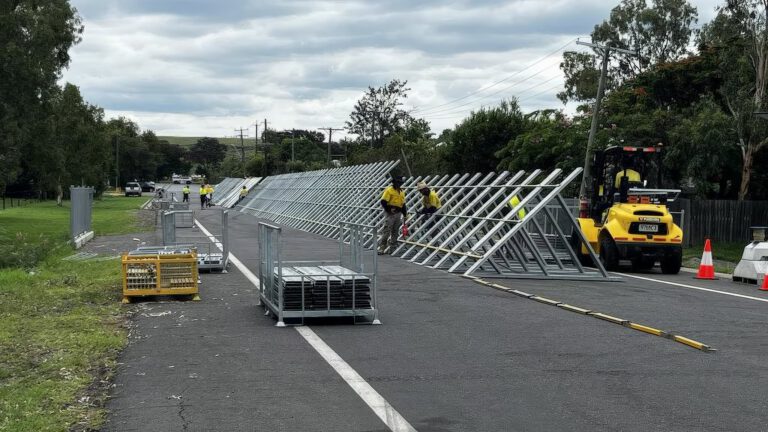
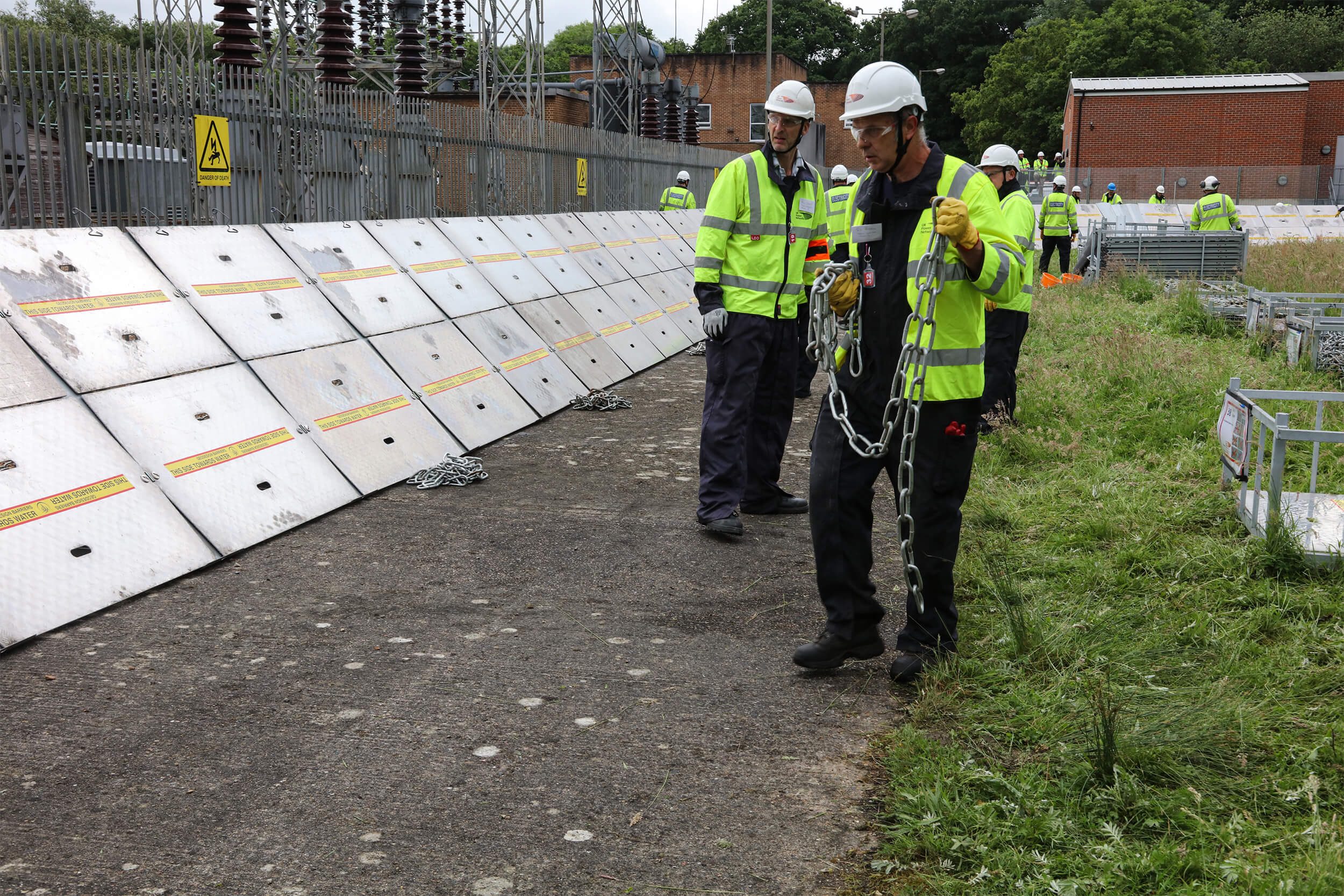
To build a sandbag wall about 1.25 m high around a substation, crews would need to bring in tonnes of sand. The Geodesign system is quicker. It consists of galvanised steel supports, horizontal connection rods and barrier panels, and can be ready within a few hours. Once the barrier is up, a polypropylene sheet is laid over it as a waterproof membrane and held down by chains and clips to limit seepage. According to Geodesign, UK Power Networks uses the Heavy Duty barrier series for this work.
Putting the barrier up on site. Bill Blackburn, Area Manager for Sussex at UK Power Networks, described how the decision is made.
At a severe flood warning, we would start to make preparations to erect the barrier. It would probably take about three to four hours to protect a large site like this. A significant consideration is how much notice we have, determining if we have ample time to secure the whole site or if we should primarily focus on the most vulnerable parts.
A tidal surge at Great Yarmouth
The approach was put to use during a December tidal surge on the Norfolk coast. UK Power Networks had the barrier ready at its Great Yarmouth substation, and the forecast floodwater did not reach the site.
During flood emergencies, UK Power Networks works with the Environment Agency, the police, the fire and rescue service and other public bodies. Its advice to property owners facing flooding is to switch off the electricity at the mains if it is safe to do so, and to contact UK Power Networks through its emergency channels or website.
What UK asset owners can take from this
UK Power Networks starts barrier preparations at a severe flood warning and decides in advance which parts of a site to protect first if time runs short. Other network and infrastructure operators can build the same logic into a documented flood emergency plan, starting with a site survey of barrier lines and access. The Industrial and Heavy Duty series are FM Approved to ANSI/FM 2510-2020 (Approval Identification PR453294) for perimeter barrier applications.