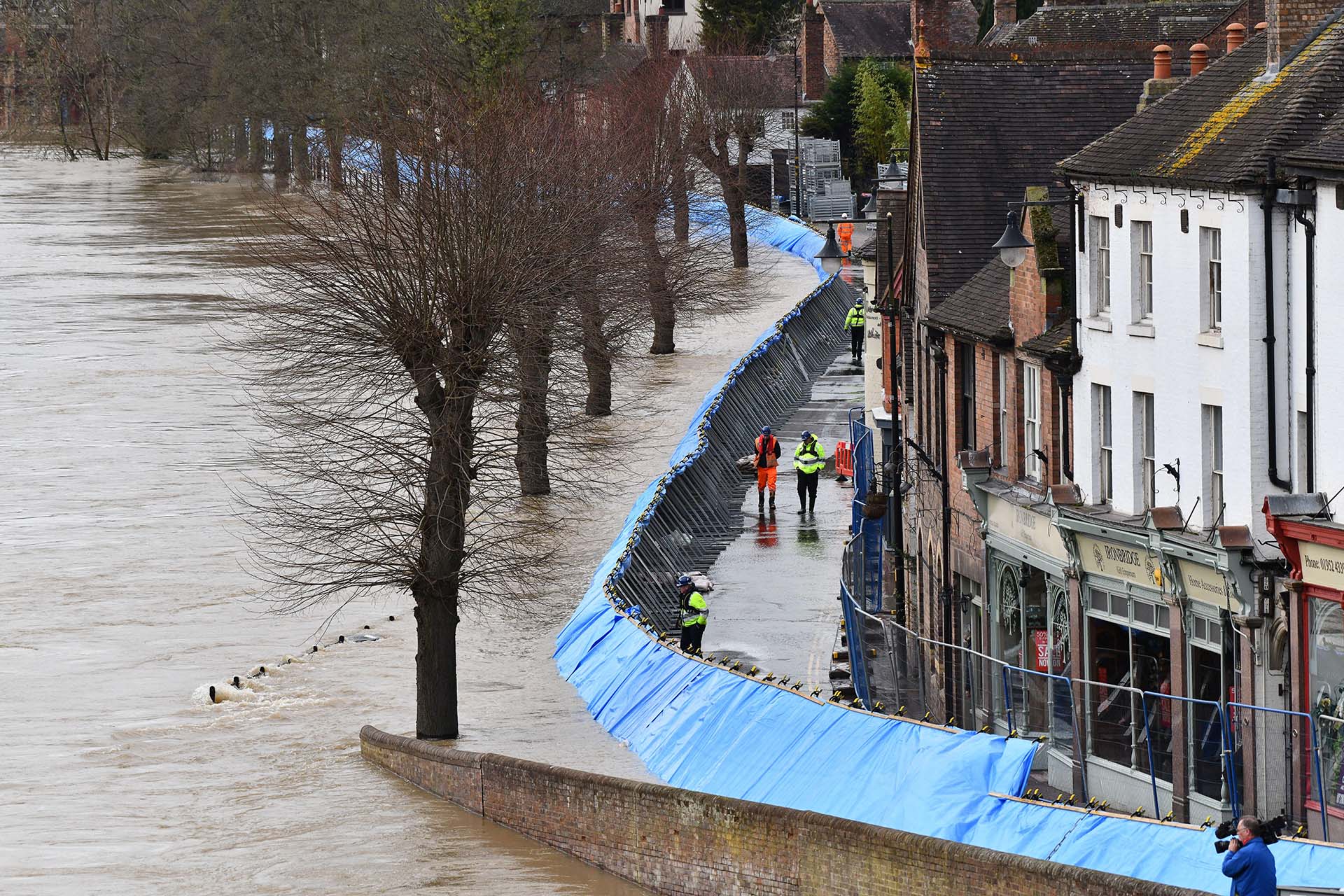
Compare Flood Barrier Systems: Which Option Is Right for Your Site?
Choosing a flood barrier system means balancing deployment speed, fill requirements, anchoring, site conditions, and operational capacity. This guide compares temporary flood barriers, demountable systems, permanent flood walls, water-filled barriers, sand-filled systems, freestanding barriers, and no-fill A-frame barriers so you can shortlist the right approach.
- Covers key barrier types
- Side-by-side comparison
- FM Approved context
Compare flood protection systems
Flood protection systems generally fall into three main categories: temporary, demountable, and permanent. Each is built around a different assumption about how and when protection is put in place.

Temporary
Fully deployed during event
Installed during a flood event and removed afterwards. Best suited for flexible incident response, temporary perimeter protection, and sites where permanent works are not feasible.

Demountable
Partly pre-installed
Uses pre-installed guides, sockets, or foundations, with closure completed during a flood event. Best suited for fixed locations with recurring protection needs.

Permanent
Always in place
Fixed flood protection that remains in place at all times. Best suited where long-term passive protection is feasible and event-time deployment is undesirable.
The widest range of product alternatives is found within mobile temporary flood barrier systems, where differences in deployment, logistics, and site fit can be significant.
Main types of mobile temporary flood barriers
Within temporary flood protection, the widest range of product alternatives is found in mobile barrier systems. These solutions vary significantly in deployment speed, fill requirements, and operational fit.

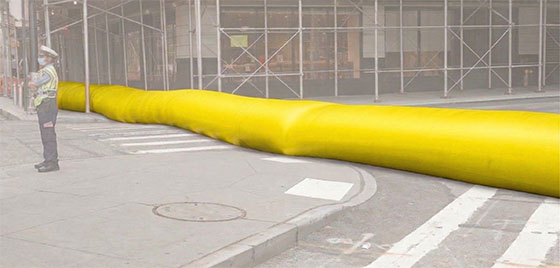
Tubes
Large tubular barriers filled with water and deployed along a flood line. Often used where long protection lengths are needed and a nearby water source is available.

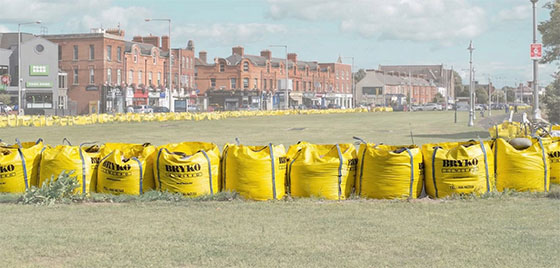
Filled containers
Container-based systems that depend on sand, water, or other fill material for stability. Simple in concept, but more demanding in logistics, transport, and cleanup.

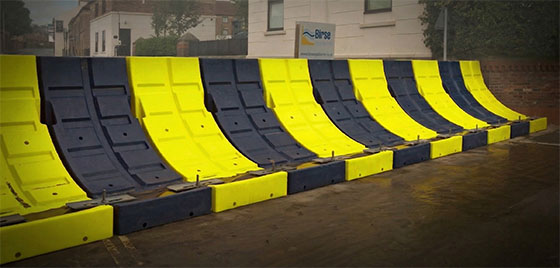
Freestanding barriers
Barrier systems designed to remain stable without permanent anchoring. Often used where fast deployment and minimal site preparation are important.

Frame barriers
Modular systems built around rigid frames and barrier elements. Often used for repeated deployment, perimeter protection, and controlled structural performance.
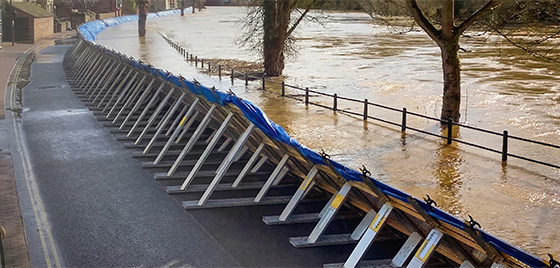
These categories include several distinct product types, each with different trade-offs in deployment speed, fill requirements, reuse, storage, and performance over repeated events.
Compare the main mobile flood barrier designs
Within these four categories, several distinct barrier designs are used in practice. Each comes with different trade-offs in fill requirements, anchoring, setup speed, and operational fit.
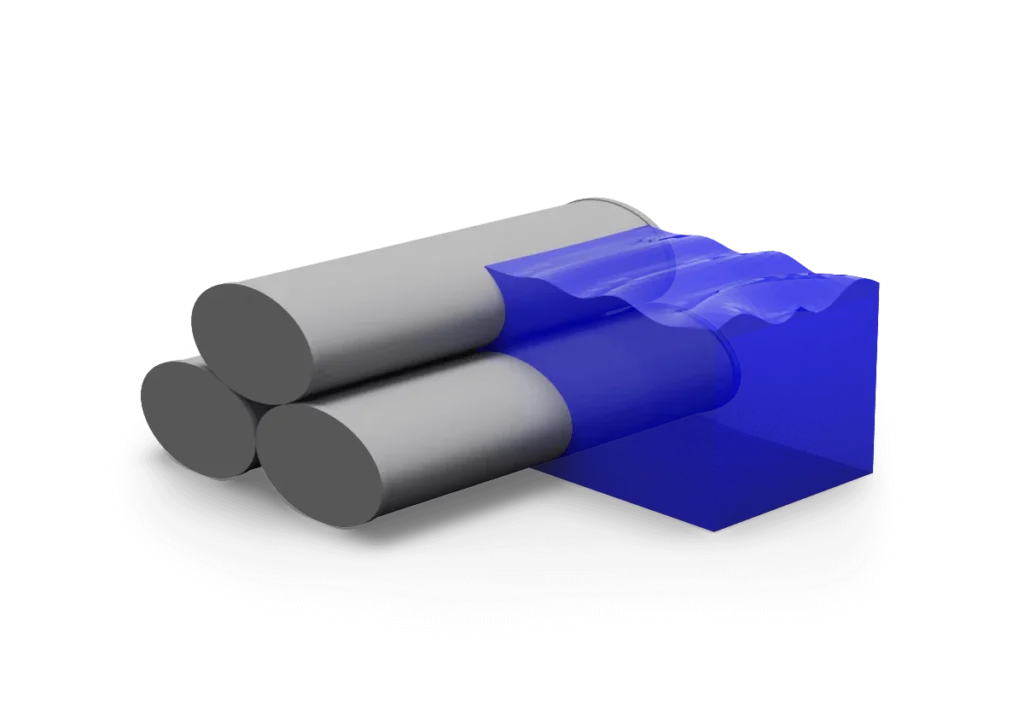
Water-filled tubes
Large membrane tubes filled with water to create a heavy, weighted barrier against rising tides.
StrengthQuick over long lengths with water access.
LimitationRequires water access, flat ground, puncture risk.
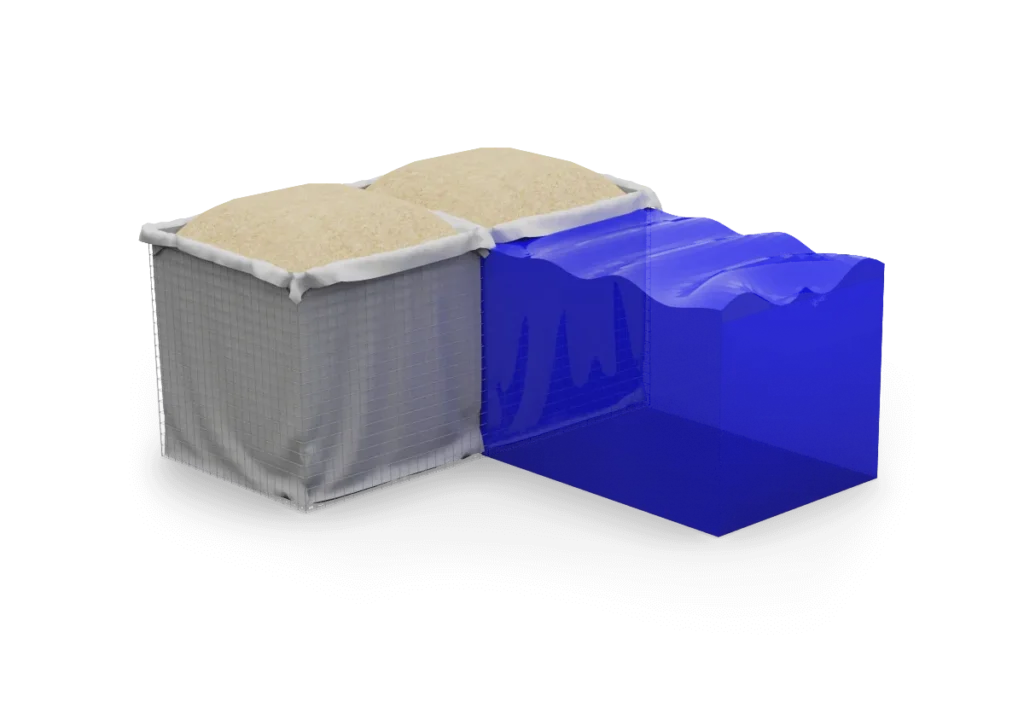
Filled containers / gabions
Cellular barriers filled with sand, gravel, or water for high-mass stabilization.
StrengthAdapts to uneven terrain, non-specialized labor.
LimitationHeavy fill logistics, significant cleanup.
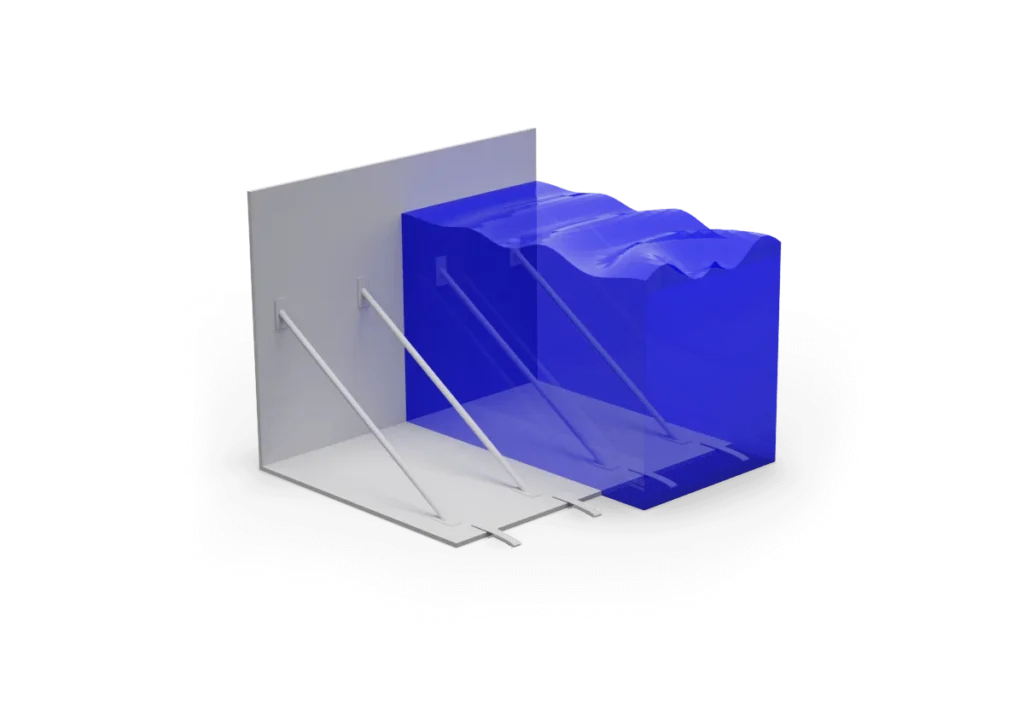
Anchored vertical wall
Rigid wall systems anchored into the ground for high-pressure resistance.
StrengthShort footprint.
LimitationRequires anchoring, site intervention, less flexible.
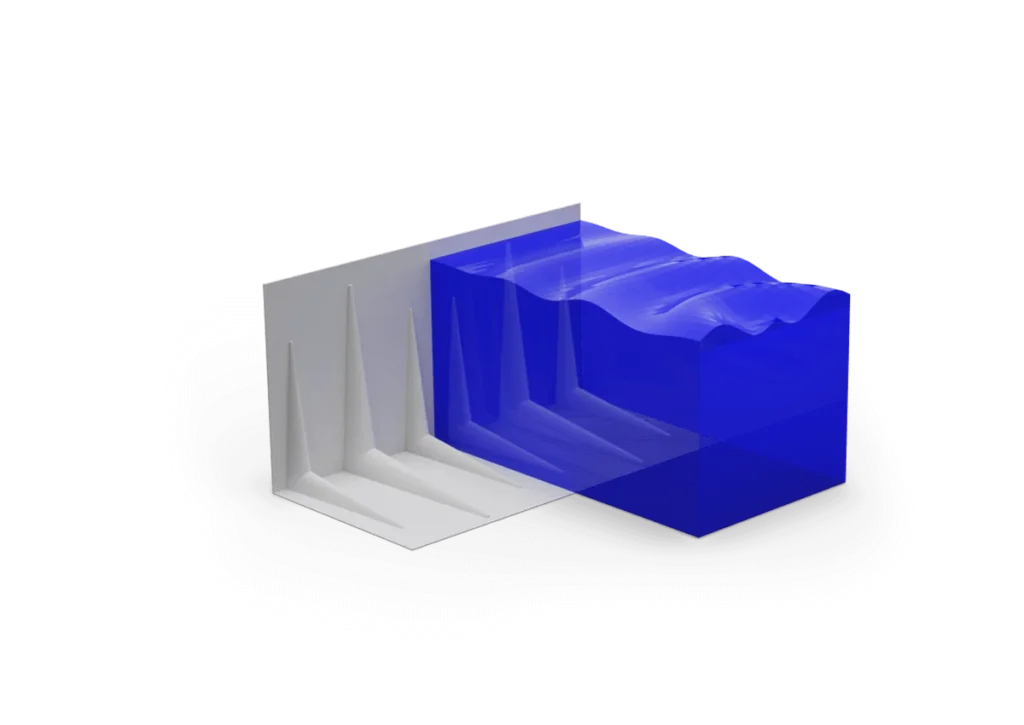
Freestanding vertical wall
Interlocking rigid walls designed for temporary deployment without permanent anchoring.
StrengthQuick to deploy, simple concept.
LimitationSeepage on uneven terrain, better for lower water.
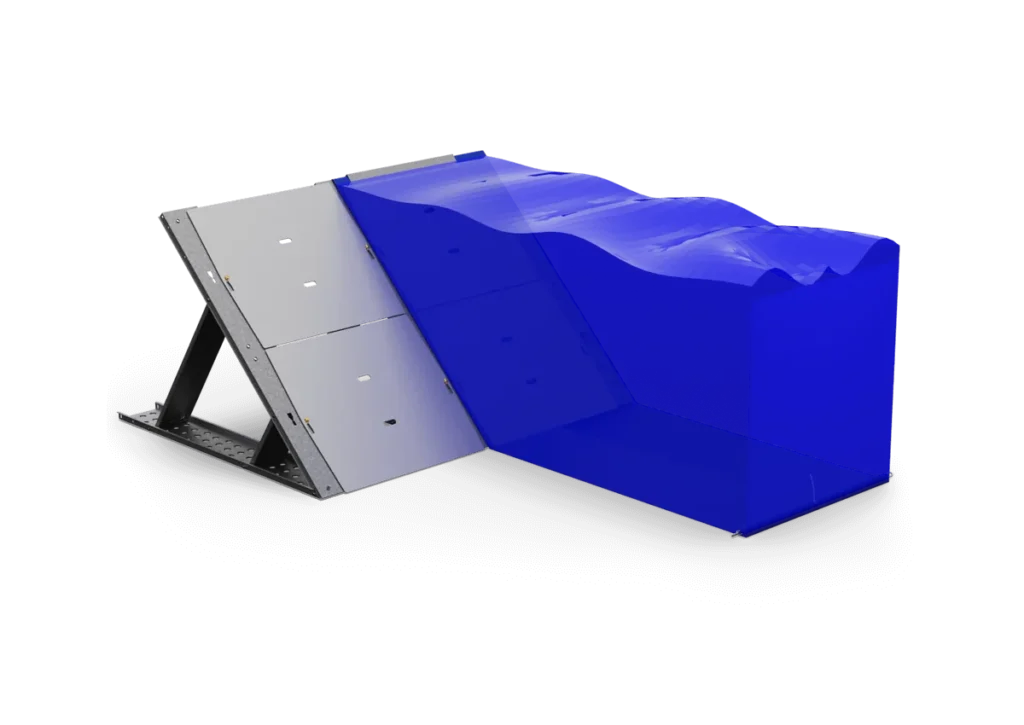
A-frame metal barrier
Structural frame using metal supports and membrane to harness the weight of floodwater.
StrengthNo external fill, repeatable, strong for perimeters.
LimitationLarger footprint as height increases.
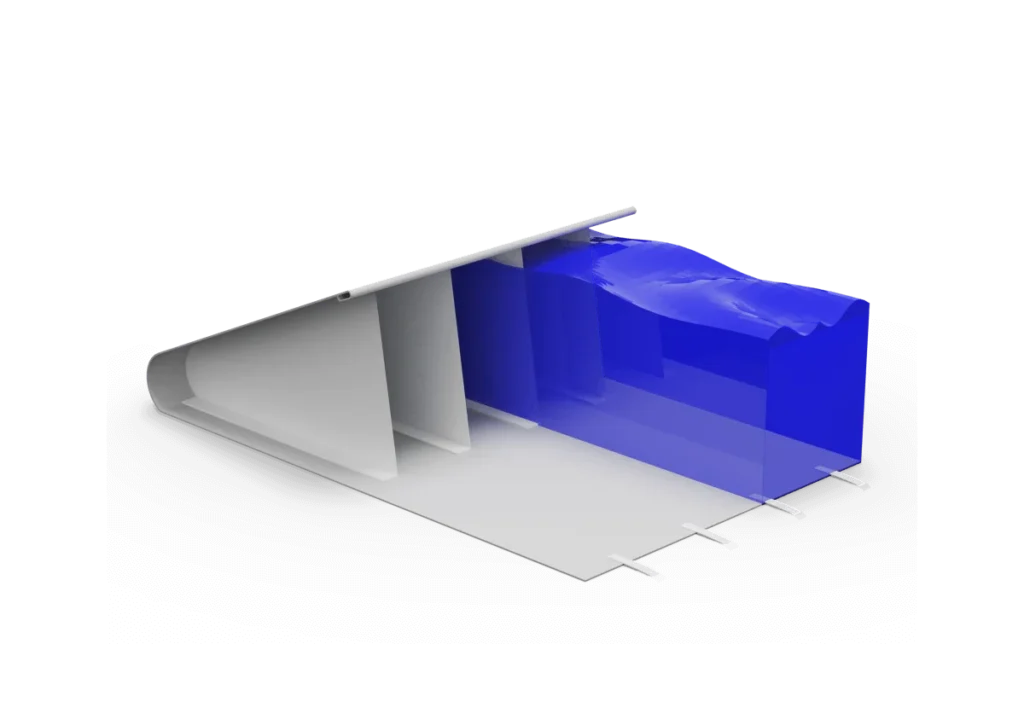
Anchored pop-up membrane
Roll-out membrane anchored and stabilized by water loading for rapid response.
StrengthCompact storage, simple concept.
LimitationRelies on anchoring, less flexible layout.
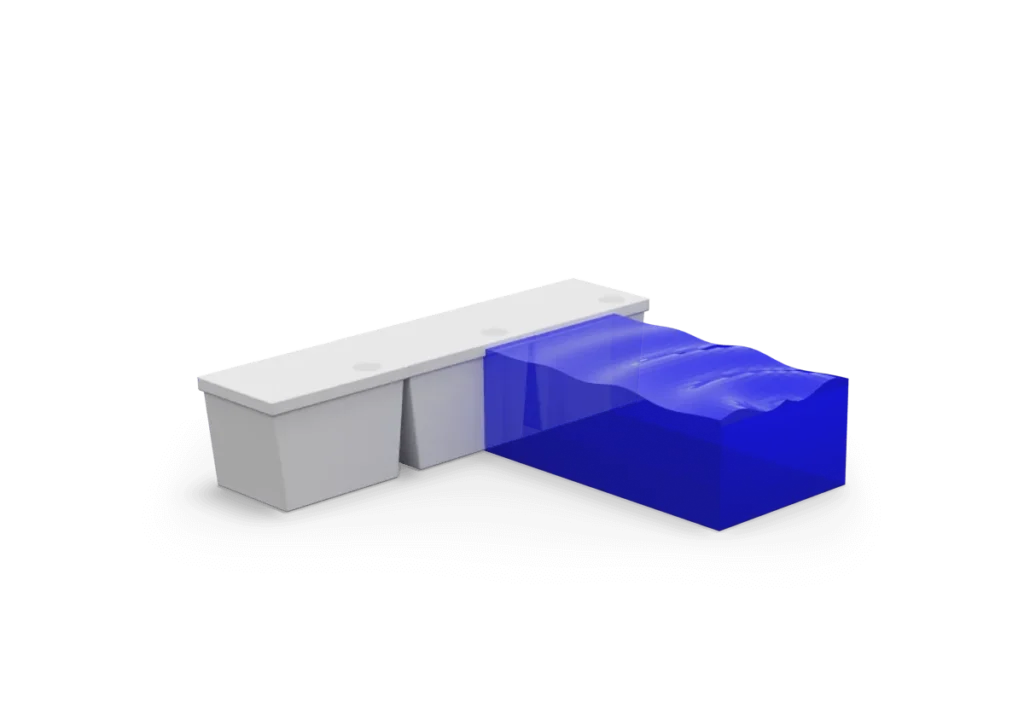
Water-filled plastic blocks
Interconnected hollow units filled with water to provide a stable, modular barrier system that adapts to complex site shapes.
StrengthSimple modular concept.
LimitationDepends on water access, time to fill and empty.
No two mobile flood barrier systems solve the same problem in the same way. The next comparison looks at the operational trade-offs that matter most in practice.
Compare the operational trade-offs
The biggest differences between mobile flood barrier systems are often operational in practice — how fast they deploy, what they require on site, how much cleanup they create, and how well they reuse across events.
| Comparison criteria | Water-filled tubes |
Filled containers |
Anchored vertical |
Freestanding vertical |
A-frame metal |
Pop-up membrane |
Water plastic blocks |
|---|---|---|---|---|---|---|---|
| Fill requirement | High | High | None | None | None | None | High |
| Anchoring requirement | Low–Medium | Low | High | None | None | High | None |
| Deployment speed | Fast | Slow | Medium | Fast | Medium | Fast | Medium |
| Lead-time dependence | Medium | High | Medium | Low | Low | Medium | Medium |
| Cleanup burden | Medium | High | Low | Low | Low | Low | Medium |
| Storage efficiency | Strong | Strong | Moderate | Moderate | Moderate | Strong | Moderate |
| Reuse potential | Moderate | Low–Moderate | High | High | High | High | High |
| Terrain adaptability | Limited | Strong | Limited | Moderate | Moderate | Moderate | Moderate |
| Site preparation impact | Low | Low | High | Low | Low | High | Low |
| Perimeter suitability | Moderate | Moderate | Moderate | Moderate | Strong | Moderate | Moderate |
How to choose the right mobile flood barrier
The best system is not just the strongest on paper. It is the one that fits your lead time, site conditions, operational capacity, and protection objective.
Protection height
Start with the flood level you need to defend against, including freeboard and overtopping conditions.

Site surface & geometry
Assess slopes, uneven ground, curves, obstructions, and how the barrier line must connect or terminate.

Lead time
Choose a system that can be mobilized and deployed within the warning window you are likely to have.

Operational capacity
Match the system to the crew, equipment, training level, and site access you can realistically support during an event.

Operational fit
Consider storage, cleanup, repeatable reuse, and how the system performs across multiple events — not just initial deployment.

Why many teams move from fill-based systems to no-fill frame barriers
The shift is often not about one barrier looking stronger on paper. It is about reducing fill logistics, simplifying deployment, improving repeatability, and matching real operational constraints.
-
No fill logistics
No sand, aggregate, or on-site water filling is required. That reduces mobilization demands, cleanup, and dependence on external fill material.
-
Repeatable manual deployment
The system is designed for repeatable manual setup using modular structural components, with no specialized tools required under normal deployment conditions.
-
Perimeter-ready by design
Frame barriers are well suited to longer defensive lines, controlled geometry, and repeatable perimeter protection — not just isolated openings.
-
Built for real site conditions
Frame systems can be configured for corners, changes in direction, and irregularities such as curbs, lamp posts, fences, and uneven ground.


Need help evaluating the right barrier type for your site?
Selected U.S. Articles & Case Studies
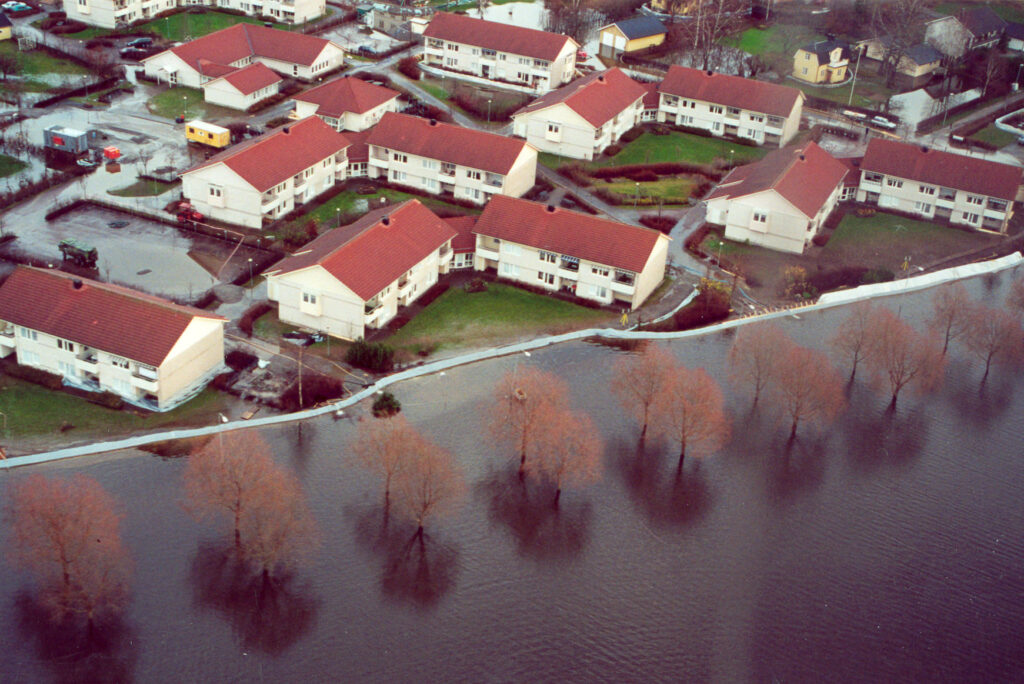
Arvika 2000: The Historic Breakthrough in Mobile Flood Protection
In late 2000, the Swedish town of Arvika, in the county of Värmland, became the stage for one of the most dramatic and consequential flood defence operations in modern history. Facing the worst flooding in living memory, local authorities, national rescue services, and the military joined forces with an innovative Swedish engineering solution — the Geodesign Pallet Barrier — marking the first large-scale emergency deployment of modern, mobile flood protection in Sweden.
Read more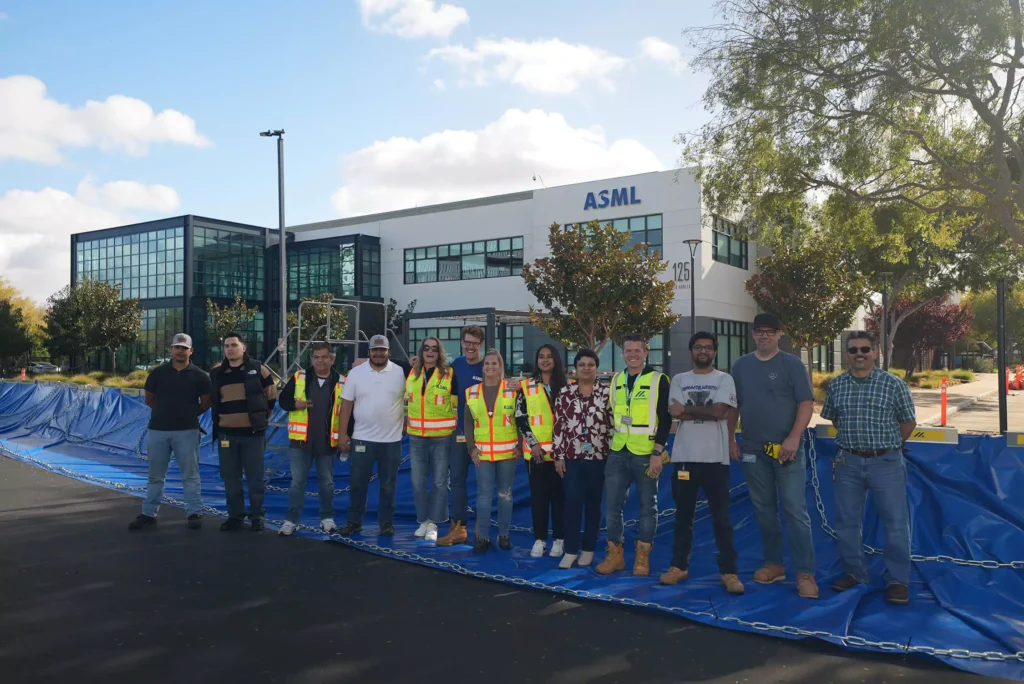
ASML Fortifies Silicon Valley Campus Against 500-Year Floods with FM Approved Barriers
In November 2024, ASML, a global leader in semiconductor manufacturing, took decisive action to protect its 50,000-square-foot R&D campus in San Jose, California, from the looming threat of severe flooding. Situated near the historically flood-prone Guadalupe River, the facility faced significant risk from extreme weather events.
Read more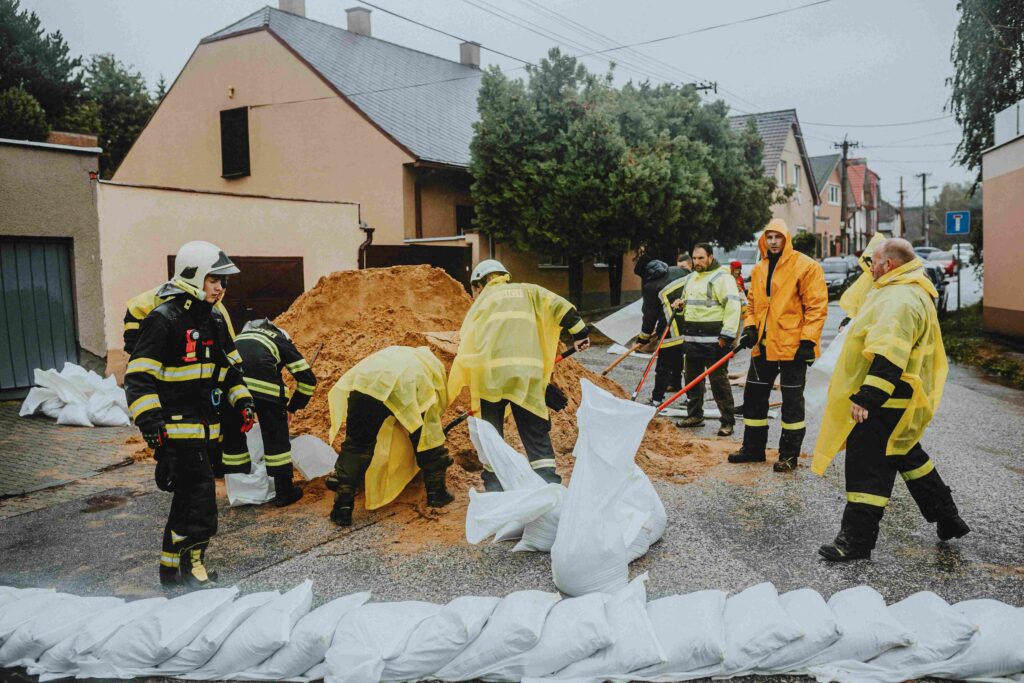
Alternative To Sandbags For Flooding
When a crisis strikes and the average citizen or business needs flood protection fast, sandbags can be a quick and easy solution to help prevent residual damage. They’re a popular…
Read more
Ready to Protect Your Site?
Tell us about your project and we'll recommend the right barrier approach, walk through your site conditions, and respond with a tailored recommendation.
-
FM Approved systemCertified to ANSI/FM 2510 — verified performance under demanding flood conditions.
-
Response within 24 hoursA Geodesign specialist will review your site and respond with a tailored recommendation.
-
Trusted by Exxon, Duke Energy & ASMLDeployed across industrial, utility, and municipal sites in 24 countries.
-
30+ years in the field538,000+ linear ft deployed globally across municipal, commercial, and industrial sites.


Frequently Asked Questions
Practical answers to common questions about flood barrier selection, deployment, site fit, and operational requirements.
What is the difference between temporary, demountable, and permanent flood protection?
Temporary systems are fully installed during a flood event and removed afterwards. They are the most versatile and are often best suited to incident response.
Demountable systems use pre-installed guides, sockets, or foundations, with closure completed during a flood event. They suit fixed locations with recurring protection needs.
Permanent systems remain in place at all times and provide passive protection where long-term structural defenses are feasible and event-time deployment is undesirable.
When is a mobile temporary flood barrier the right choice?
Mobile temporary barriers are the right choice when protection is needed on demand, when the site cannot host permanent works, or when the same crew and equipment must serve multiple locations across seasons.
Do all mobile flood barriers require fill material or anchoring?
No. Fill-based systems rely on water, sand, or gravel for mass, and anchored systems rely on fixings into the ground. Frame barriers and freestanding walls are designed to stay stable without external fill or permanent anchoring.
How important are lead time and organizational capacity?
Critical. A barrier that matches the threat on paper but cannot be mobilized in the available warning window — or cannot be set up by the crew and equipment on hand — will not protect the site. Lead time and operational capacity are as important as fill and anchoring.
Which systems are best suited to perimeter protection?
Frame barriers score strongest on perimeter suitability in this comparison. Their modular geometry handles corners, direction changes, and irregularities such as curbs, lamp posts, and fences without requiring a fresh design for each obstacle.
Why do many teams move from fill-based systems to no-fill frame barriers?
The shift is driven by operational fit: no fill logistics, repeatable manual deployment, controlled geometry for perimeter protection, and consistent behavior across real-world site conditions. The barrier that is fastest to deploy and easiest to reuse is usually the one that actually gets deployed.
What is the best alternative to sandbags for flood protection?
The best alternative depends on site conditions, warning time, labor availability, protection height, and whether the system must be reused. No-fill frame barriers can be a strong option when teams want repeatable deployment without sand, water fill, or major cleanup. Other alternatives include water-filled barriers, freestanding rigid walls, and demountable systems with pre-installed sockets.
Are temporary flood barriers better than permanent flood walls?
Not always. Permanent flood walls provide passive protection in fixed locations but require capital works, space, approvals, and long-term site commitment. Temporary flood barriers are better suited where protection needs to be deployed only when flood risk is present, where permanent construction is impractical, or where the same crew and equipment must serve multiple locations across seasons.
What is the difference between water-filled and no-fill flood barriers?
Water-filled barriers use water as ballast and require filling, draining, and water access during deployment. No-fill systems are designed to stabilize through structural geometry, self-weight, and hydraulic loading — without external fill material. This can reduce logistics, cleanup, and dependence on local water or sand supply, especially for sites with limited deployment windows or no nearby water source.
Which flood barrier type is best for long perimeter protection?
For long or irregular perimeter lines, the best fit is usually the system that matches the available crew, deployment window, surface conditions, and reuse plan. Frame barriers are often well suited because they can follow controlled alignments, corners, and repeated deployment sequences without redesign for each obstacle.