Flood Barriers for Homes in Australia
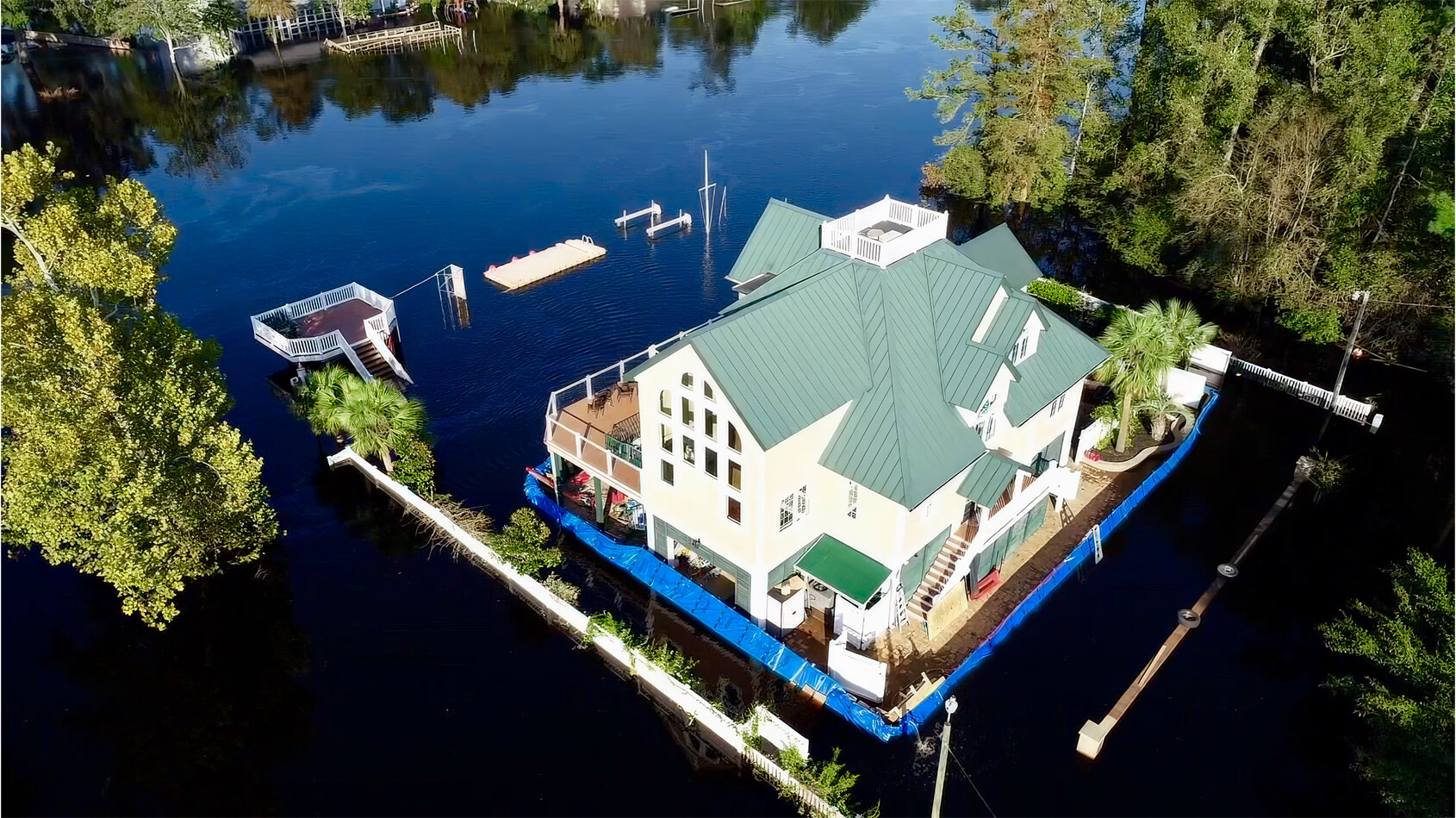
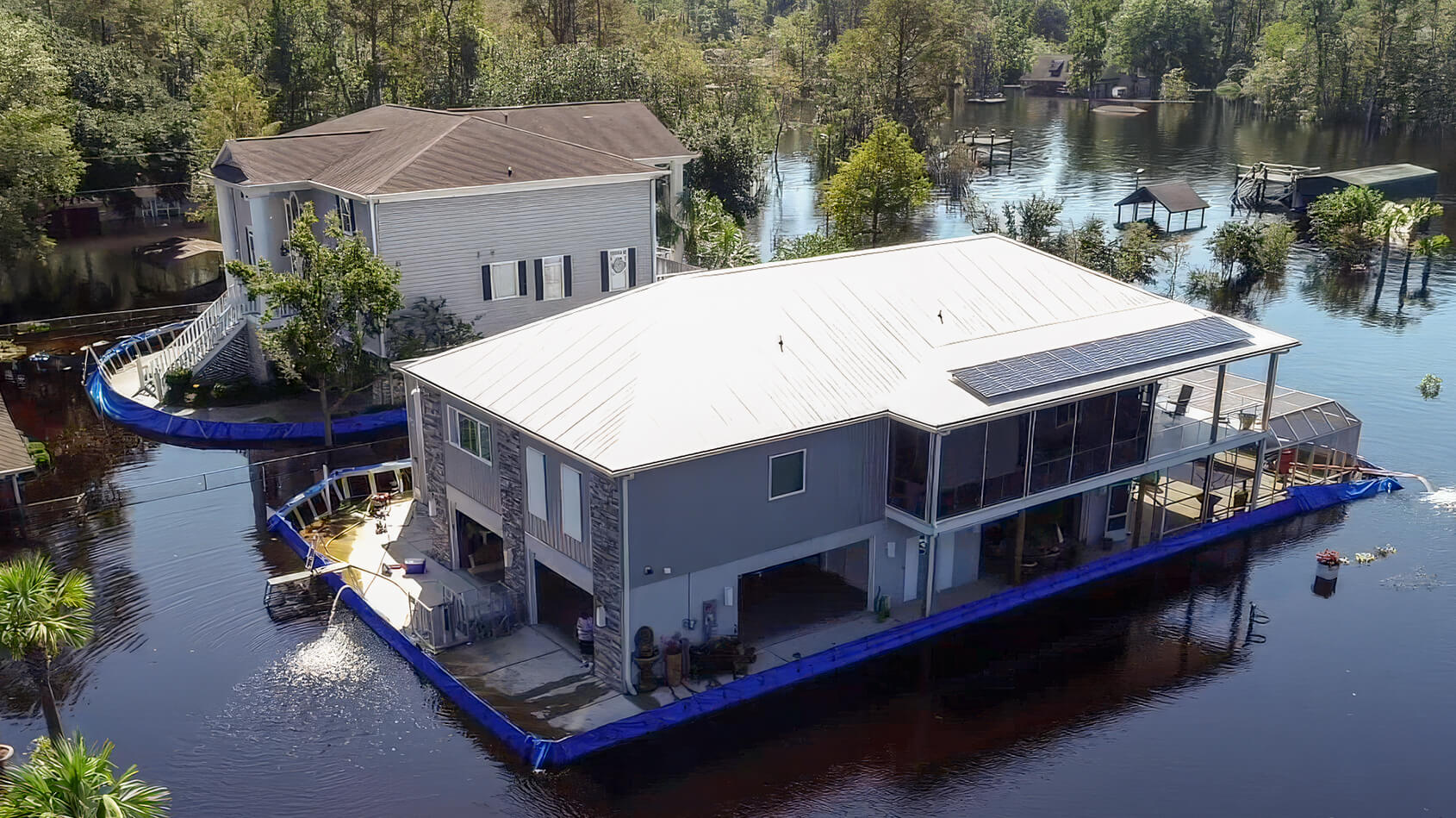
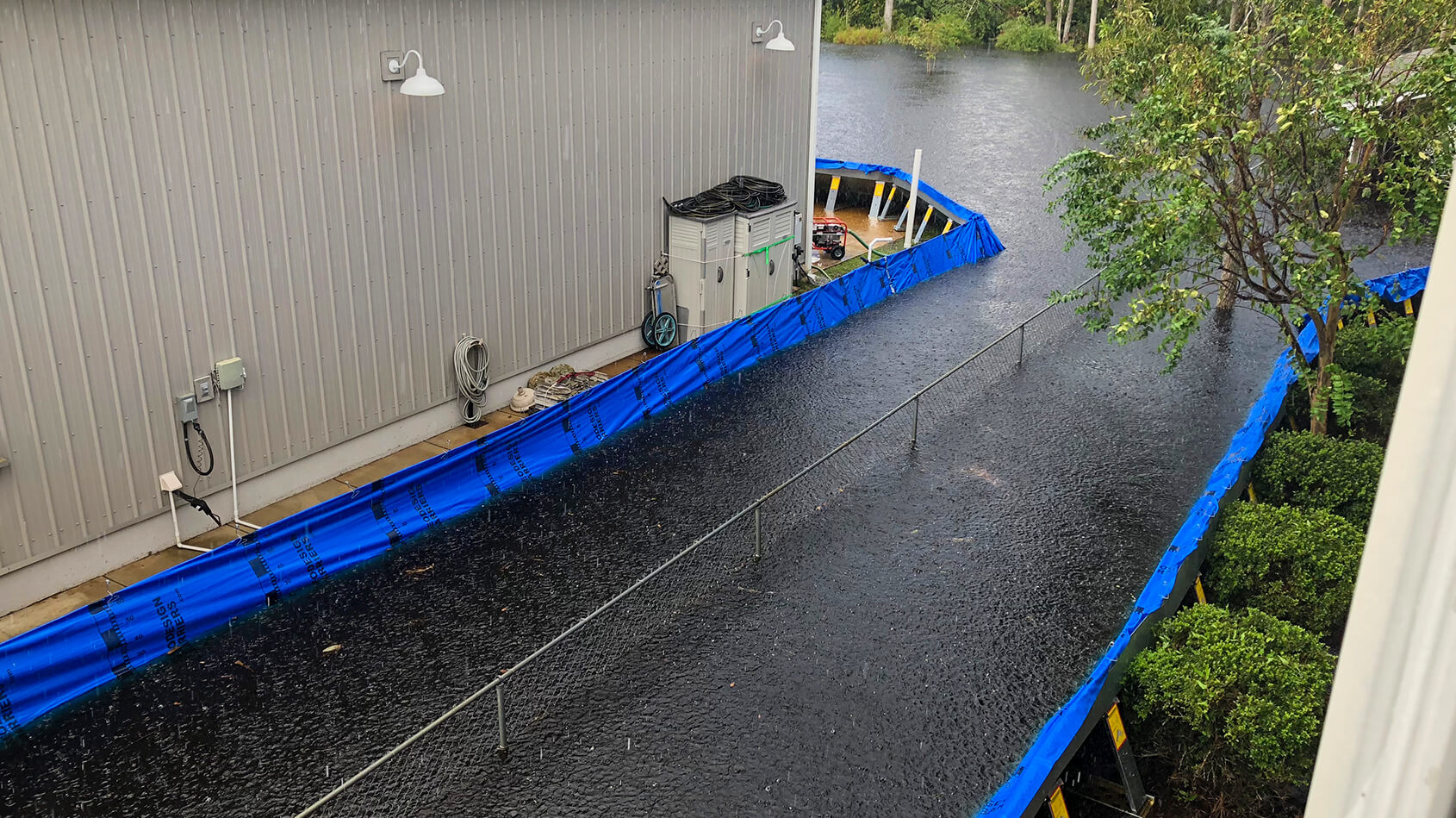
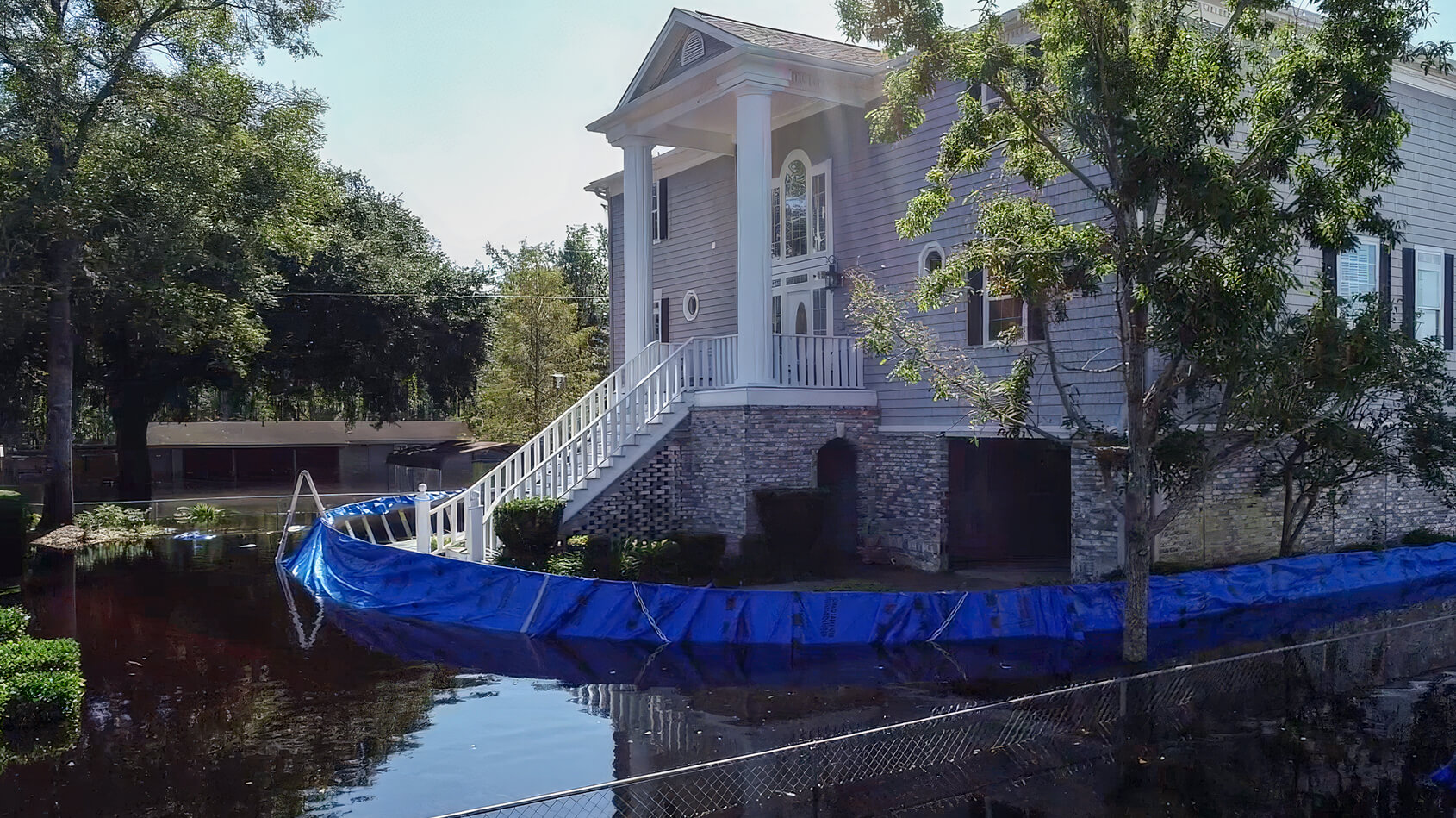
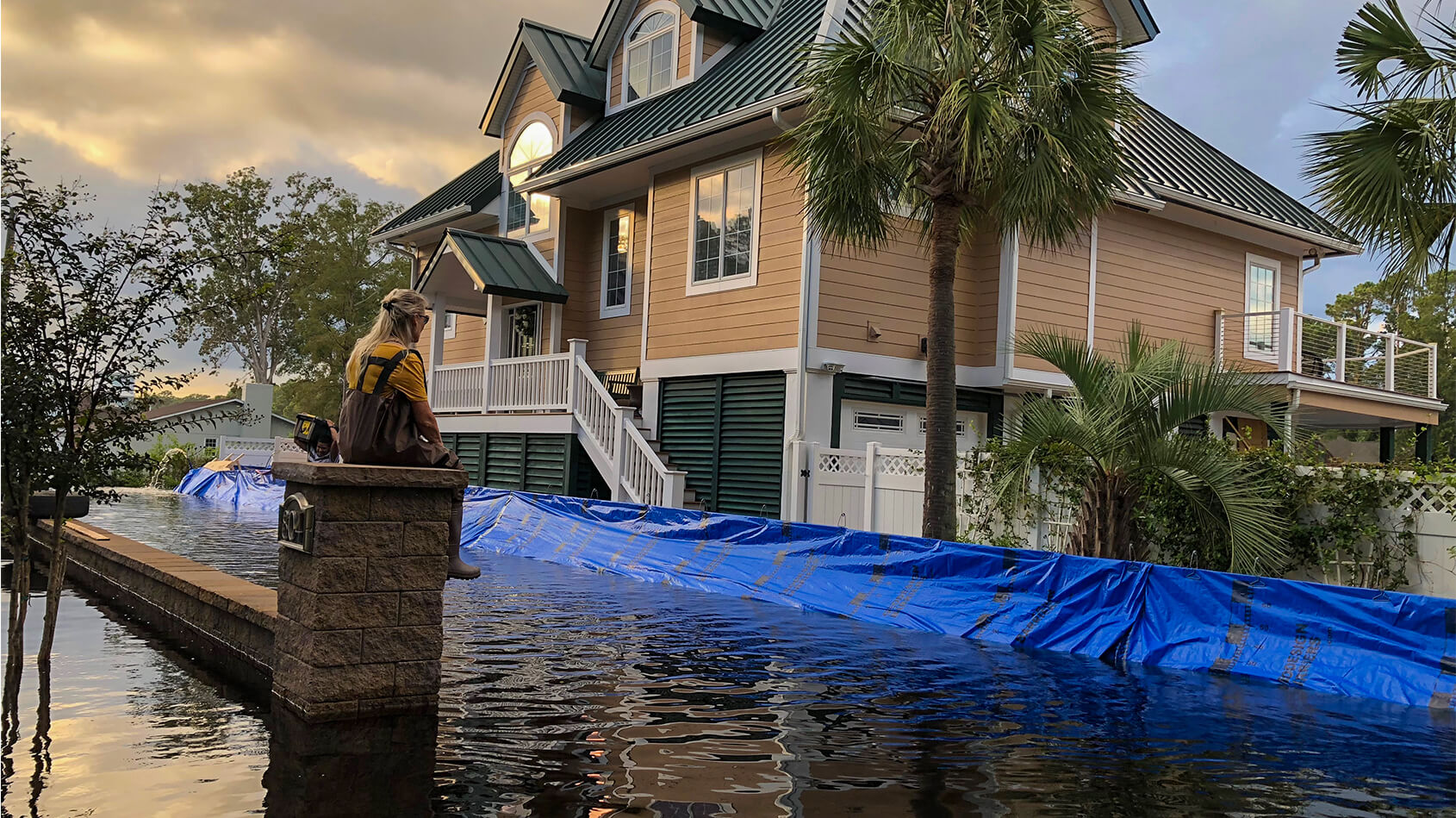
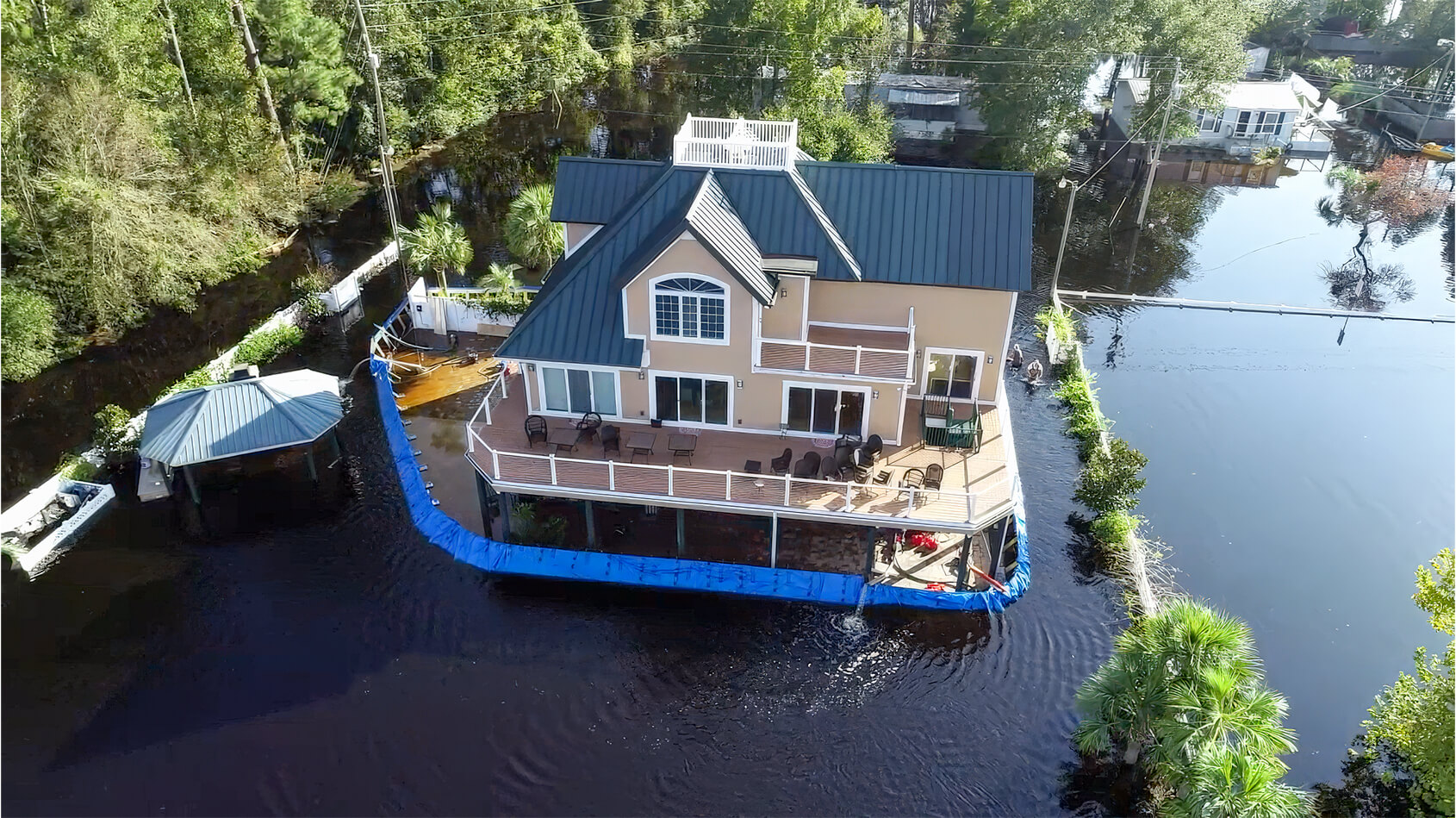
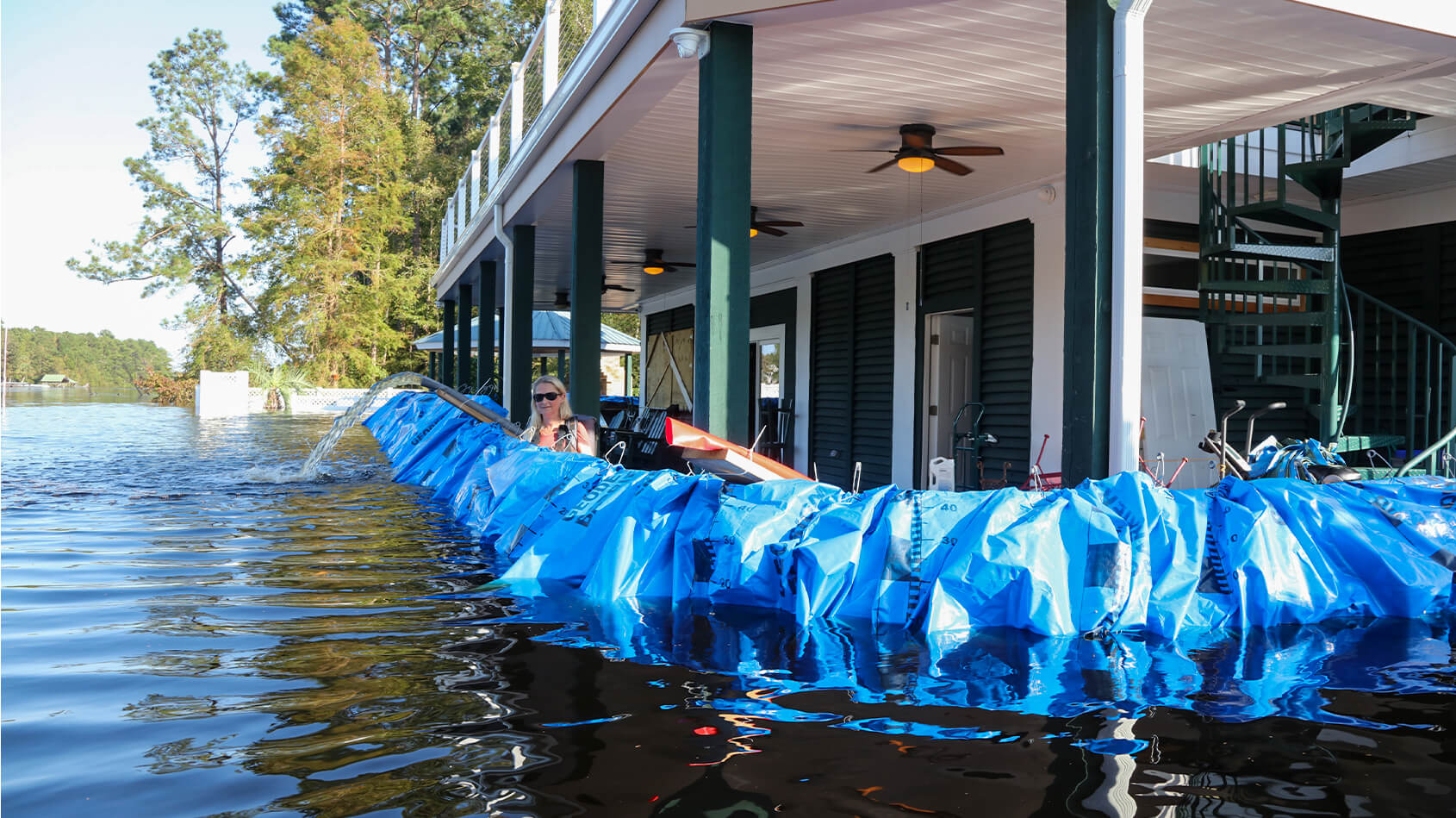
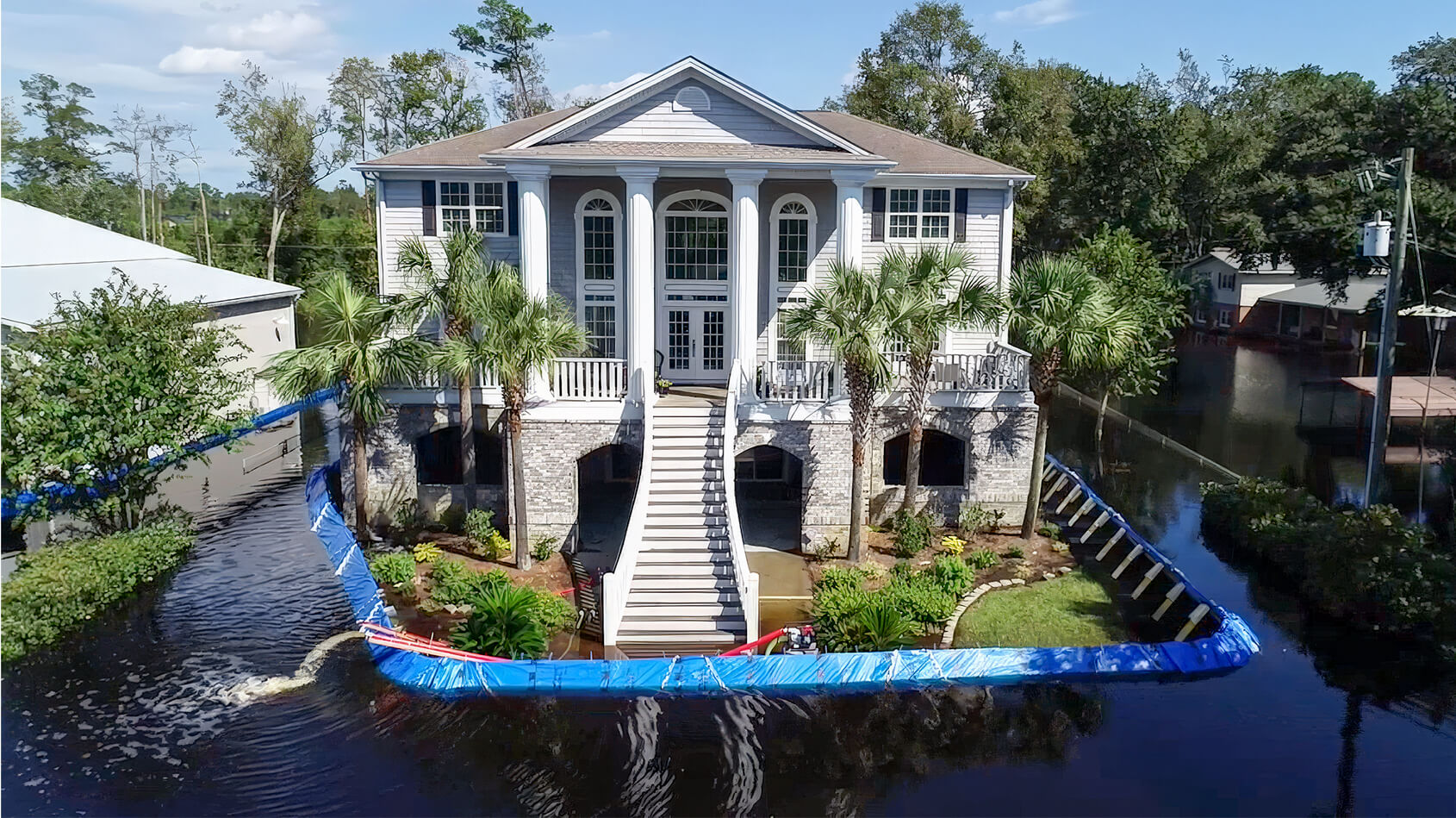
A doorway, a garage opening or the whole perimeter — put up by the people who happen to be home, in the hours between the warning and the water. Nothing is drilled or pegged into the ground, nothing is consumed, and 50 metres of it stores in the corner of a garage.
- No tools or machinery
- Nothing fixed to the ground
- Reusable, not single-use
- ISO 9001 & 14001
Two numbers decide everything
How long a line, and how deep the water. Everything else — which series, how many sections, what it costs, where it lives between events — follows from those two numbers.
The line is not the perimeter of your block. It is the path water actually takes to the house: a front door is one or two metres, a double garage about five, a full house perimeter usually 30 to 60. The depth is what has come through before, or what the flood study says to plan for.
Send us those two numbers and we will tell you what you need. If a doorway barrier and a few sandbags would do the job, we will say that too — the site assessment is free and there is nothing to buy at the end of it.
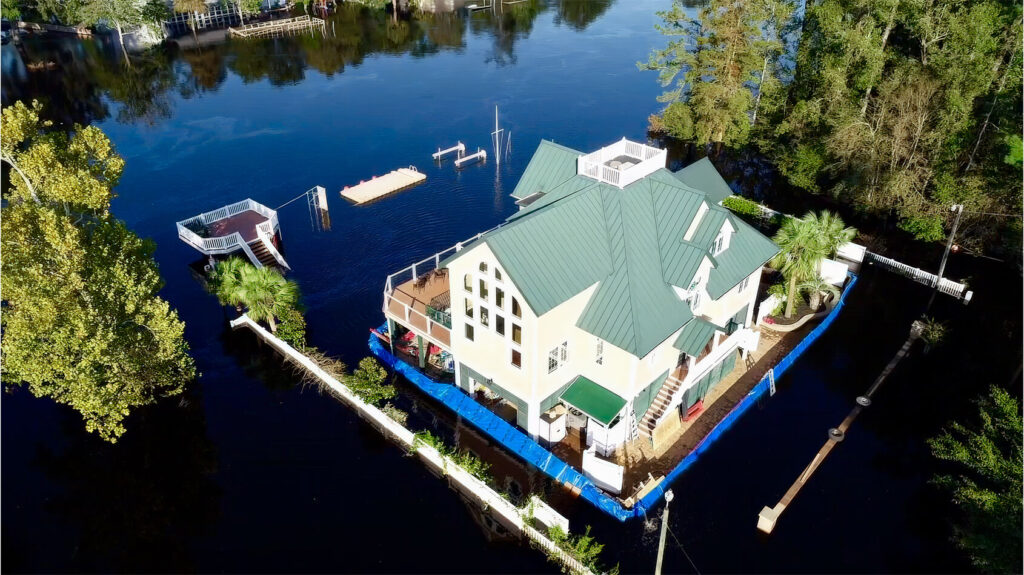
Where the water actually gets in
Most homes are lost through one of four places. Work out which one is yours and the job gets much smaller.
Which barrier suits which house
Three series, and for most homes the answer is the first one.
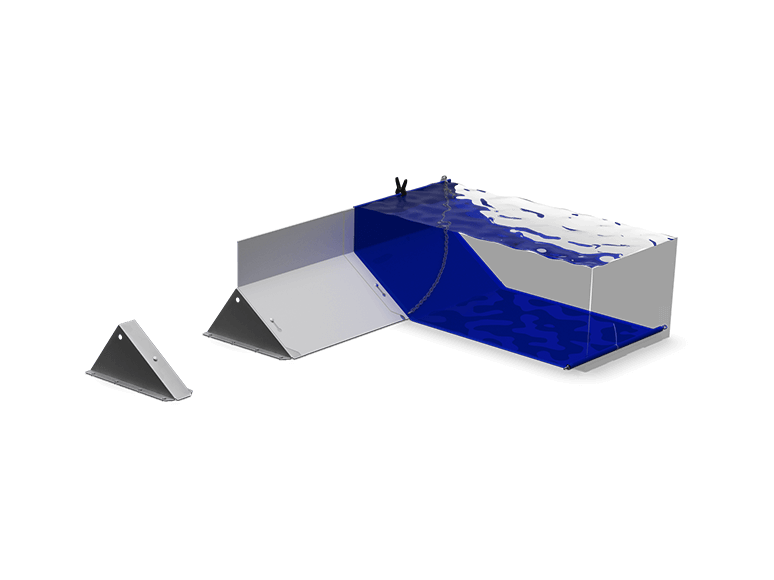
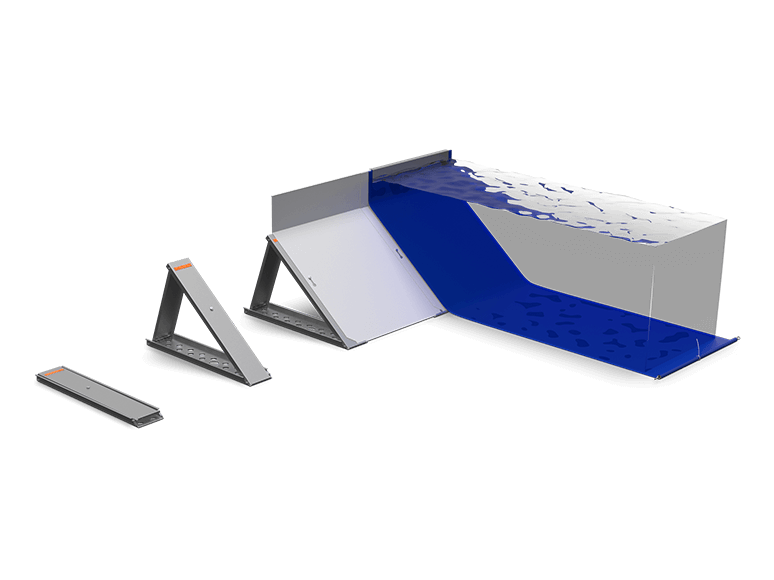
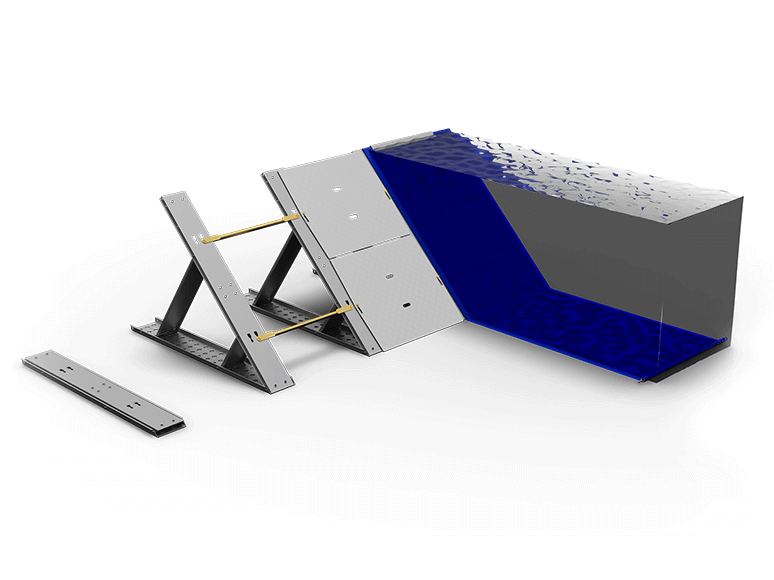
Four steps, no tools
This is the Elemental sequence — the series most homes use. Industrial and Heavy Duty work the same way with an extra step.
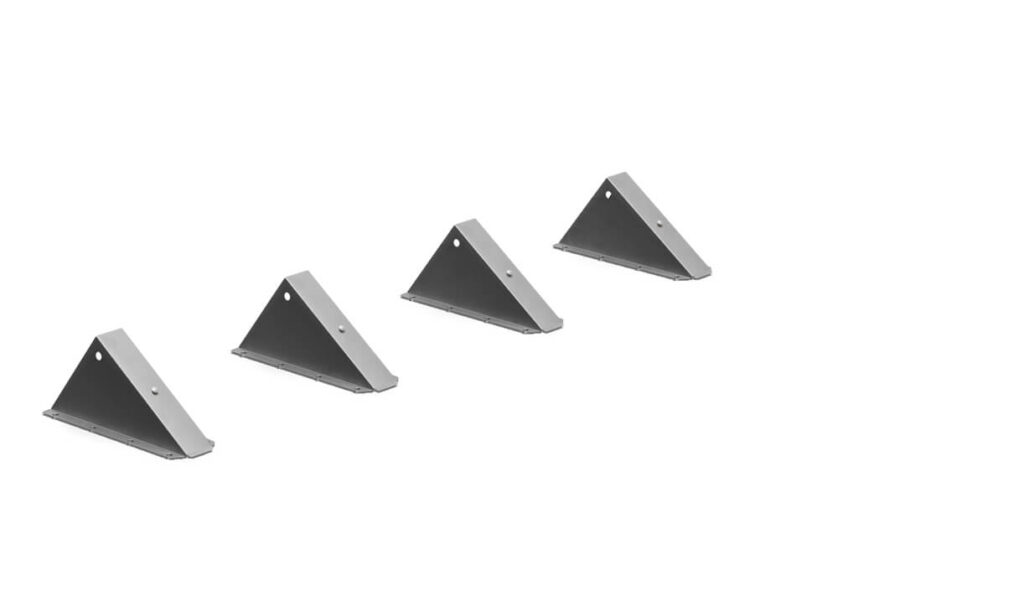
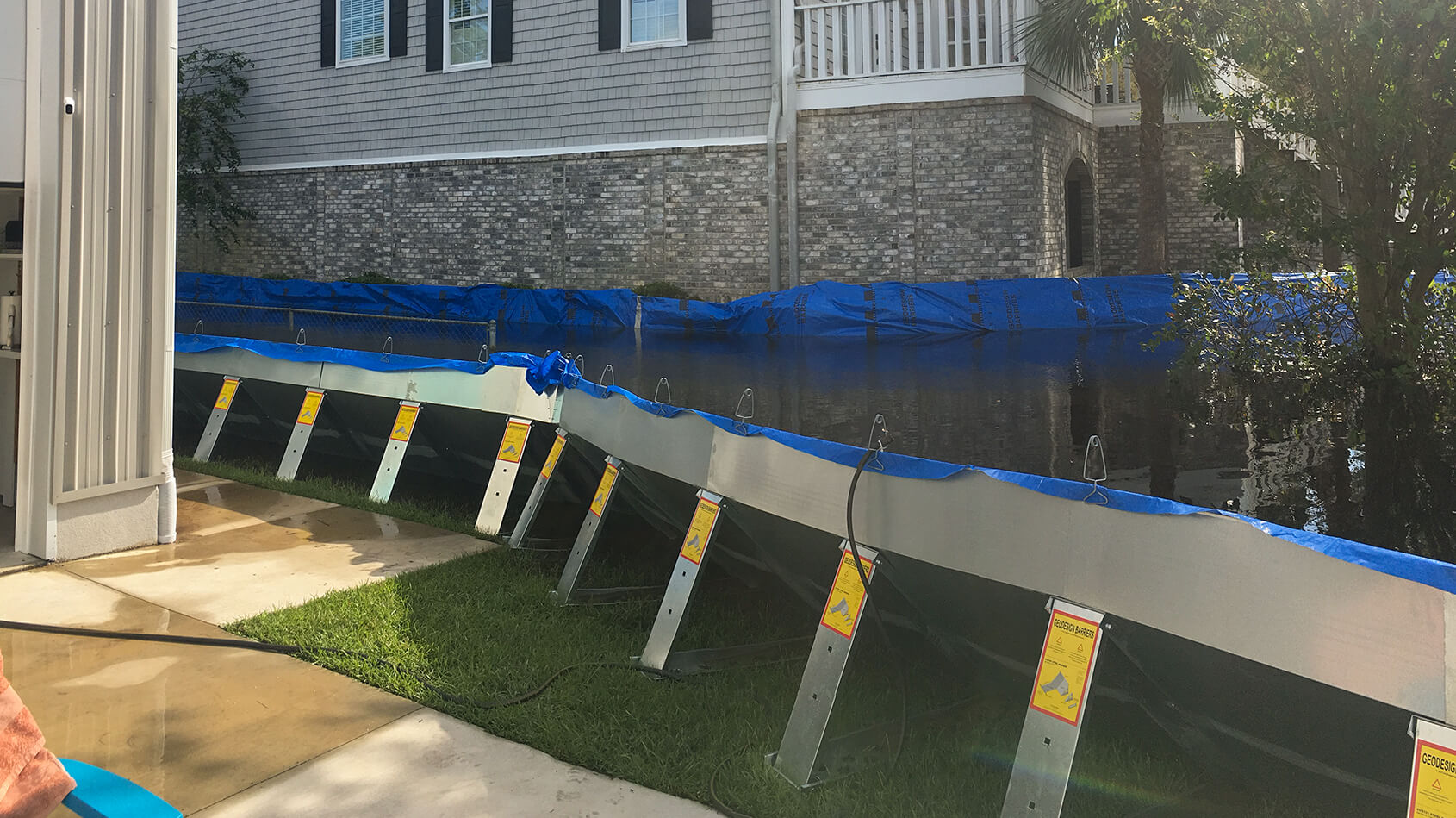
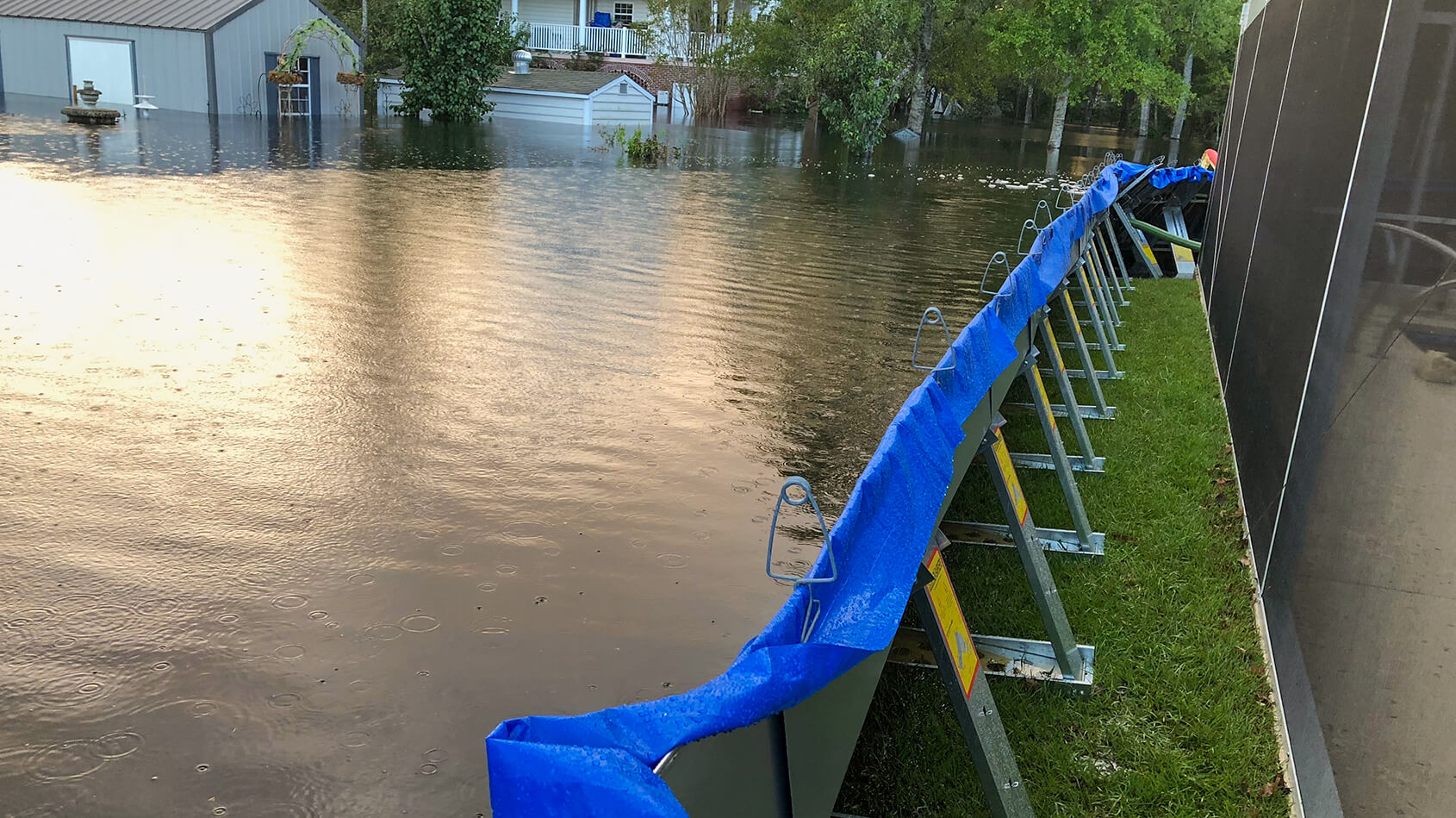
Set the supports out
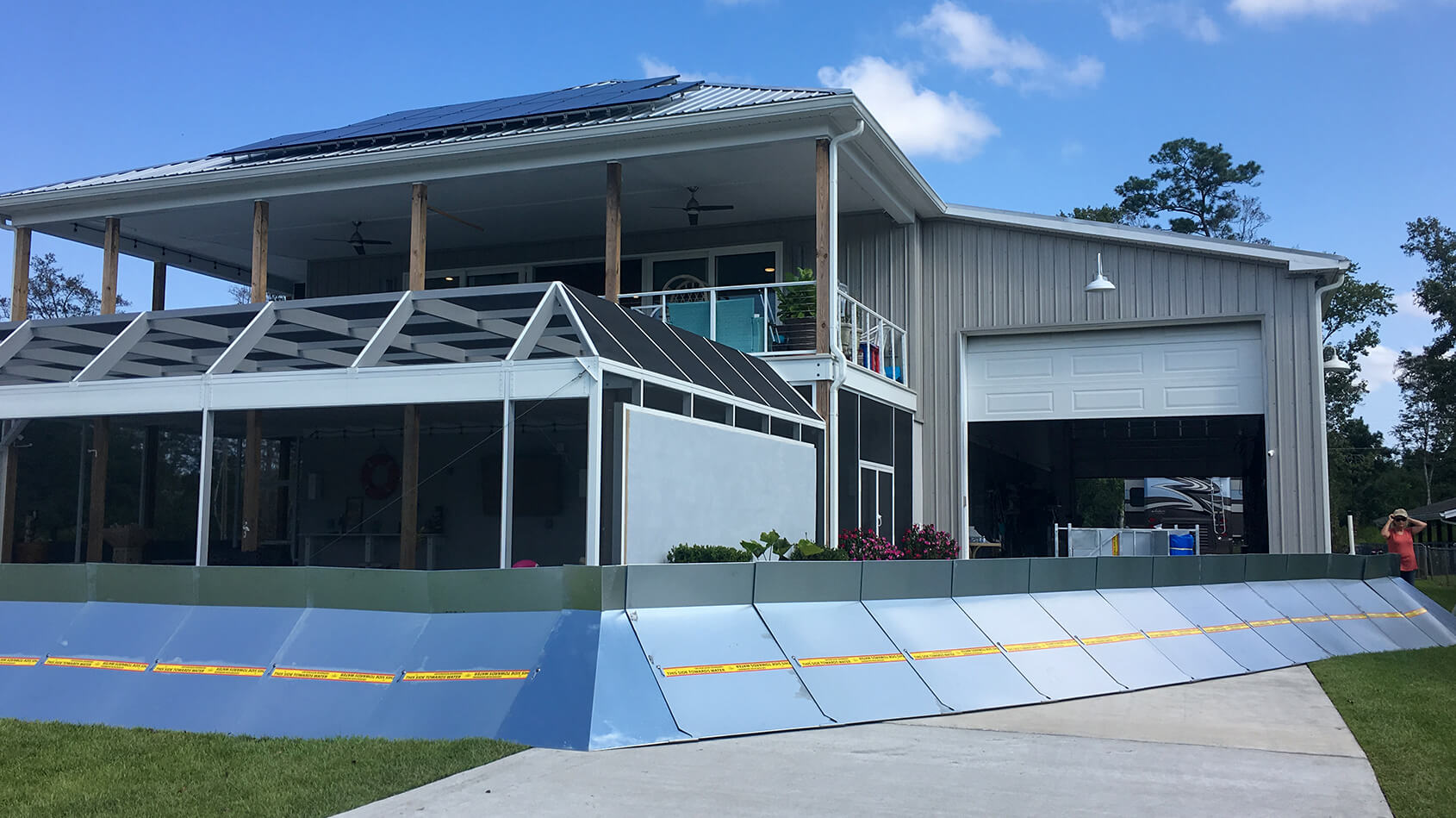
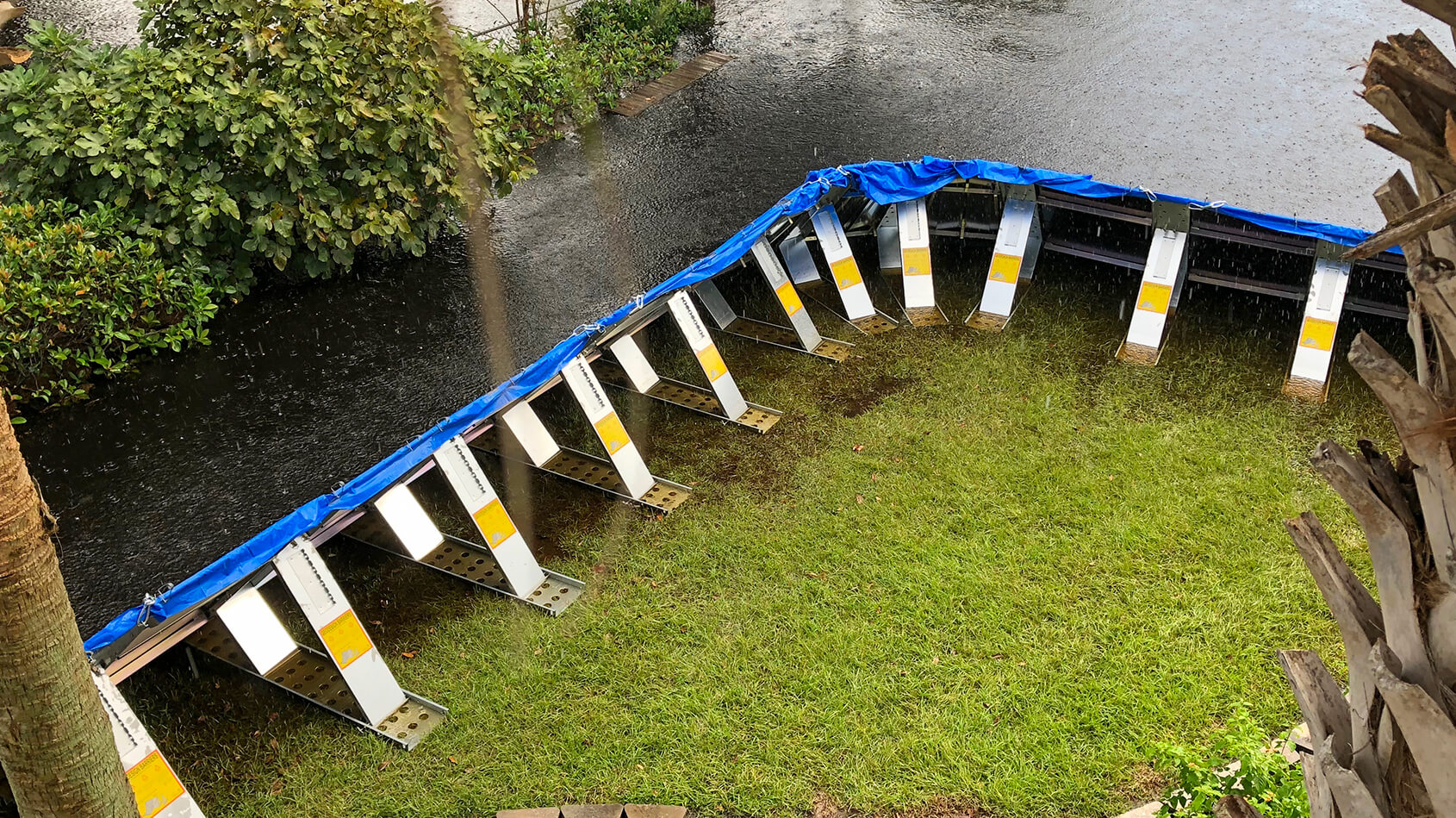
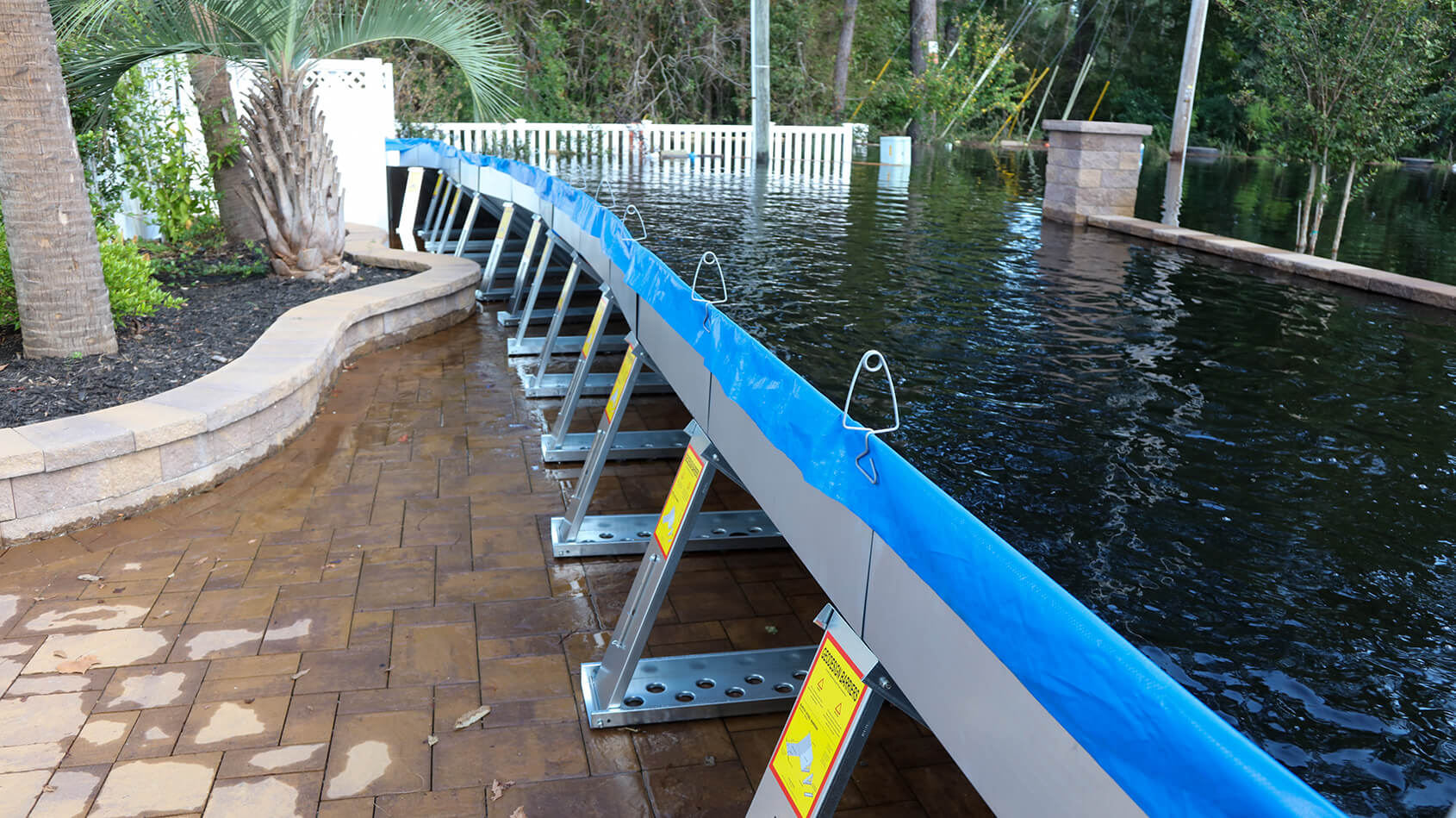
Place the triangular supports along the line you want to protect, a metre apart. Nothing is pegged, drilled or fixed to the ground.
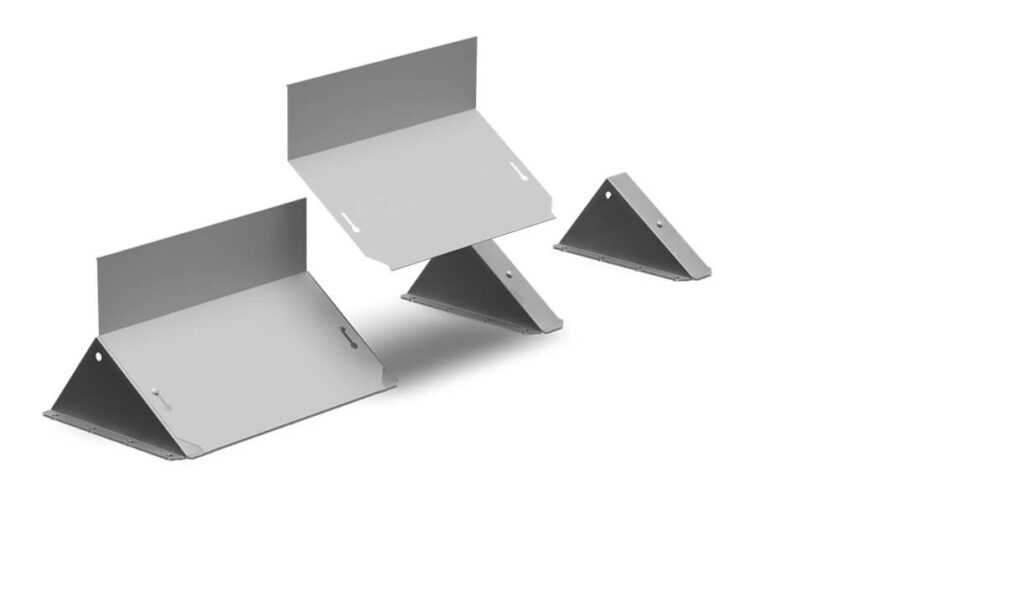
Hang the panels
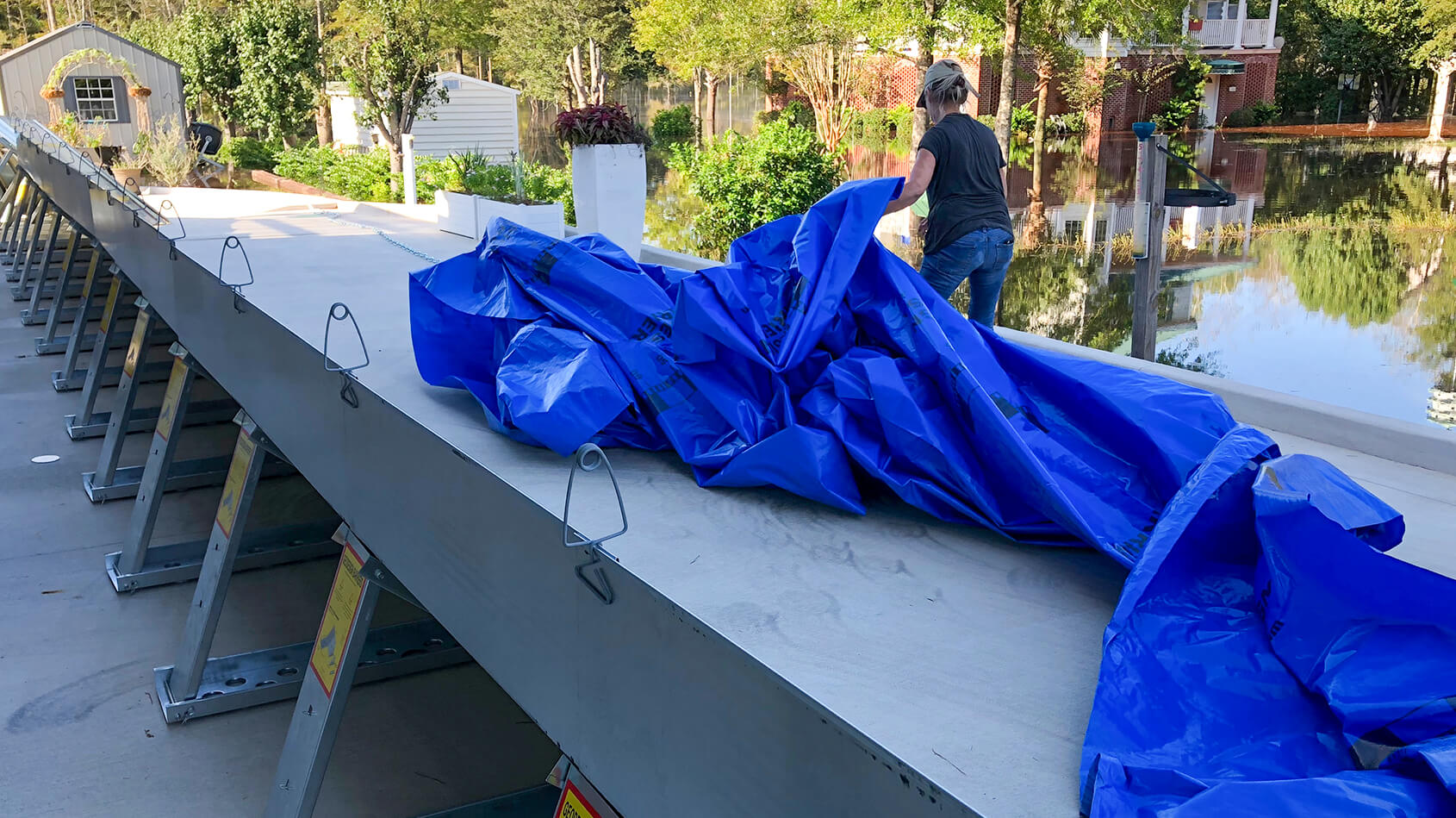
Each steel panel drops onto a knob on the support and locks with a slide. One person can carry and hang a panel.
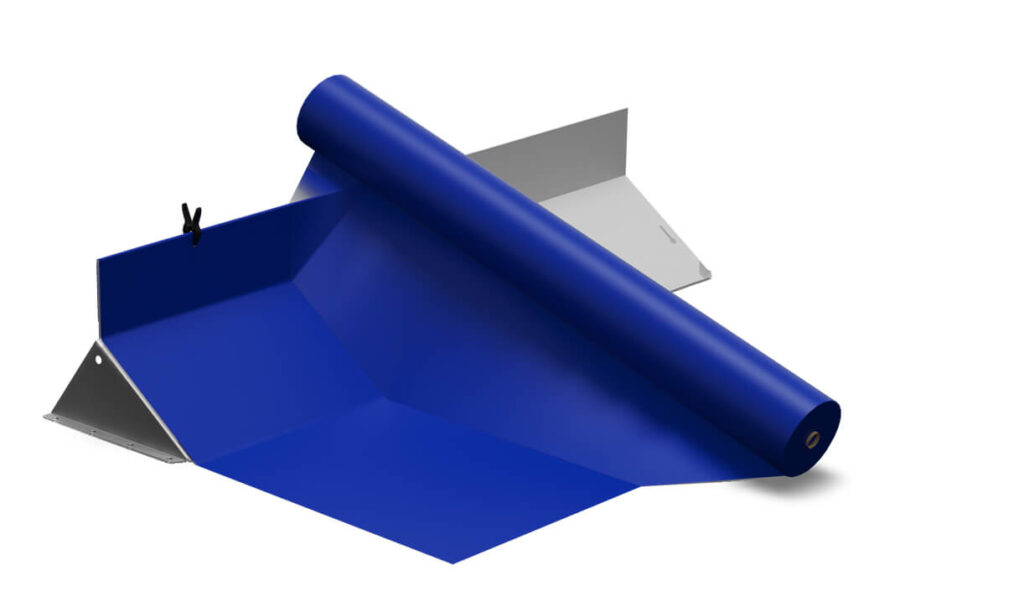
Roll out the membrane
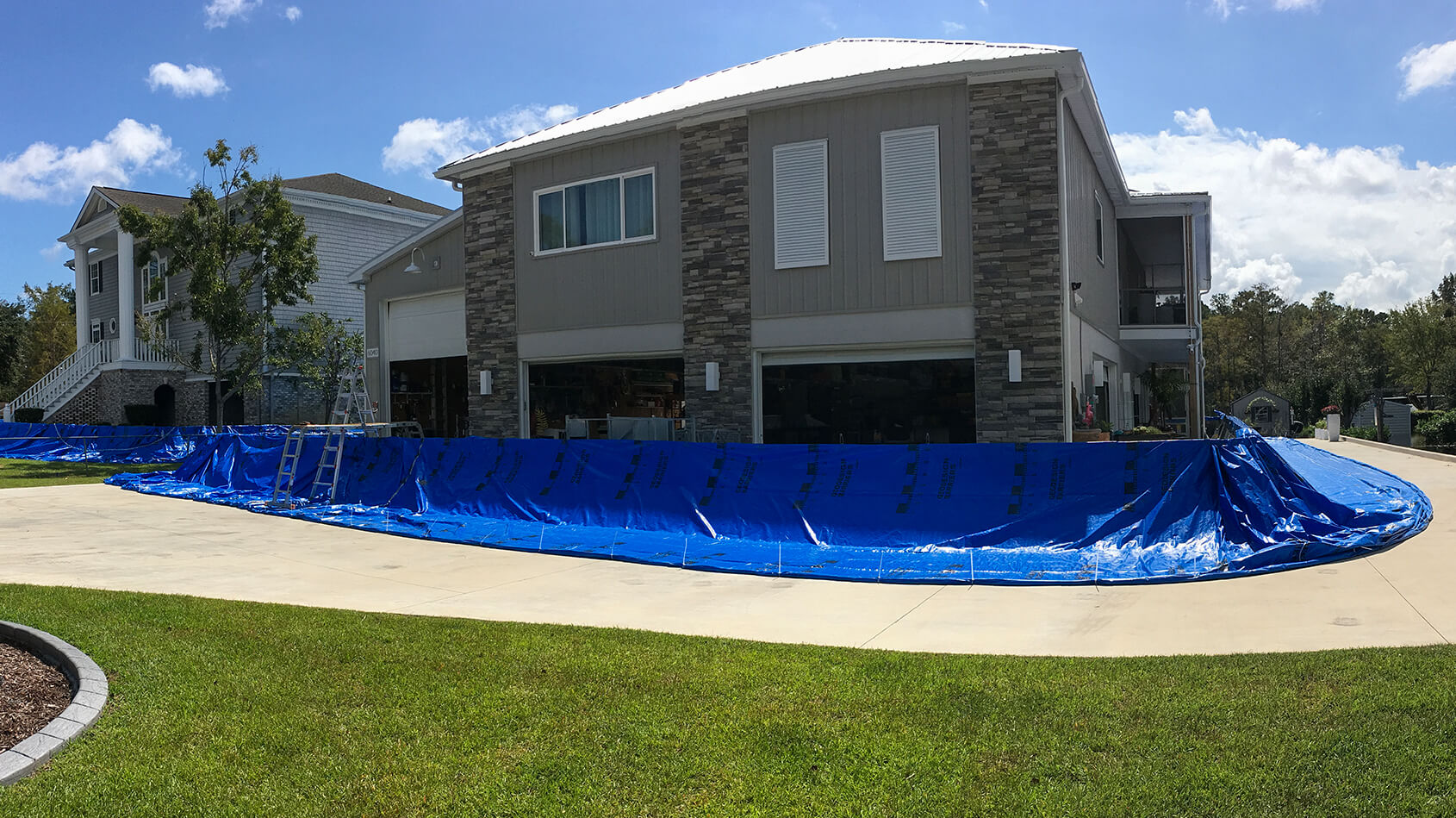
The poly membrane runs along the face of the barrier and is held with spring clamps. Chains weigh it down if it is windy.
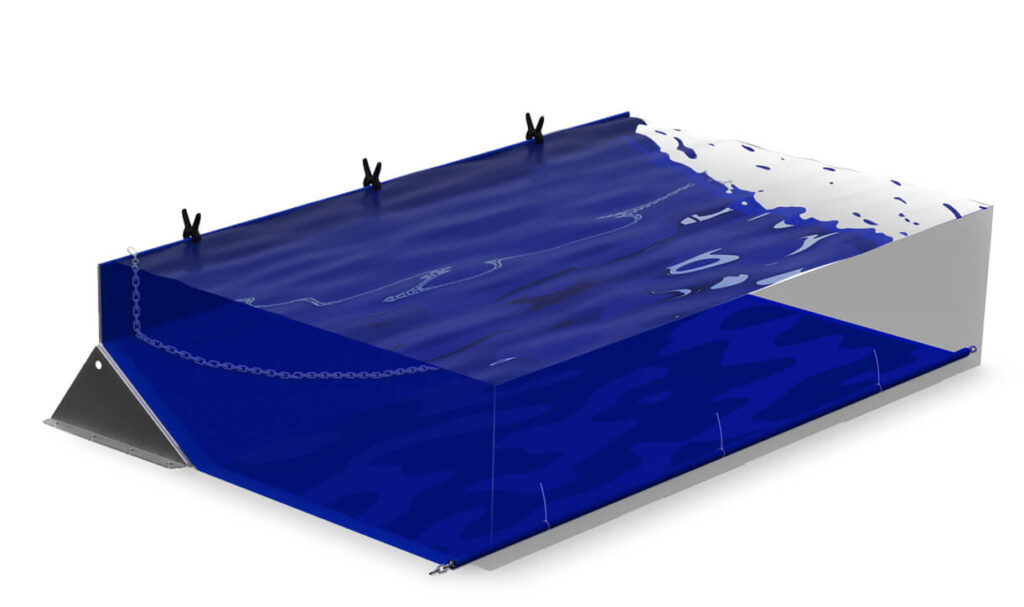
Let the water do the rest
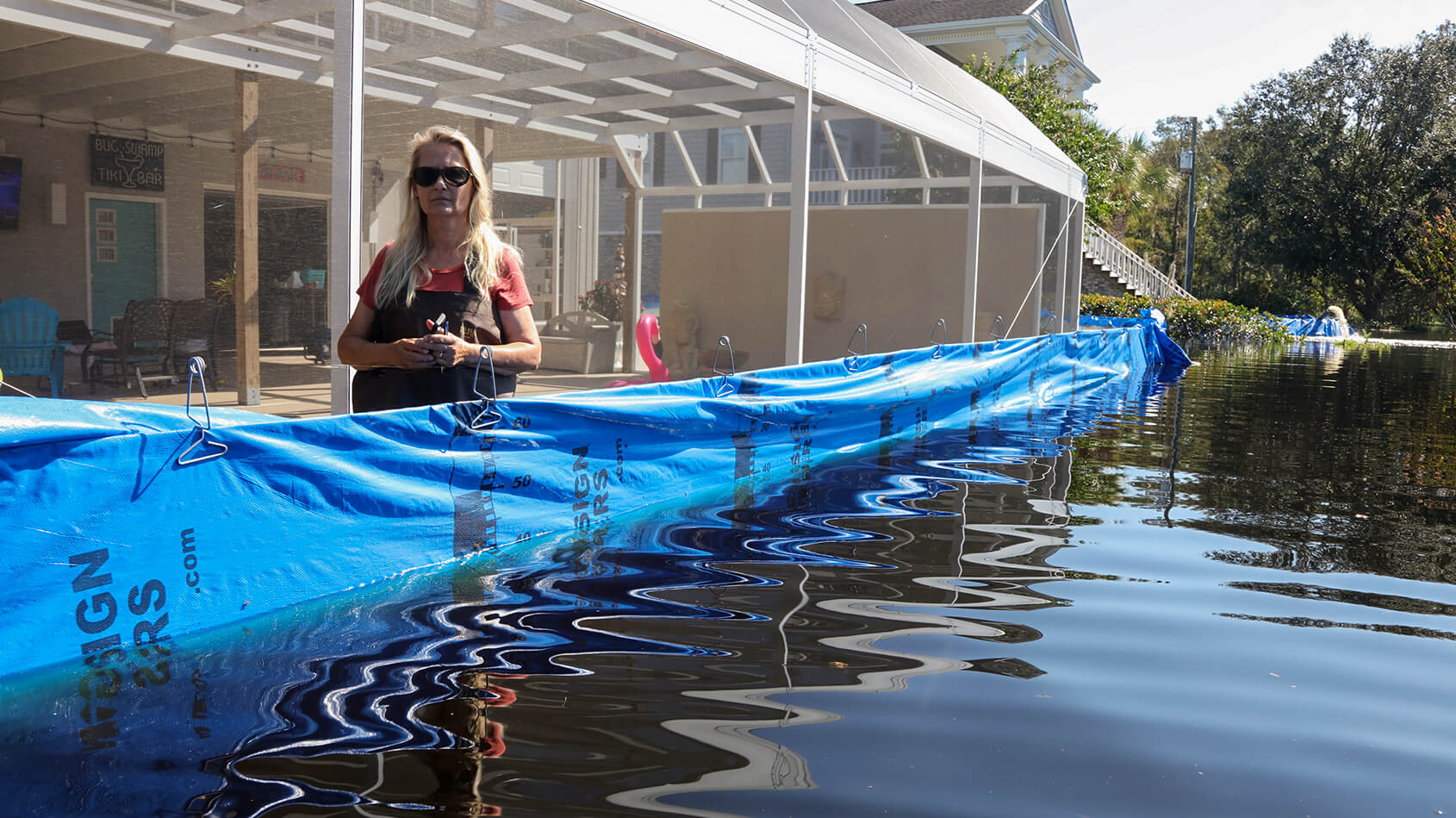
Floodwater running onto the membrane presses the whole line down, and collars under the bottom beam grip the surface. The water that threatens the house is what holds the barrier in place.
Against sandbags
Sandbags are what most Australians reach for, and for a doorway or an awkward gap they are still a reasonable answer. Past that, the arithmetic changes.
A Geodesign barrier
- Two people put up 100 metres in about half an hour.
- Nothing to fill, carry or source on the day.
- Reusable — washed down, dried and stacked back in the crate.
- Stores on 1.3 m² per 50 metres, dry, in a garage.
- Seals against the ground and self-anchors on the water's own weight.
- Nothing goes into the ground: works on driveways, over services, on leased land.
Sandbags
- A metre of wall is roughly 30 bags, filled and placed by hand.
- Sand and bags have to be found while everyone else is looking too.
- Single use — wet, contaminated and bound for landfill afterwards.
- Bulky to store, and the bags degrade in the sun.
- Leaks between bags; slows water rather than stopping it.
- Fine for a doorway or an awkward gap. Not for a perimeter.
Built for Australian conditions
What matters about these barriers on an Australian property specifically.
Protecting homes



Protecting a home — common questions
What can you put around your house to prevent flooding?
For anything longer than a doorway, a demountable barrier is the practical answer: a line of steel supports and panels you put up when a flood is forecast and pack away afterwards. Sandbags still suit very short runs and awkward gaps. Permanent works — raising the house, a built flood wall, backflow valves on the stormwater — are a different kind of decision, usually made with a builder and the council.
What are the different types of flood barriers?
Broadly four. Demountable barriers like ours: steel or aluminium panels put up on the day and stored between events. Water-filled tubes and bladders: quick to lay out, but they need a water source and a flat run. Door and threshold barriers: a fitted panel or seal across a single opening. Permanent flood walls and gates: built structures, engineered and approved. Which one fits depends on how deep the water gets, how long a line you need and whether you can build on the site.
What are permanent flood barriers?
Structures that stay in place — a built flood wall, an embankment, or a fixed gate that closes across an opening. They need engineering, approval and usually a builder, and they change how the property looks all year. We do not make them. Geodesign barriers are demountable: they go up when they are needed and are not there the rest of the time, which is why they suit houses and leased sites.
What is a self-raising flood gate?
A barrier that lifts itself as water arrives, usually floating up out of a channel in the ground. It is clever and it needs no one present, but it has to be built into the ground first, which means excavation, engineering and approval. Ours is the opposite trade-off: nothing is installed, and a person puts it up on the day.
How much barrier does a house need?
Measure the line you actually want to protect, not the perimeter of the block. A front door is one or two metres, a double garage about five, and a full house perimeter usually 30 to 60. Then work out how deep the water has come, or is forecast to. Those two numbers decide the series and the quantity — send them to us and we will tell you.
Can I put it up on my own?
For a doorway or a garage opening, yes. Elemental panels weigh 10 to 14 kilograms and drop onto the supports by hand. For a full perimeter you want two or three people — a 100 metre line takes about 30 minutes with a small crew.
Where to next
The range, the comparison, and the free assessment.
Elemental series
The lightest system, 41 to 61 cm. What most homes use.
Read more →All flood barriers
The full range across three series and every dam height to 2.45 m.
Read more →Compare the systems
Side by side on dam height, set-up time, weight and where each belongs.
Read more →Site assessment
Send us the line and the depth. We will tell you what you need, before you buy anything.
Read more →