
Book a Flood Site Assessment
Before you can budget for flood protection you need to know two numbers: how high the water gets, and how long a line you have to close. A site assessment gives you both, along with a barrier layout that fits the ground you actually have.
- Tell us about the site
- We review levels, ground and access
- You get a layout, a length and a next step
- No cost, no obligation
- FM Approved — ANSI/FM 2510-2020
- 30+ years in the field
- Deployed across Queensland
- Reply within two working days
Request a Site Assessment
The more you can tell us about the site, the more useful the first answer will be. Anything you are unsure of, leave as "not sure" — that is what the assessment is for.
We collect these details only to assess your site and respond to your request. We do not sell your information. See our Privacy Policy for how we handle personal information, including how to access or correct it.
Office Contact Information
Australia
Every state and territory
Response time
Two working days
Cost
No charge, and no obligation to buy
What the assessment covers
This is an engineering conversation, not a sales call. The point is to work out whether a demountable barrier is the right answer for your site — and if it is, what shape it takes.
- The line you need to close. Where the water comes in, where it goes around, and how many metres of barrier that actually means once the low points are accounted for.
- Protection height against your flood levels. Working from your flood study, council mapping or past event marks, and which barrier series that puts you in.
- The ground it stands on. Sealed surfaces, gravel, grass, kerbs, service pits, slopes and corners all change the layout and the anchoring approach.
- Seepage and what sits behind the line. A barrier holds the river back; it does not stop water arriving from underneath. We look at that honestly — see our guides on managing seepage and sand boil control.
- Who deploys it, and how long they have. Crew size, deployment time and the warning time you can realistically count on — the subject of our guide to flood monitoring and lead time.
- Storage and handling. Where the system lives for the 360 days a year it is not deployed, and how it gets to the line when it is needed.
What you get back
A written summary with a recommended barrier series and protection height, an indicative barrier length in metres, the deployment approach for your crew, and the things we could not settle from a desk review.
If the honest answer is that a demountable barrier is not right for your site — where a permanent structure makes more sense, for instance — we will say so. We would rather lose a sale than be the reason a plan fails on the night.
If you are still working out how exposed the site is, start with our guide to flood risk assessment and site vulnerability, then come back.
Common questions
Does someone come to the site?
Most assessments start as a desk review — drawings, levels, aerial imagery and photographs get us a long way, and it is faster for you. Where a site is complex or large, we will discuss an on-site visit and who from your side needs to be there.
What does it cost?
The assessment is free and carries no obligation. We do it because a barrier specified against the wrong height or the wrong length helps nobody, least of all us.
What do I need to have ready?
Nothing mandatory. Useful, in rough order: a site plan or aerial view with the line marked, known flood levels from a flood study or council mapping, photographs of the ground along the line, and any past event photos. If you have none of it, send the form anyway and we will work out what is needed.
Is this the same as a flood risk assessment?
No. A flood risk assessment establishes how exposed a site is and how deep the water gets — that is engineering work you or a consultant does, and our guide to it explains how. A site assessment starts where that finishes: given those levels, what barrier goes where.
How long does it take?
Clay responds within two working days, usually with questions. How quickly you get a layout after that depends mostly on how quickly the site information comes back.
We are mid-procurement. Can you work to a tender timeline?
Yes. Tell us the closing date in the form and we will work to it. Our contact page sets out how procurement through the National Emergency Management Stockpile panel works.
Not ready for an assessment yet?
Start where it makes sense for your site.
Understand the risk
Work out how exposed the site is and how deep the water gets before you specify anything.
Read the guide →Compare barrier types
See how demountable steel barriers stack up against sandbags, water-filled and permanent options.
Compare systems →See the systems
Heights, deployment rates and what each series is built for.
View flood barriers →Just have a question
Technical, commercial or procurement — send it to the right person directly.
Contact us →Already protecting Australian sites
Councils and water utilities have put these barriers in the ground during real Queensland flood events — not just tested them in a laboratory.
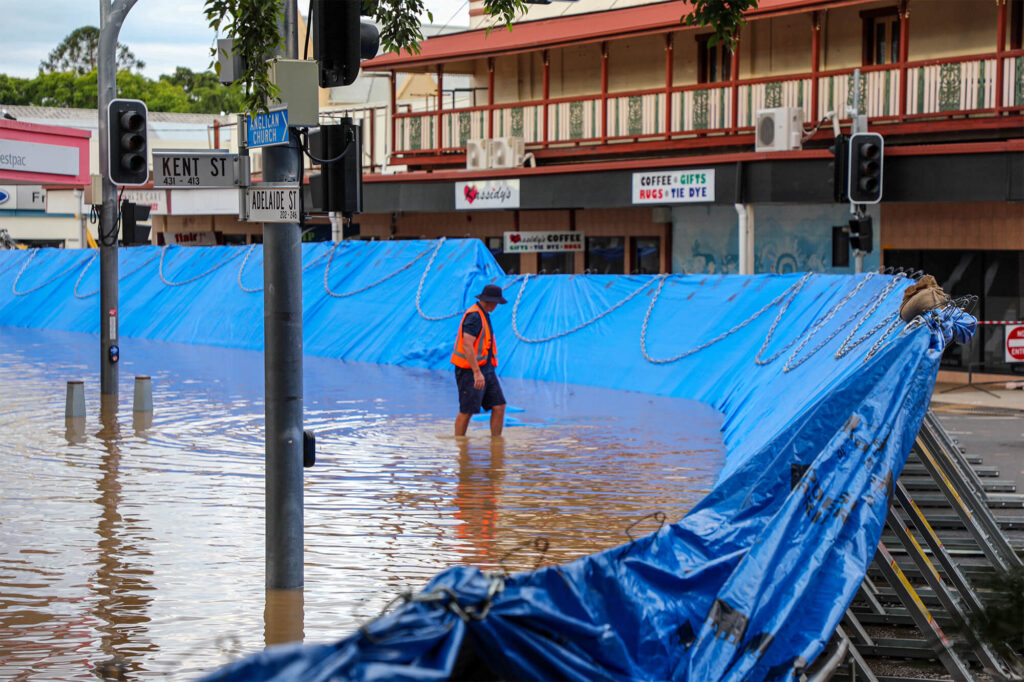
Maryborough
A barrier line held back the Mary River to keep the CBD trading.
Read the story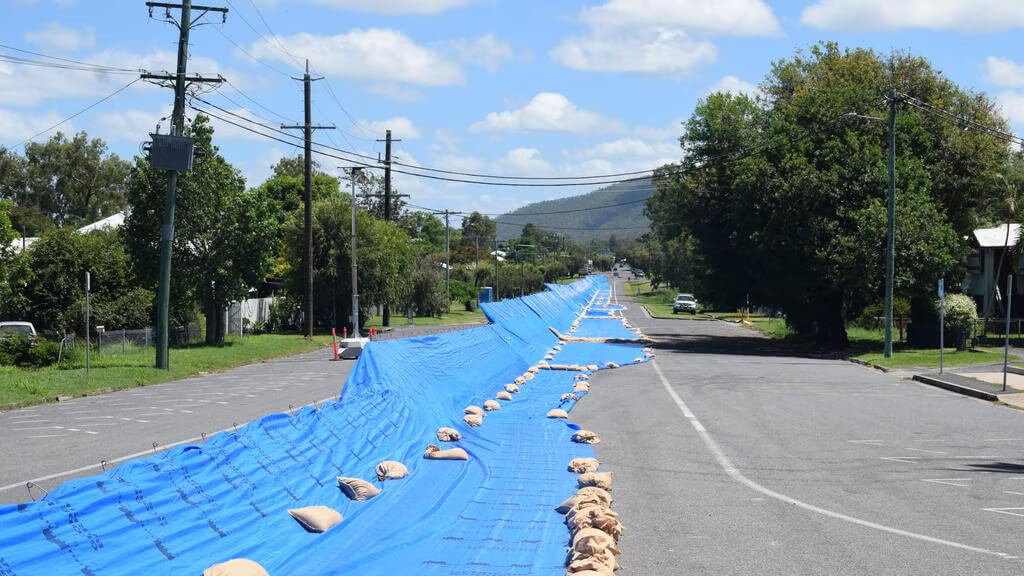
Rockhampton
Rockhampton Regional Council deployed a temporary barrier line along Water Street ahead of the peak.
Read the story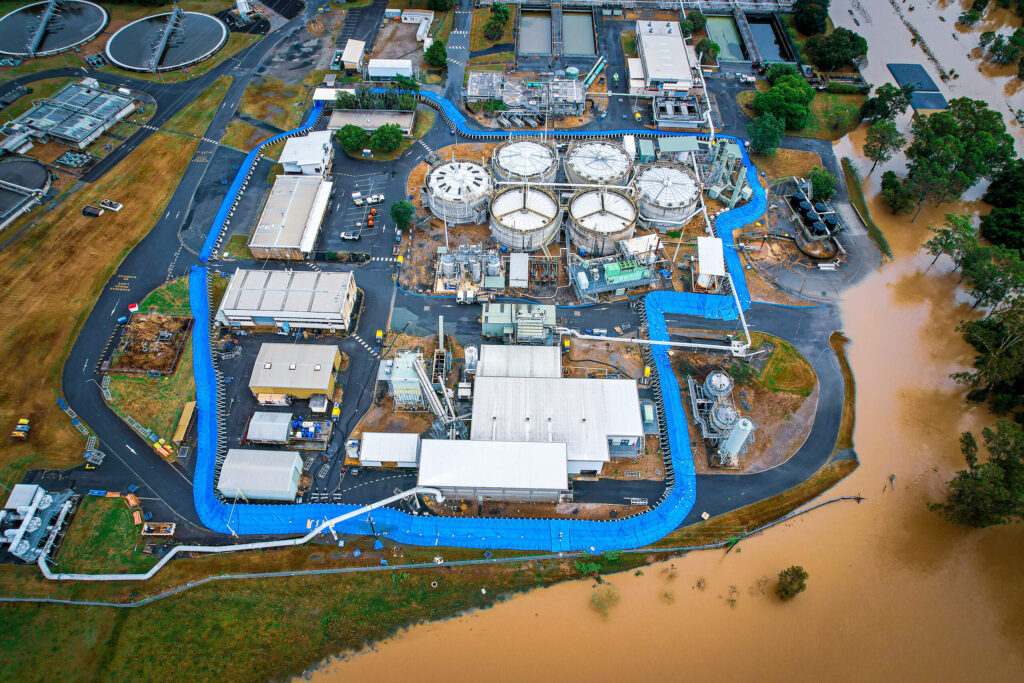
Oxley Creek, Brisbane
Urban Utilities kept its treatment plant running through Cyclone Alfred.
Read the story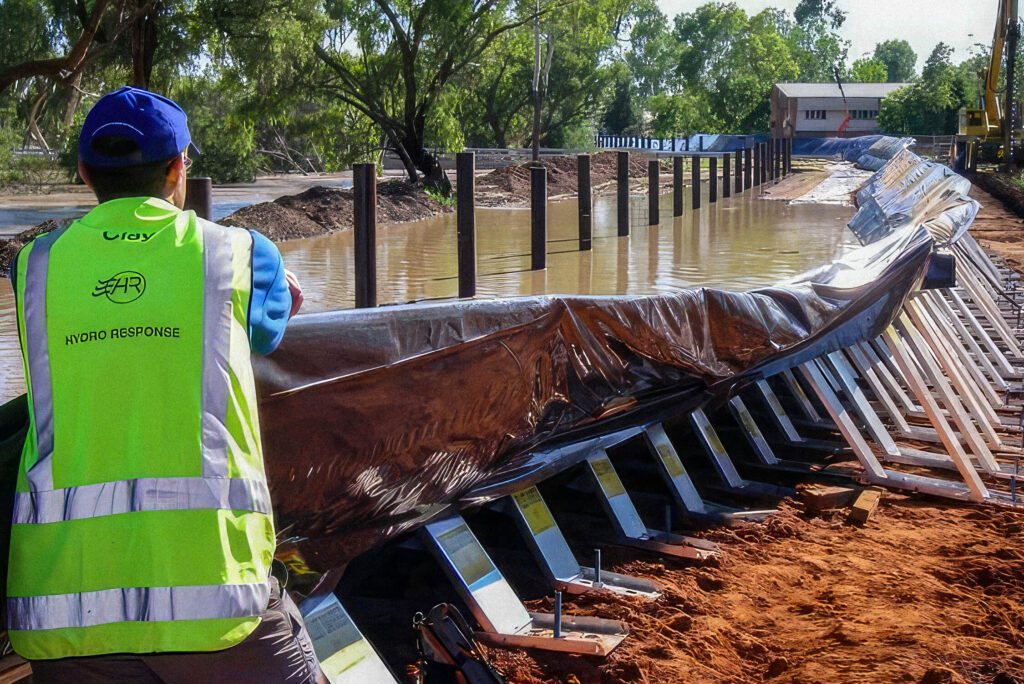
Charleville
A town levee built from demountable barrier sections, deployed before the peak.
Read the story