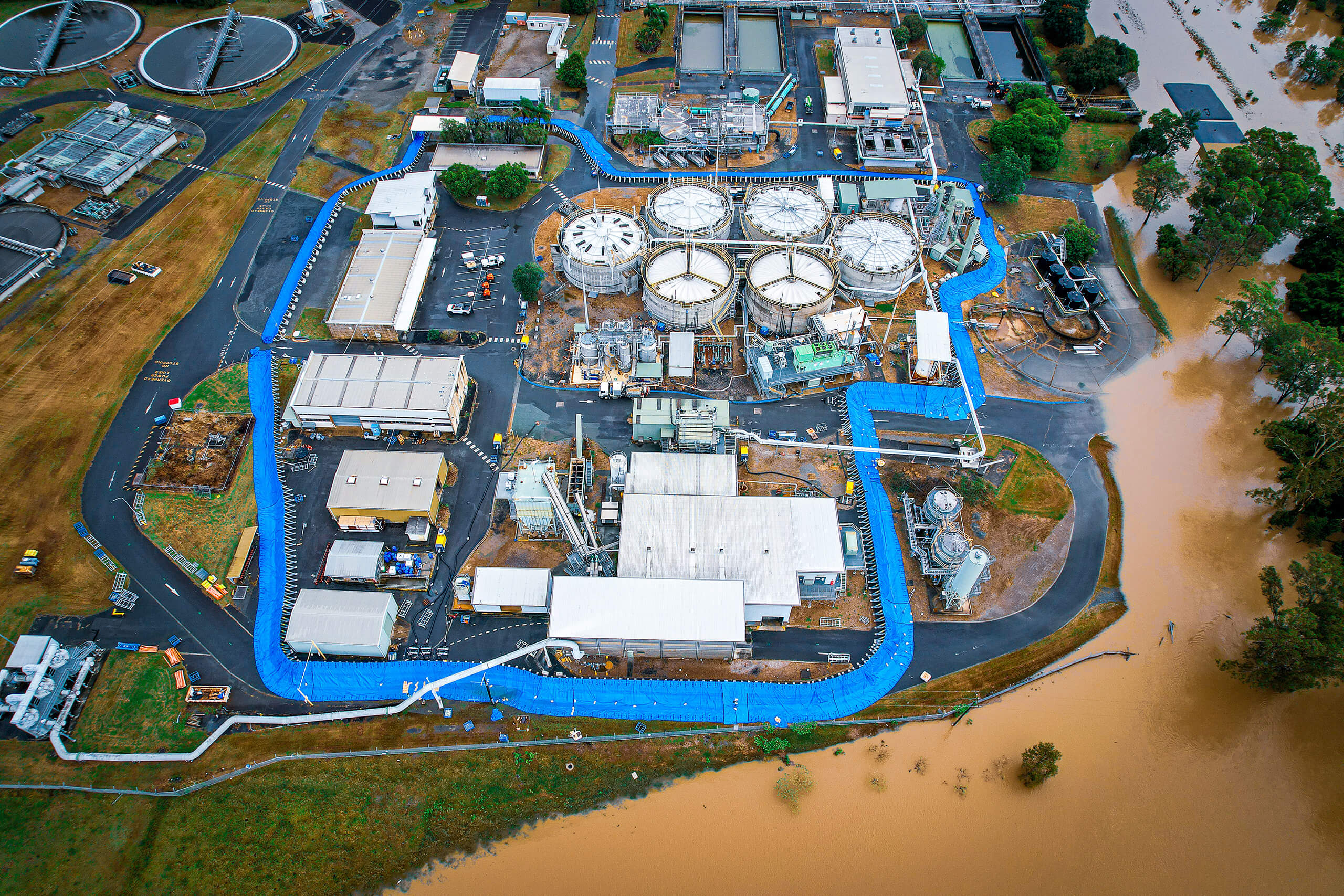
A critical infrastructure success story from Brisbane, Australia
Brisbane’s 2022 floods were among the most destructive natural disasters in Australia’s recent history, inundating large parts of South East Queensland and exposing vulnerabilities across essential infrastructure. One of the hardest-hit assets was Urban Utilities’ Oxley Creek Wastewater Treatment Plant, a facility vital to wastewater services for Australia’s third-largest city.
When the plant was submerged under metres of floodwater, the damage triggered months of recovery work and raised serious concerns about future insurability and operational resilience. For Urban Utilities, protecting Oxley Creek from repeat flood events became an urgent priority—one that would soon be tested under real-world conditions during ex-Tropical Cyclone Alfred.
Brisbane, Flood Risk, and a Changing Climate
Located along the lower reaches of Oxley Creek, approximately 12 kilometres south-west of Brisbane’s central business district, the treatment plant sits within a natural floodplain. Brisbane’s subtropical climate, combined with increasingly intense rainfall events, makes flood resilience a defining challenge for the region’s infrastructure operators.
Following the 2022 floods, Urban Utilities recognised that traditional flood mitigation approaches—such as permanent levees or elevating major assets—were either impractical, prohibitively expensive, or too slow to implement. What was needed was a deployable flood protection system that could be installed quickly when severe weather threatened, without disrupting daily operations.
Choosing a Deployable Flood Protection Solution
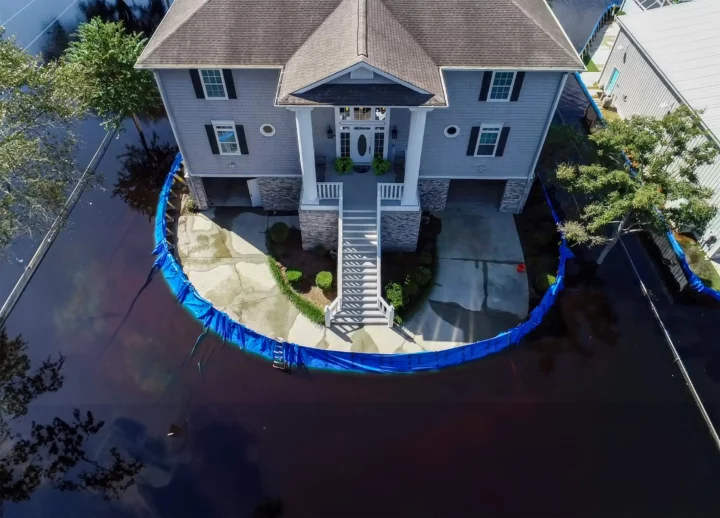
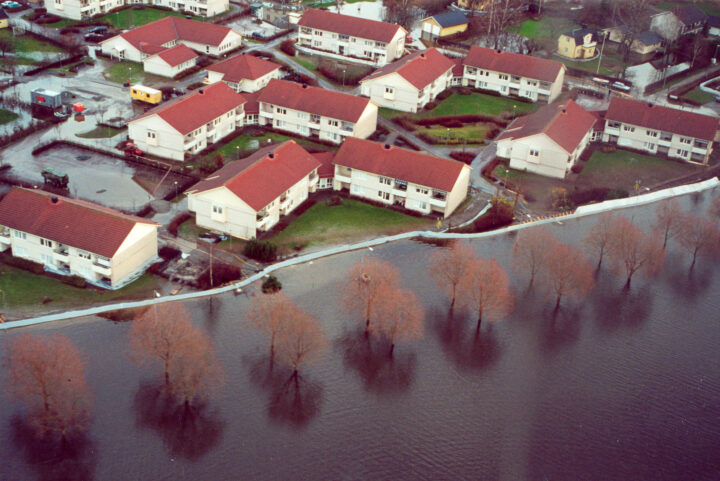
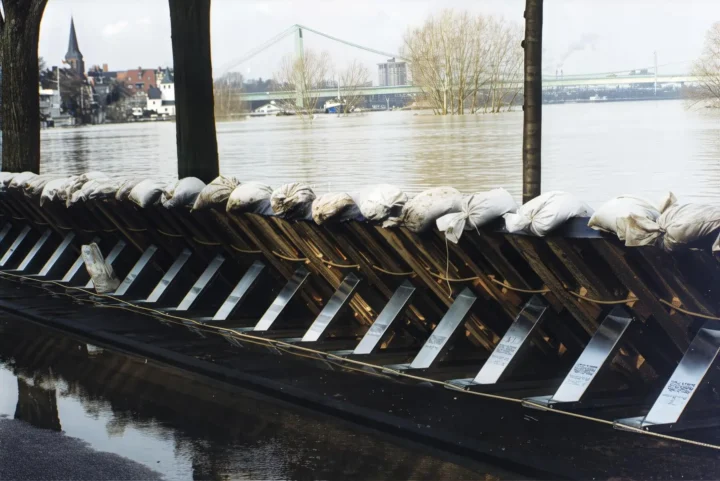
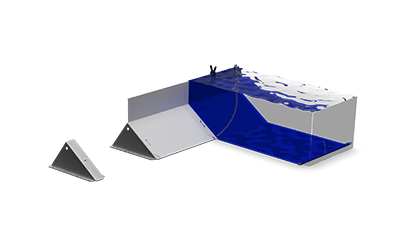
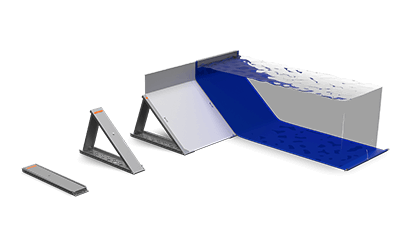
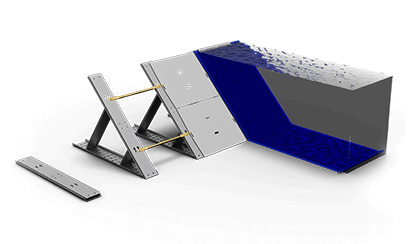
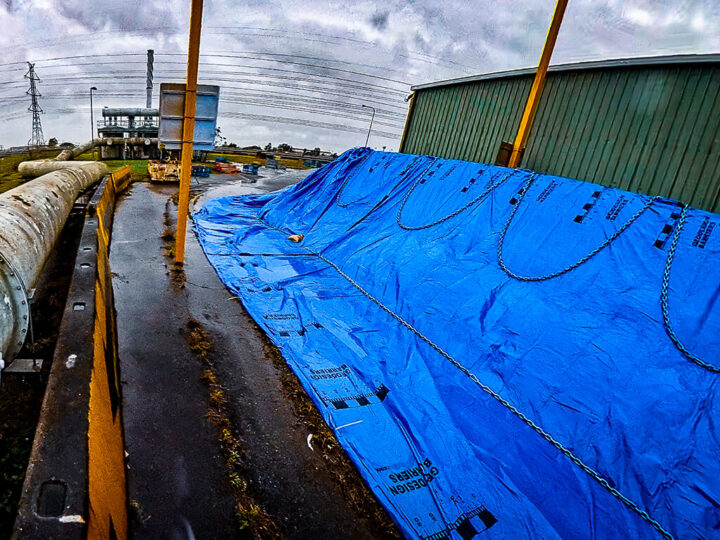
Urban Utilities selected the Geodesign Heavy Duty Flood Barrier, a Swedish-engineered, high-strength modular system designed for temporary flood defence. Unlike sandbags or ad-hoc barriers, Geodesign flood barriers are purpose-built for critical infrastructure and are widely used as temporary flood barriers and deployable flood barriers across industrial and municipal settings.
Crucially, the system installed at Oxley Creek is FM Approved and certified to ANSI/FM 2510, a globally recognised standard for flood mitigation products used to protect high-value assets.
To deliver the project, Pipe Management Australia (PMA)—Geodesign Barriers’ Australian Partner—worked in close collaboration with Hydro Response, providing an end-to-end solution that extended well beyond supply alone.
Largest Flood Barrier Deployment in the Southern Hemisphere
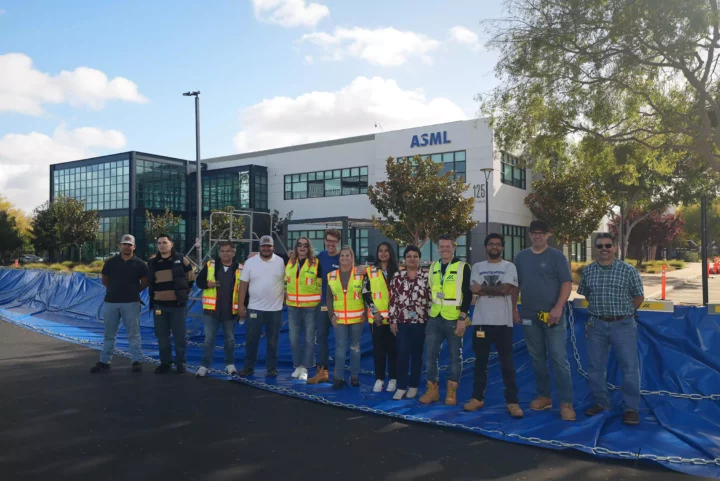
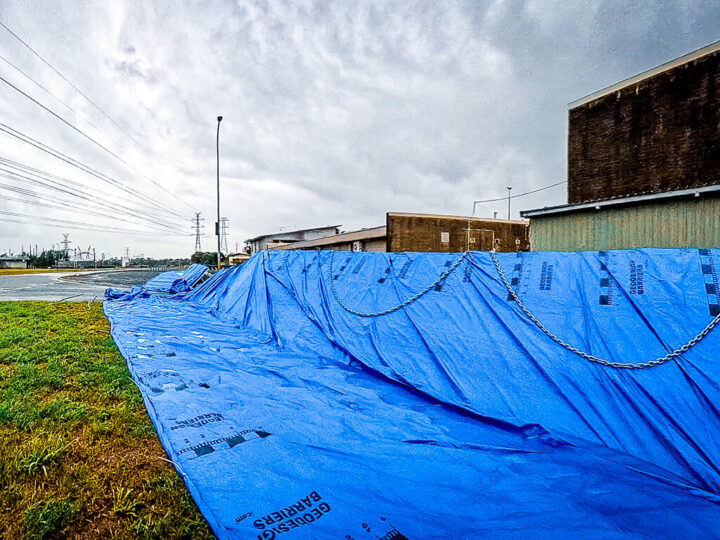
At 600 metres in length, the Oxley Creek installation became the largest Geodesign Flood Barrier deployment in the Southern Hemisphere. While longer systems had been installed overseas, this project stands out as the most technically complex deployment globally.
The barrier design incorporated:
- Varying barrier heights to match uneven terrain and creek-side contours
- Custom service penetrations, allowing essential pipes and utilities to pass through without compromising flood integrity
- A fully demountable configuration, enabling the barrier to be stored on-site and redeployed within days
This flexibility made the system ideally suited as a temporary flood protection barrier for a live wastewater treatment facility.
Precision Deployment Ahead of Ex-Tropical Cyclone Alfred
In March 2025, ex-Tropical Cyclone Alfred tracked south through the Coral Sea, bringing intense rainfall, flash flooding, and heightened flood risk across South East Queensland. Unlike many international flood barrier deployments—often installed after hurricanes pass—this system had to be erected before the weather event arrived.
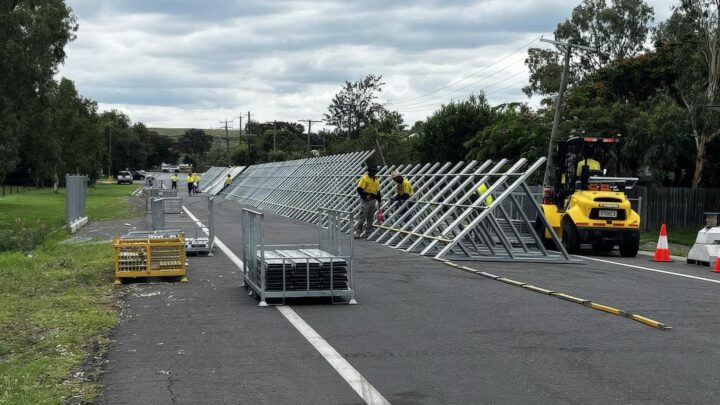
Under significant time pressure, PMA and Hydro Response mobilised rapidly. The deployment included:
- Assembly of hundreds of metres of interlocking aluminium panels and steel support frames over just a few days
- Installation of 14 drainage plugs (225–750 DN) beneath the plant to prevent floodwater ingress via underground infrastructure
- Preparation of pumps to manage any residual water behind the barrier
- Overnight installation of the final waterproof membrane on 9 March 2025, sealing the system ahead of the predicted flood peak at 6:00 am on 10 March
This readiness was not accidental. PMA had previously conducted full-scale training and practice deployments, including a major exercise in 2023, ensuring crews could execute the installation efficiently under emergency conditions.
Flood Protection Success: Oxley Creek Stays Operational
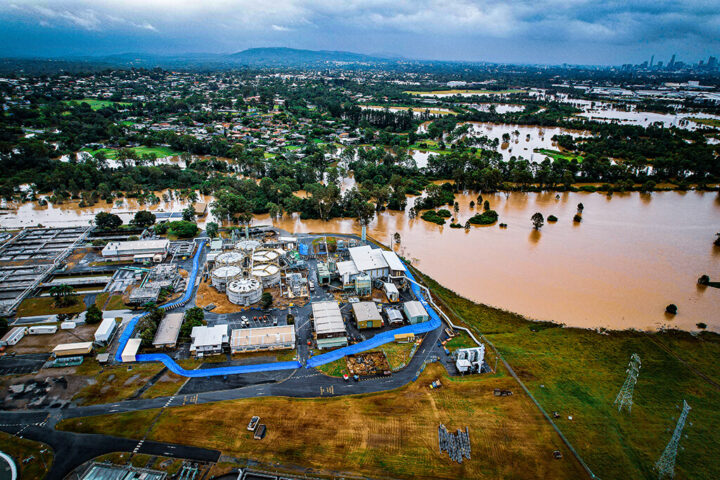
When ex-Tropical Cyclone Alfred peaked, floodwaters in Oxley Creek rose to within 600 millimetres of the barrier’s base. The system was never overtopped.
As a result, the Oxley Creek Wastewater Treatment Plant remained dry, fully operational, and undamaged, avoiding a repeat of the devastation experienced in 2022. The successful deployment demonstrated not only the speed at which the barrier could be installed, but also its ability to protect against millions of dollars in potential damage while maintaining uninterrupted wastewater services for Brisbane.
A New Benchmark for Flood Defence in Australia
The project has set a clear benchmark for flood protection and flood defence systems across Australia and beyond:
- Largest Geodesign Flood Barrier deployment in the Southern Hemisphere
- Most complex installation globally, tailored to challenging terrain and live infrastructure
- Proven performance under real flood conditions, validating training, design, and execution
Throughout the event, PMA teams remained on-site to monitor performance and manage post-flood pack-down, ensuring the system was correctly dismantled and stored for future use.
Proactive Planning for Critical Infrastructure
By investing in a smart, flexible flood protection solution, Urban Utilities has secured the long-term resilience of the Oxley Creek Treatment Plant. The Geodesign Flood Barrier—delivered and supported locally by Pipe Management Australia, in partnership with Hydro Response—proved its effectiveness when it mattered most.
As climate-driven weather extremes continue to test cities worldwide, this project illustrates how deployable flood barriers, combined with rigorous planning and trained response teams, can protect critical infrastructure and safeguard essential public services for years to come.