A Late-Night Call as Florence Moved In
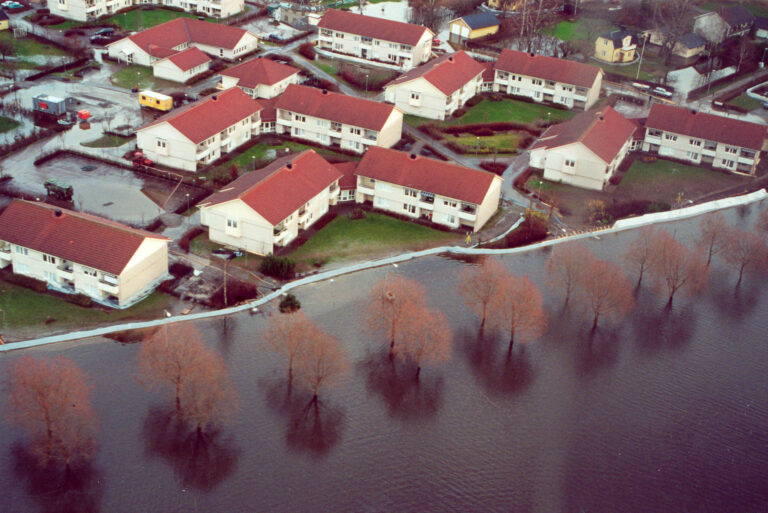
When Hurricane Florence stalled over the Carolinas in September 2018, it turned a hurricane into a week of rain, and some communities recorded as much as 35 inches of it.
The water pushed rivers like the Waccamaw in South Carolina far beyond their banks and flooded whole neighborhoods near Myrtle Beach. Thousands of homes ended up surrounded by floodwater.
Three homeowners decided not to wait and see how high it would get. They called Geodesign Barriers late at night, and trucks left Hobe Sound, Florida, the same night for the 650-mile drive to South Carolina, loaded with 11 tons of barrier components: aluminum panels and the steel supports that hold them.
Three Homes Ringed in a Single Morning
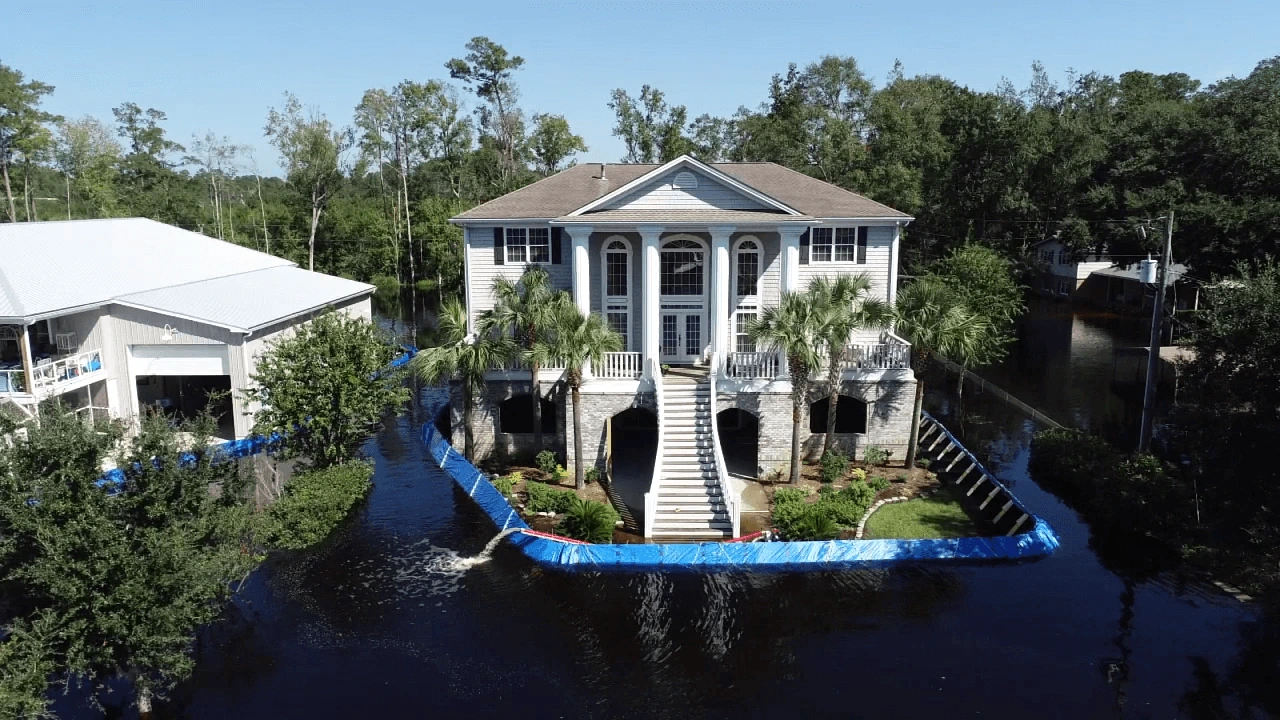
By the middle of Saturday, before the water reached the properties, a two-person Geodesign crew had closed a barrier line around all three houses. One home was protected with a P40 Industrial flood barrier (40 inches high, P101 in metric naming), another with 300 feet of C48 Heavy Duty barrier (48 inches high, C122), and the third with a combination of the two.
Each house took less than two hours, and the full line was standing in under six hours. That pace is what makes a deployable system work for a home: the decision to protect can be made late, as long as the crew and the equipment can reach the site in time. Our guide to warning time and deployment triggers covers how to judge that window before a storm arrives.
How the Barriers Held the Water Back
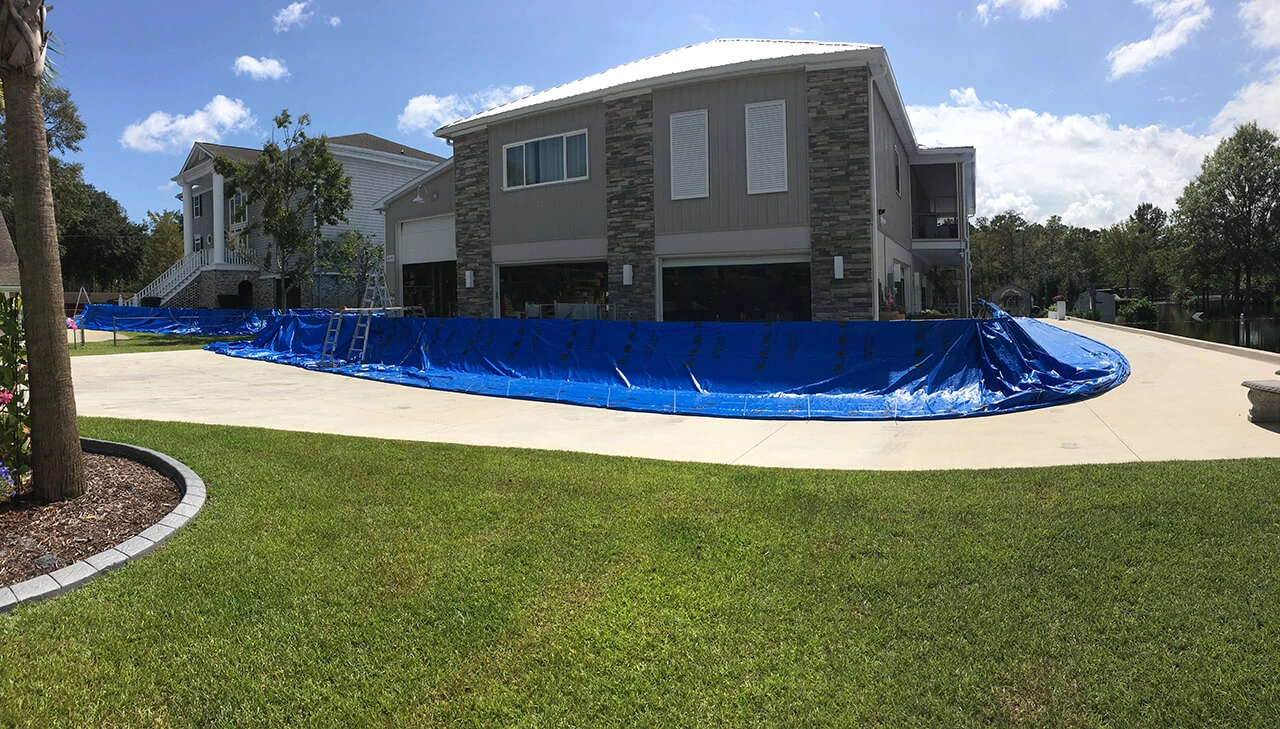
The barriers rest on A-frame supports that the flood itself holds down: the deeper the water, the harder it presses the frame into the ground. The crew set the supports, secured them with chains, and draped a watertight liner over the line to seal it.
Sandbags would have taken far longer and far more people to reach the same height around a whole property. Our comparison of sandbags and temporary barriers explains where the difference comes from.
Ten Days Behind the Barrier Line
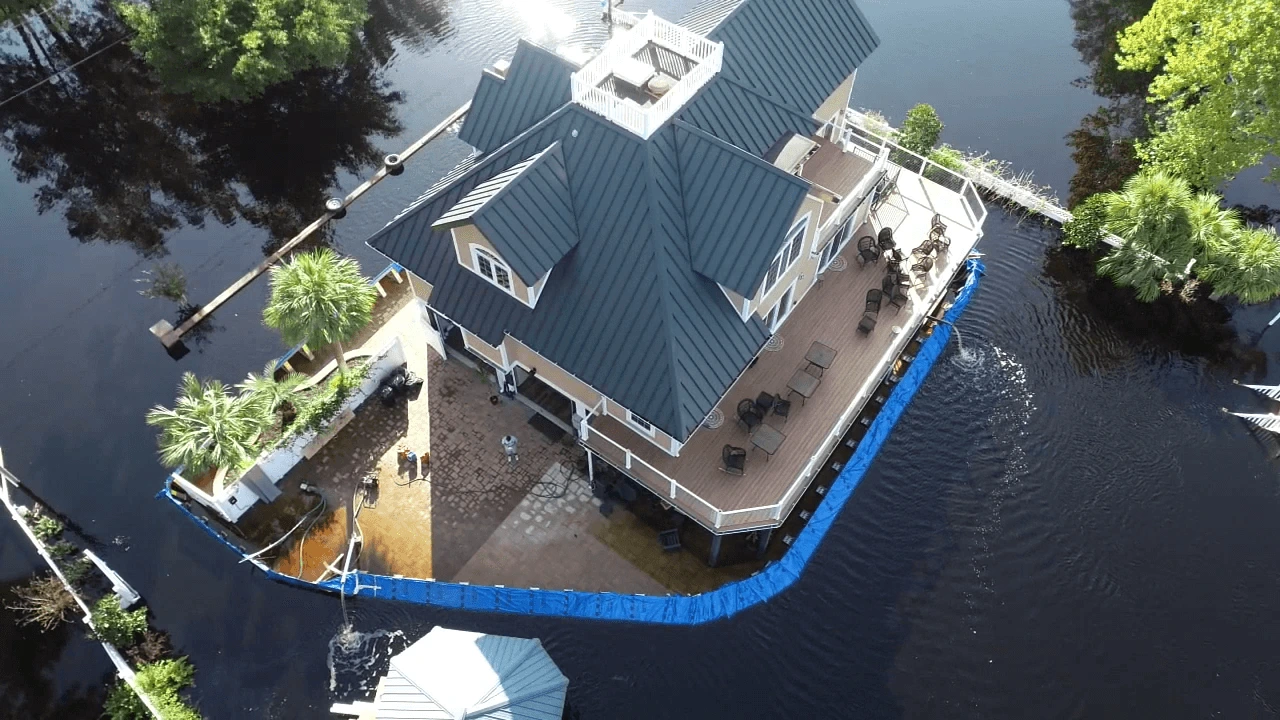
When the Waccamaw crested and pushed back toward the Atlantic, the water pressed directly against the barrier lines. For ten days, while neighboring houses filled with floodwater, the three protected homes stayed dry. The residents adapted to being cut off, using a ladder and a small boat to get over the barrier and back.
Florence caused catastrophic damage across the Carolinas, with losses in the billions and thousands of people displaced. For these three homeowners, the barriers prevented more than $100,000 in damage per property, and the deployment drew attention from neighbors, the National Guard, FEMA, and the U.S. Army Corps of Engineers.
One of the homeowners, who had finished building the house a year earlier, credited the barriers with saving the property.
What This Means for a Home on a Floodplain
A house on a floodplain rarely gets a second chance to prepare. What worked in Myrtle Beach was a system that could be trucked in, put up by two people, and taken down and stored for the next storm.
If your home sits near a river or in a mapped flood zone, our guide to flood barriers for homes walks through the heights, the ground conditions, and the questions to settle before a warning is issued.