Boxing Day 2015: a village pub under water
The Ribchester Arms in Ribchester, Lancashire, was closed for more than three months after the River Ribble flooded the village on Boxing Day 2015.
Ribchester sits on the banks of the River Ribble in the Ribble Valley district of Lancashire, a village built around the remains of a Roman fort. The river is known for sudden spates, and on Boxing Day 2015 it flooded parts of the village. The Ribchester Arms was among the properties damaged and had to close for 101 days while it was repaired, according to local press reports.
For a village pub that doubles as a community meeting place, a closure of that length affects staff, suppliers and regular customers as well as the owners.
Storm Ciara floods the village again
On Sunday 9 February 2020, heavy rain from Storm Ciara pushed the River Ribble and local brooks out of their banks once more. The Ribchester Arms flooded again, along with homes on Greenside and Ribblesdale Road. The Environment Agency said a late change in the rainfall forecast that morning left too little time to install temporary defences.
A temporary barrier before Storm Dennis
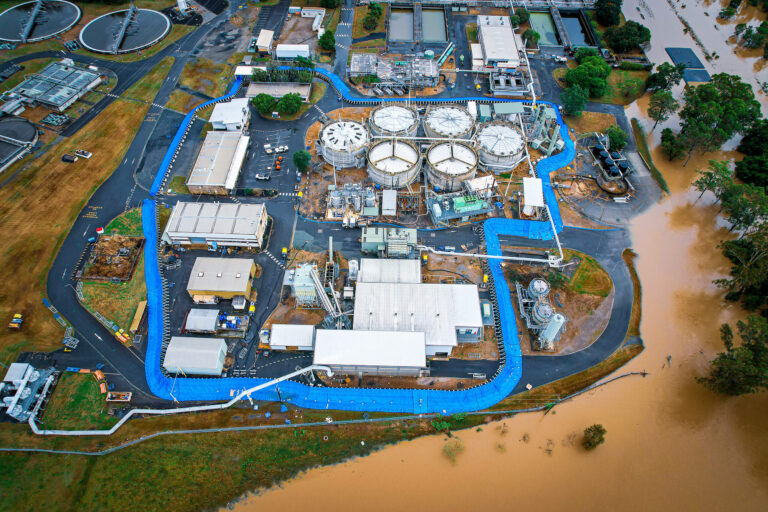
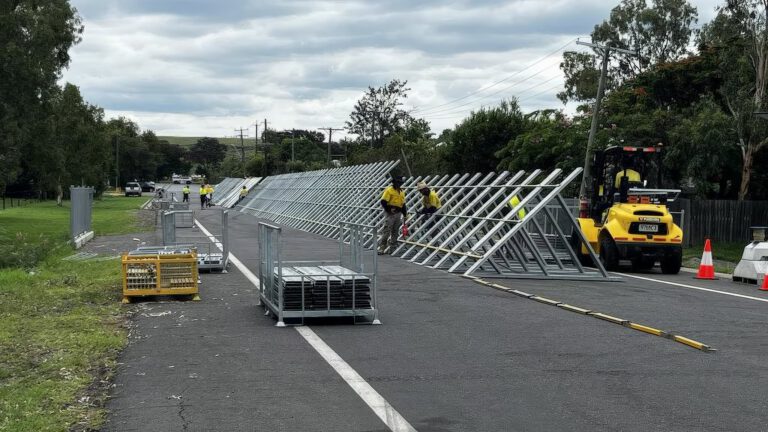
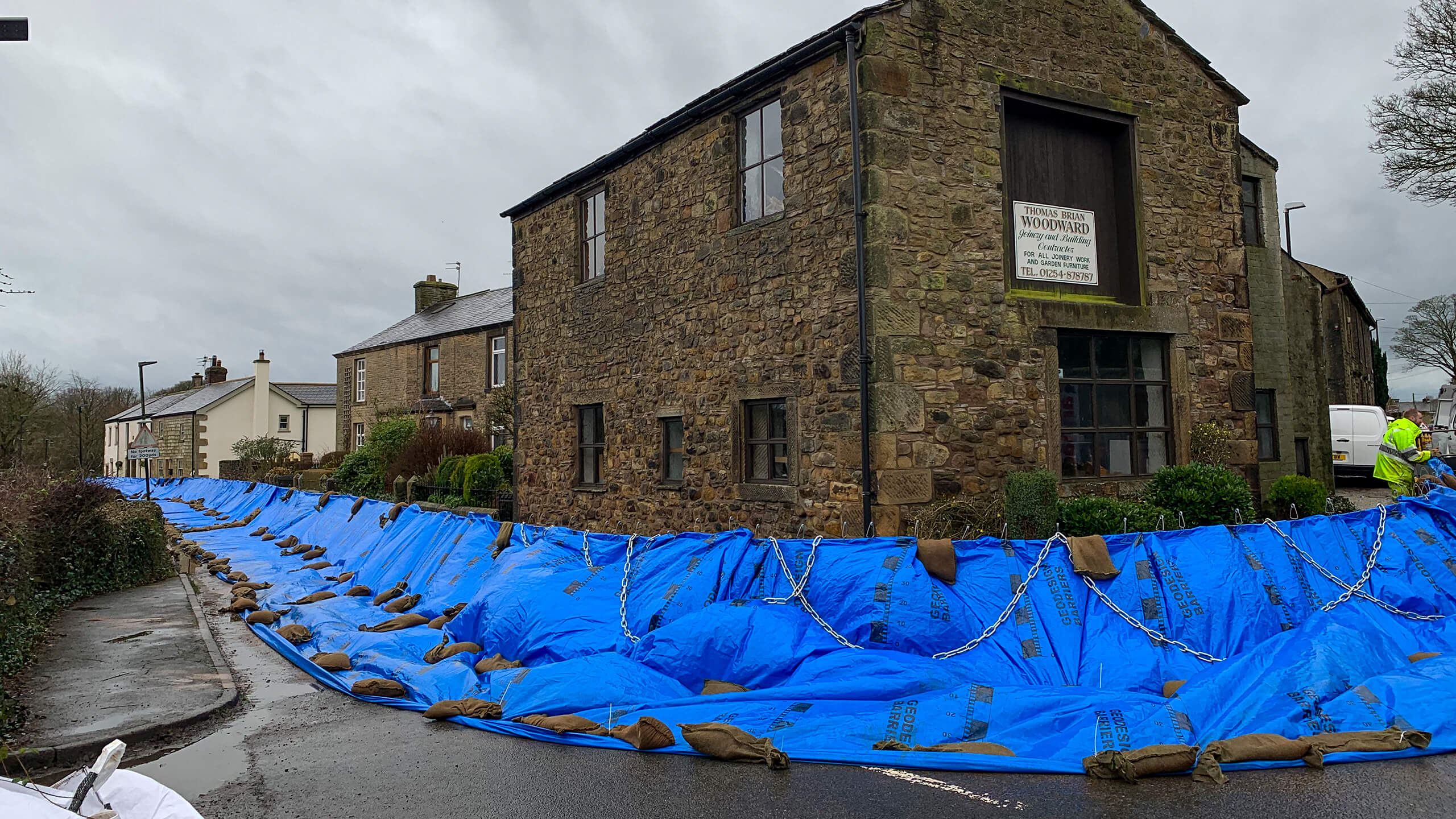
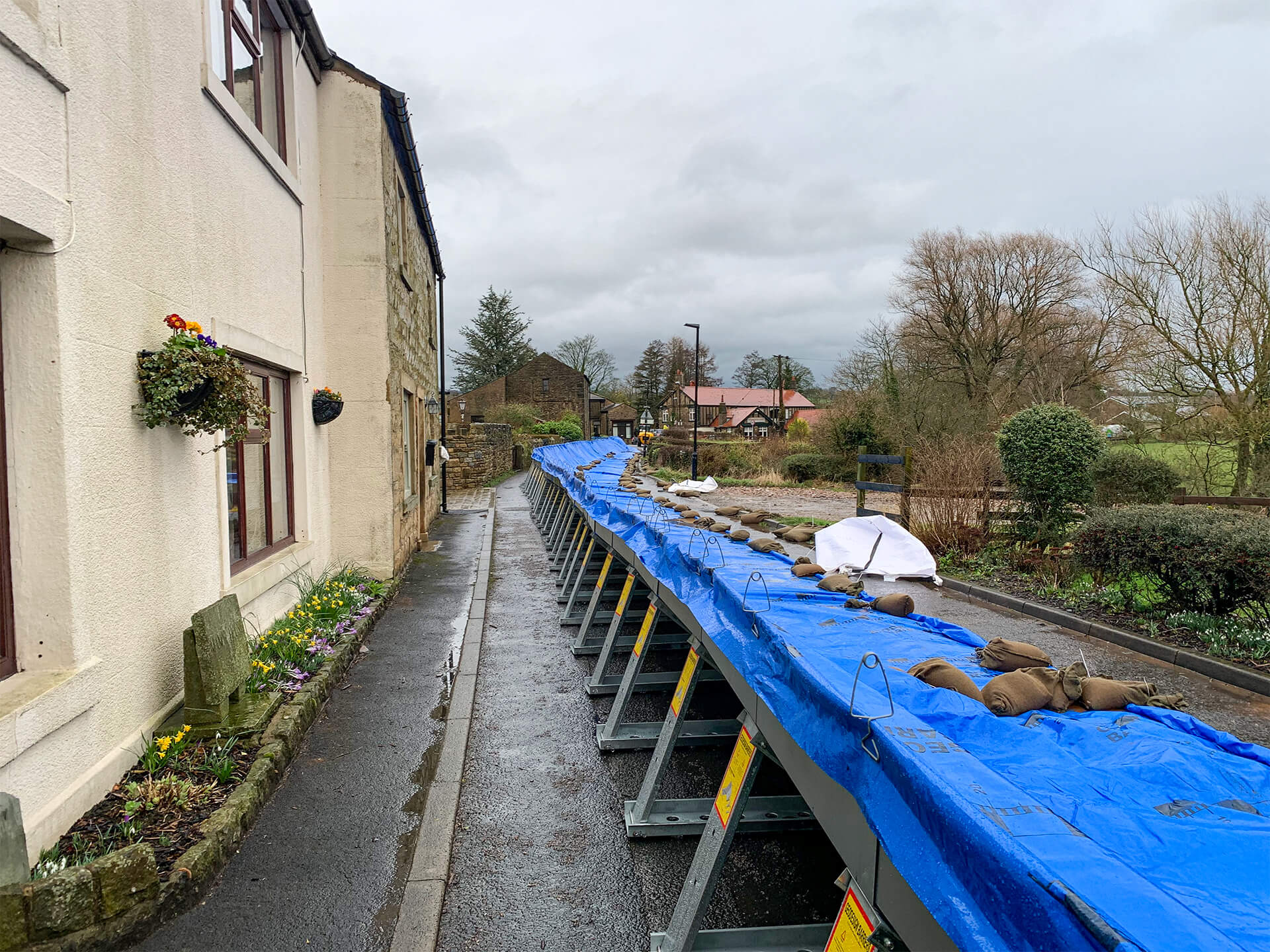
With Storm Dennis forecast for the following weekend, the Environment Agency acted earlier. On 14 February 2020, with support from Geodesign Barriers, its teams set up an Industrial P101 temporary barrier in Ribchester. The line was intended to protect 24 properties, including homes on Greenside.
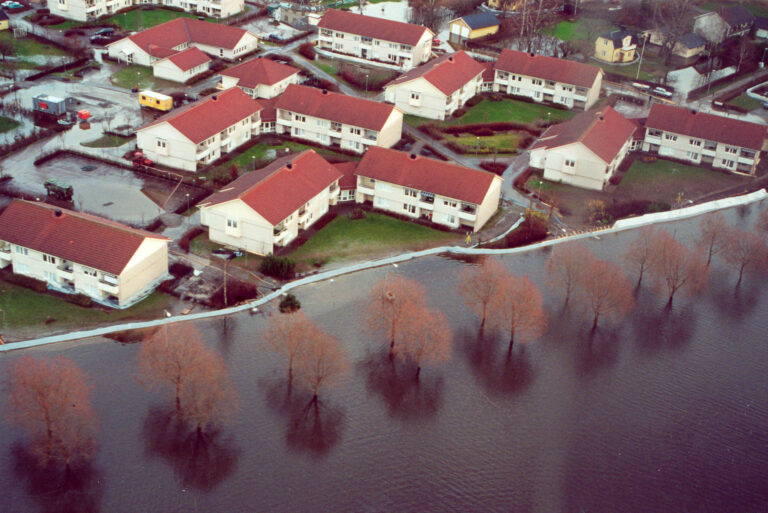
The Industrial P101 is a freestanding system: frames are set out along the planned line and covered with a waterproof membrane; in the photographs, sandbags weigh down its base. Because it is temporary, it only goes up when a forecast calls for it.
This time the floodwater did not reach the barrier. It stayed dry and was dismantled on 16 February. A dry barrier is still a useful outcome: it means the defence was in place in time, and the community had protection ready if the forecast had proved worse.
A wider picture across England
Ribchester was one of many communities on alert that month. The Environment Agency reported that the Ribble, Calder and Derwent were among the rivers that broke record levels after weeks of wet weather. Its teams issued warnings, operated flood defences and temporary pumps, cleared debris from rivers, and inspected and repaired damaged defences. During February 2020 they put up more than 6 kilometres of temporary flood barriers at locations across England. Elsewhere in the Ribble Valley, homes in Billington on the River Calder also had a barrier in place before Storm Dennis.
Why the village barrier plan was withdrawn
Ribchester's case also shows how much a temporary defence depends on warning time. According to The Flood Hub, the local plan for the village used about 200 metres of barrier and needed 24–48 hours to deploy safely. The plan was withdrawn in October 2022, after a review found that the longer lead time now required, 48–72 hours, could not be achieved in such a fast-responding catchment.
What Australian organisations can take from Ribchester
For Australian councils and asset owners, the Ribchester storms show that a temporary barrier only helps if it can be put up before the water arrives. Deployment plans should be tied to realistic warning times, drawing on Bureau of Meteorology forecasts and local knowledge of how quickly each catchment responds. Our guide to flood monitoring and warning lead time sets out how to set practical trigger points.