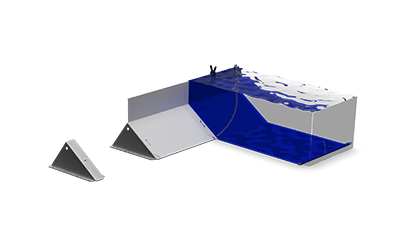
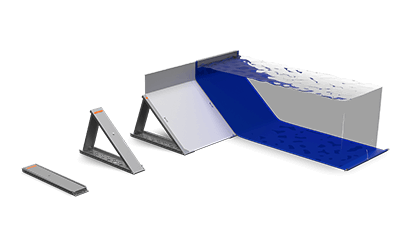
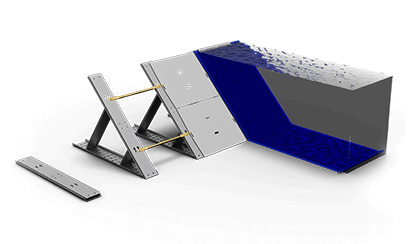
The C122 is a model within our Heavy Duty product range, embodying the same stable, robust, and durable construction as the other flood barriers in the series. As the very first Heavy Duty model produced by Geodesign Barriers, the C122 has been at the core of our DNA, with over 20 years of proven use in the field. Its flexible design makes it particularly well-suited to handle complex and challenging flood protection scenarios where adaptability is key.
Dam height
122 cm
Module width
C/C
122 cm
Deployment time
(100 m / 6 people)
50 min
Storage volume
(100 m)
13.9 m3
Introducing the C122 Heavy Duty flood barrier, the original model in our Heavy Duty series and the foundation of Geodesign Barriers’ innovative flood protection system. Like its successors, the C122 features a triangular metal support that folds out and connects via two rods. Aluminum sheets are suspended from the rods, and a laminate-coated high-density polyethylene membrane is draped over the structure to form a ground-sealing surface.
The C122—like all Geodesign Barriers—can be deployed without tools, machinery, or groundwork. Once water arrives, it pushes the barrier into the ground, making it entirely self-anchoring.
As the first Heavy Duty barrier we produced, the C122 has over 20 years of proven field use and remains a flexible, reliable solution for complex and demanding flood protection challenges. With its robust design and 122 cm dam height, it offers unmatched versatility for a wide range of scenarios.

| Barrier footprint without membrane (A) | 177 cm |
| Maximum water column / Dam height (B) | 122 cm |
| Module width (C) | 122 cm |
| Inclined length (D) |
174 cm |
| Aluminum sheet height (E) | 86 cm |
| Membrane ground length (F) | 256 cm |
| Membrane width (F+D+20 cm) | 450 cm |
| Installation footprint (A+F) | 433 cm |
| Set up time 100 metres by 6 workers | 50 min |
| Certifications | FM Approval ANSI 2510-2020 |
| Module weight | 73,1 kg |
| Water flow resistance | Performance verified at 2,13 m/s |
| Extendable | +15 cm or + 60 cm to C184 |
| Factor of safety | 1,5 |
| Load / section | xx.xx kN |

| Material | High strength low alloy steel |
| Dimensions | L 177 x W 32 x H 7 cm |
| Weight | 24 kg |
| Quantity / module | 1 pc |
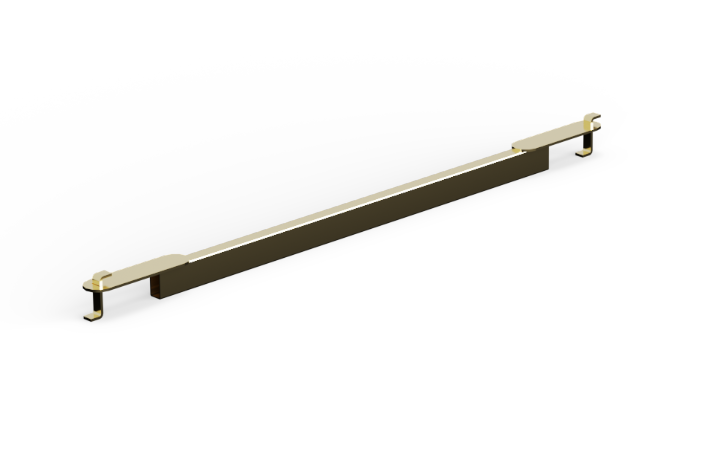
| Material | High-strength steel |
| Dimensions | L 122 x W 5 x D 7 cm |
| Weight | 3 kg |
| Quantity / module | 2 pcs |

| Material | Aluminium checker plate |
| Dimensions | L 120 x W 86 x T 0,7 cm |
| Weight | 14 kg |
| Quantity / module | 2 pcs |

| Material | PVC coated low density polyethylene |
| Dimensions | L 33 x W 4,5 m - 420 g/m2 |
| Weight | 62 kg per roll |
| Quantity / module | 1,2 m / 0,04 roll |

| Material | Galvanized steel DIN766 |
| Dimensions | L 5 m x 12 mm links excluding carabiners |
| Weight | 15,6 kg |
| Quantity / module | 3 m / 0,6 pcs |
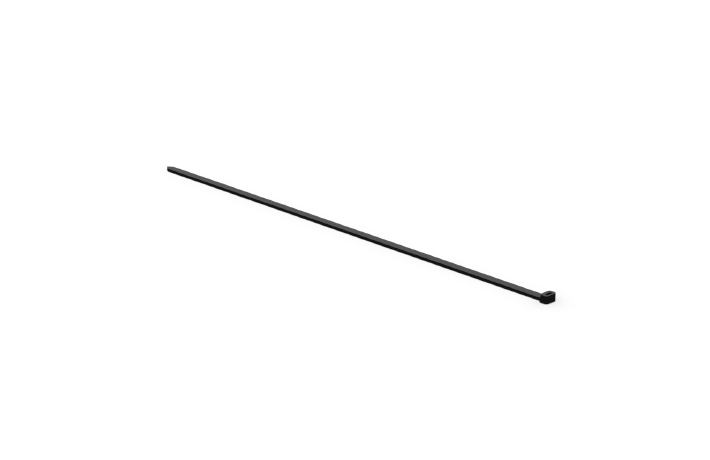
| Material | Nylon |
| Dimensions | L 38 cm |
| Weight | 0,001 kg |
| Quantity / module | 2 pcs |
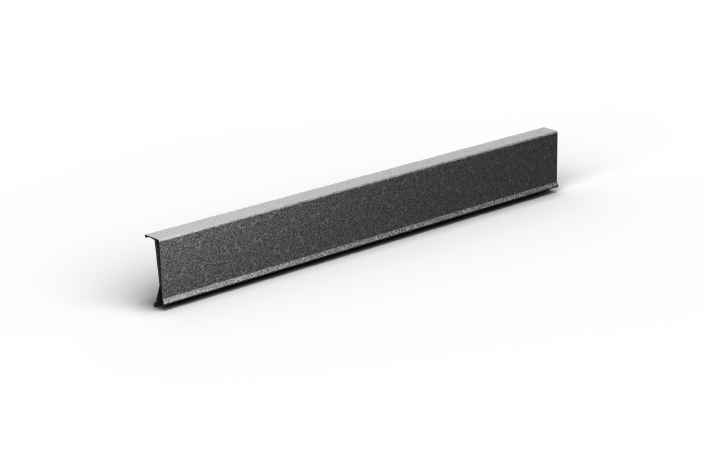
| Material | High strength low alloy steel |
| Dimensions | L 80 x W 12,5 cm |
| Weight | 3,7 kg |
| Quantity / module | 1 pc |
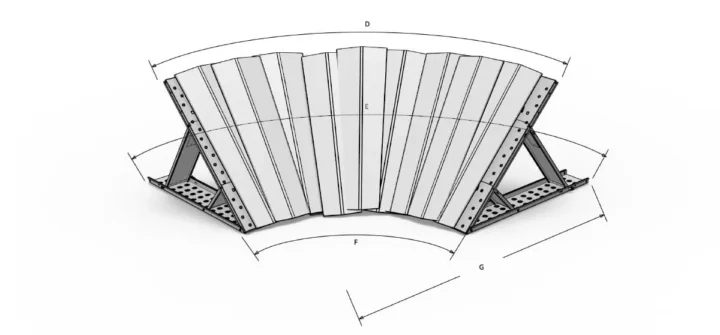
The C122 Heavy Duty flood barrier is engineered for adaptability, offering reliable performance even in complex site geometries. With each module capable of turning up to 30 degrees, a 90-degree corner is formed using three connected sections.
Thanks to our innovative moduler system—featuring adjustable rods and purpose-designed corner elements—assembling angled modules is both quick and intuitive. Suitable for both inner and outer turns, the C122’s corner modules ensure a smooth, efficient setup without compromising structural integrity.
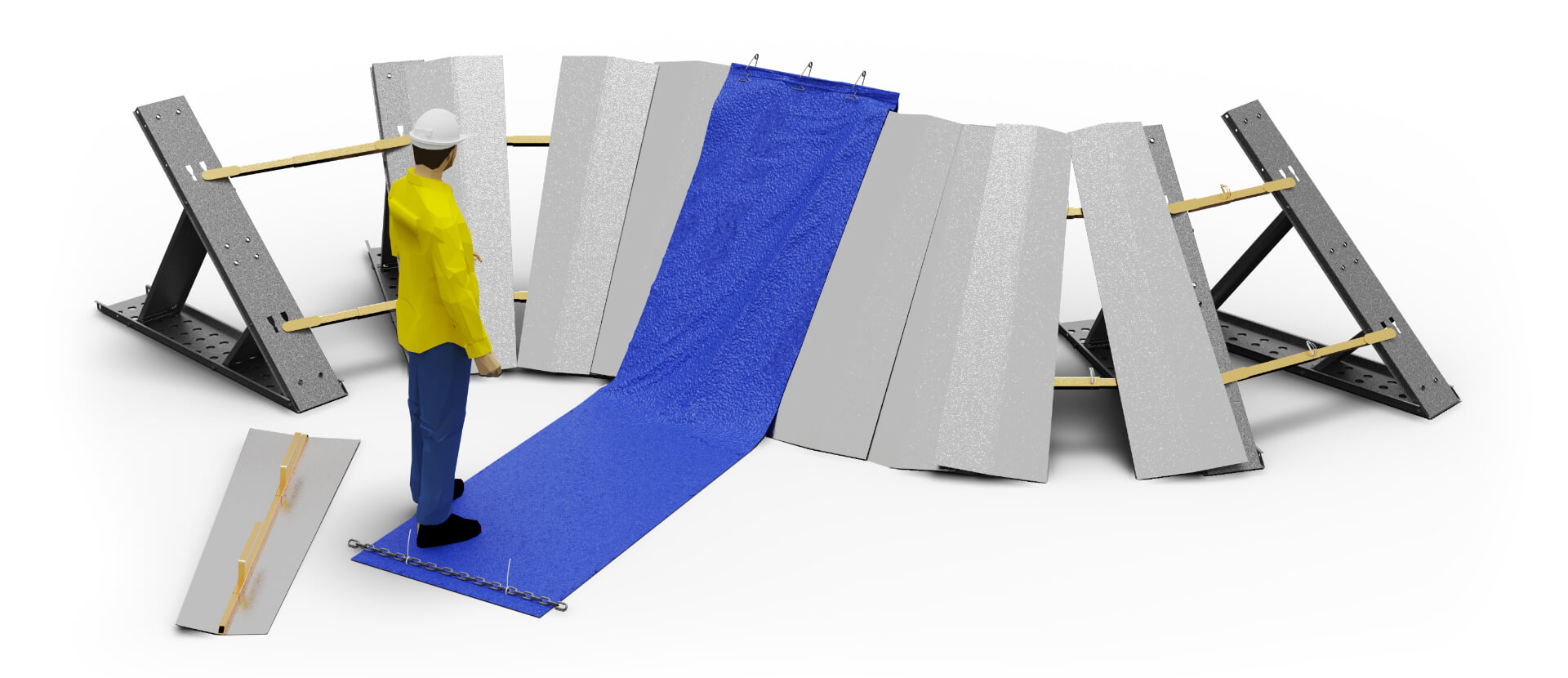
| Turning radius / module | 30 degree |
| 90 degree corner | 3 corner modules |
| Setup time 90° corner (6 workers) |
8 min |
| Module weight - Outer corner | 88,6 kg |
| Module weight - Inner corner | 82,9 kg |
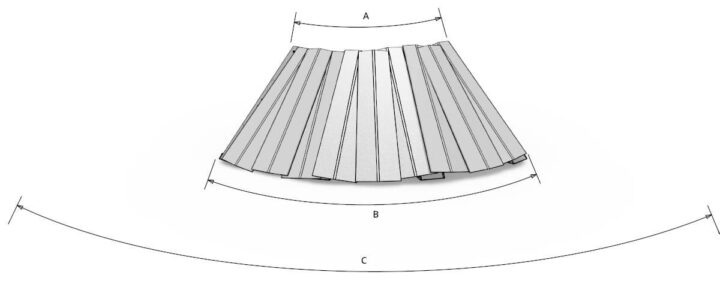
| Upper arc length (A) | 225 cm |
| Lower arc length (B) | 425 cm |
| Membrane length (C) | 825 cm |
| Turning radius | 525 cm |
| Sealer clips | 6 |
| Turning radius (G) | 315 cm |
| Lower inner arc length (F) | 225 cm |
| Lower outer arc length (E) | 495 cm |
| Upper arc length (D) | 415 cm |
| Membrane length | 415 m |
| Sealer clips | 9 |
| Material | High strength low alloy steel |
| Dimensions | L 177 x W 32 x H 6,5 cm |
| Weight | 24 kg |
| Quantity / module | 3 pc |

| Material | High strength steel |
| Dimensions | Min. L 569 mm Max. L 749 mm |
| Weight | 2,6 kg |
| Quantity / 90 degree OUTER corner | 3 pcs |
| Quantity / 90 degree INNER corner | 3 pcs |
| Material | High strength steel |
| Dimensions | Min. L 794 mm Max. L 1189 mm |
| Weight | 3,9 kg |
| Quantity / 90 degree OUTER corner | 3 pcs |
| Quantity / 90 degree INNER corner | 3 pcs |
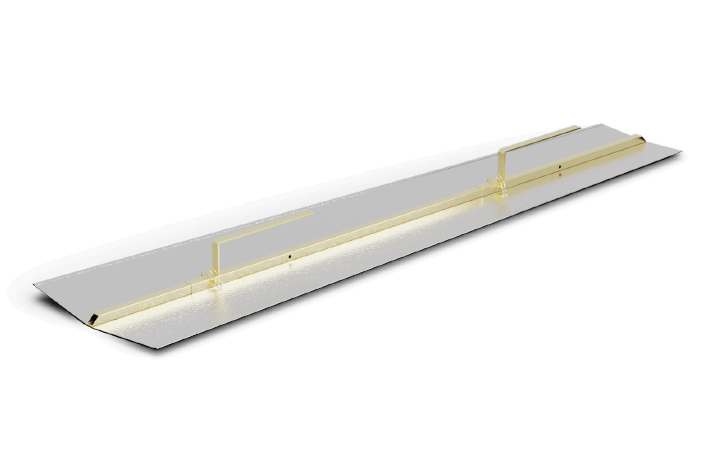
| Material | Zinc coated, galvanized steel |
| Dimensions | L 215 x W 50 / 32 cm |
| Weight | 12 kg |
| Quantity / 90 degree corner | 9 pcs |
| Material | PVC coated low density polyethylene |
| Dimensions | L 33 x W 4,5 m - 420 g/m2 |
| Weight | 62 kg per roll |
| Quantity / 90 degree OUTER corner | 8,4 m |
| Quantity / 90 degree INNER corner | 4,2 m |
| Material | Galvanized steel DIN766 |
| Dimensions | L 5 m x 12 mm links excluding carabiners |
| Weight | 15,63 kg |
| Quantity / 90 degree OUTER corner | 12,9 m |
| Quantity / 90 degree INNER corner | 10 m |
| Material | Nylon |
| Dimensions | L 38 cm |
| Weight | 0,001 kg |
| Quantity / 90 degree OUTER corner | 17 pcs |
| Quantity / 90 degree INNER corner | 8 pcs |
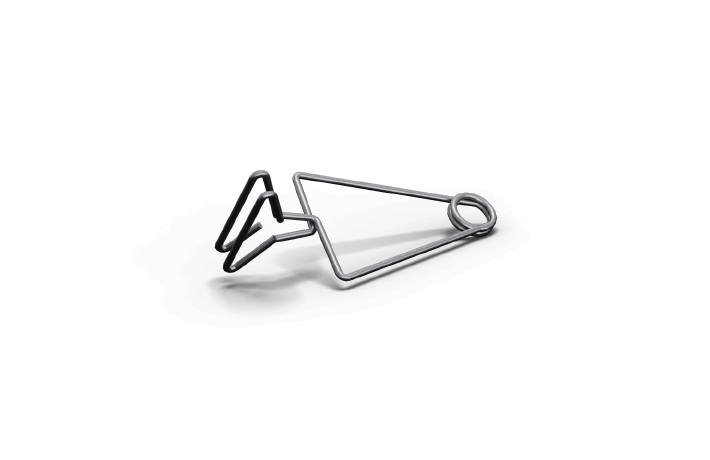
| Material | Steel |
| Dimensions | L 17 cm |
| Weight | 0,08 kg |
| Quantity / 90 degree OUTER corner | 6 pcs |
| Quantity / 90 degree INNER corner | 9 pcs |
Our step-by-step instructions are designed to guide you through the process of setting up your system quickly and easily. Even if you're new to the C152, our instructions are straightforward and easy to follow.
Proper training is essential to ensure safe, effective, and timely deployment. A well-rehearsed response is critical for ensuring operational success.
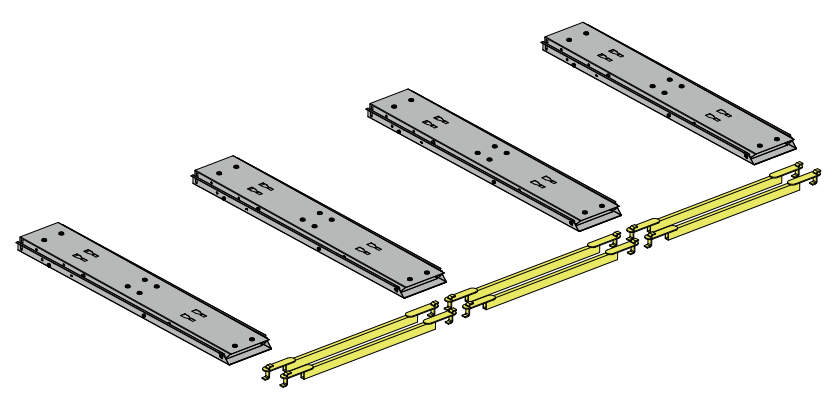
Place the C122 barrier supports 122 cm apart. Use link bars to gauge the distance.
If installed on concrete
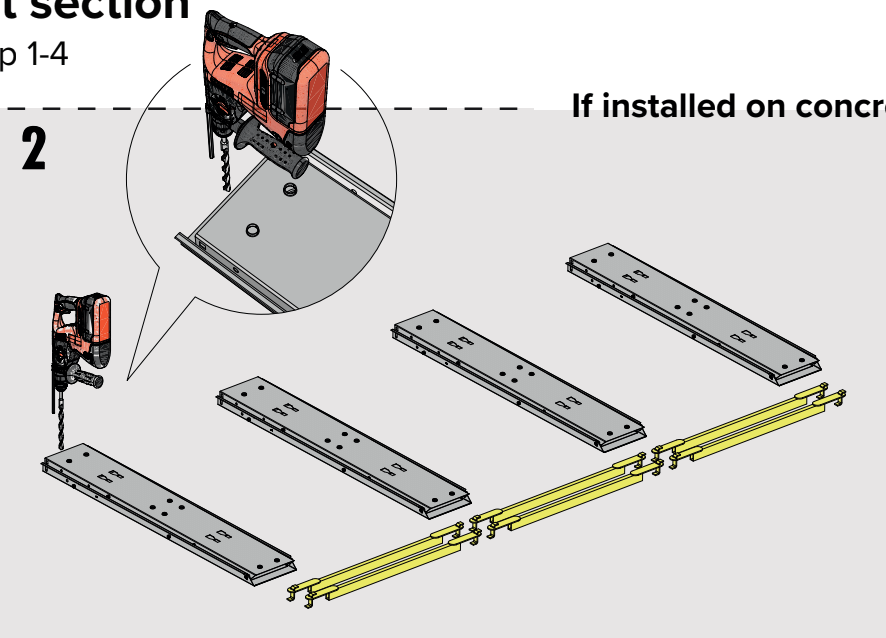
Prepare installation of concrete anchor. Drill a hole using a hammer drill.
If installed on concrete
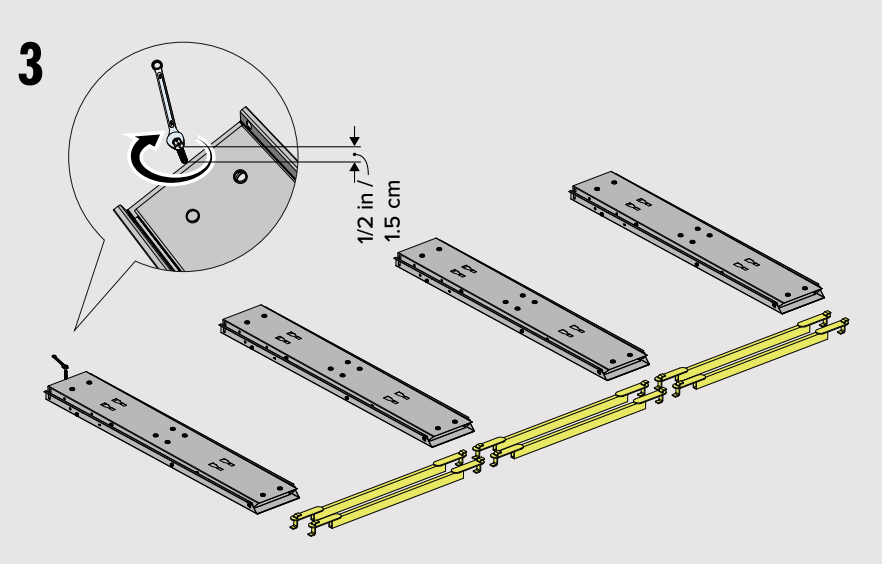
Screw on the concrete anchors into the ground. Leave a distance of 1.5 cm between top of the anchor and the bottom beam of the C122 barrier supports.
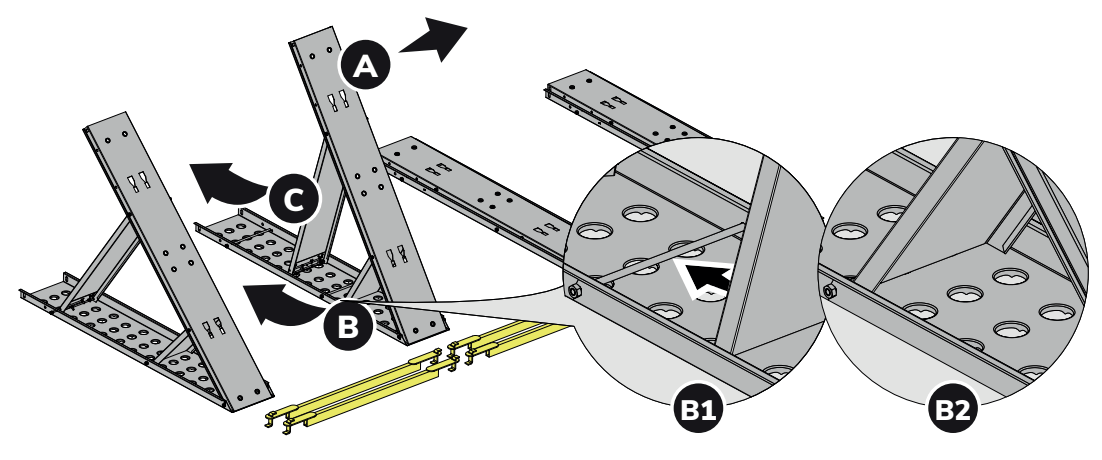
Errect the C152 barrier supports. Lift the front beam up (A) and unfold the support beams (B)(C). Slide the inner support beam until it rests against the security axis (B1)(B2).
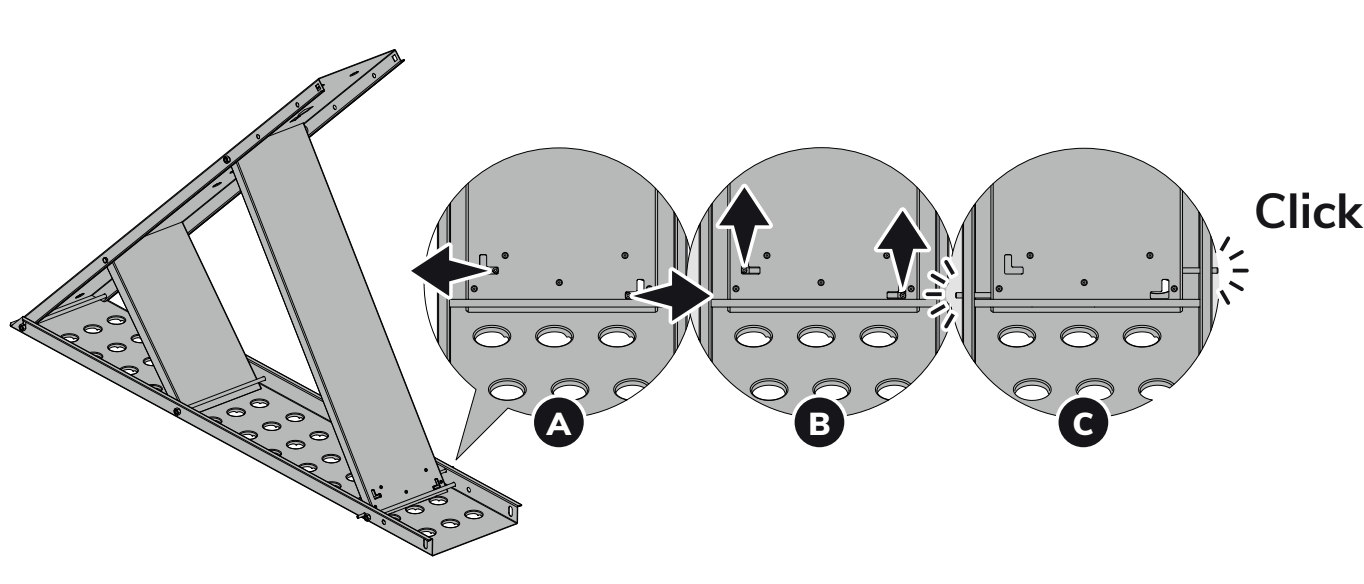
Secure the C122 barrier supports upright position with the snap lock. Push the protruding rods outward (A), then upward (B), until they pass through the cut-out (C).
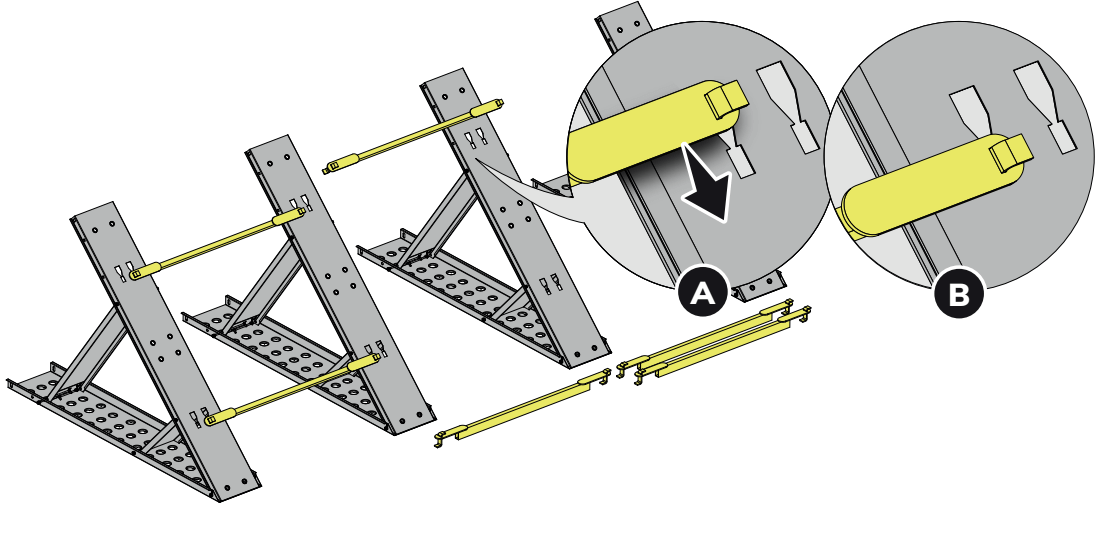
(A) Insert the z-lock on the link bar into the keyhole cutout on the front beam. (B) Lower until the z-lock rests at the bottom of the cutout.
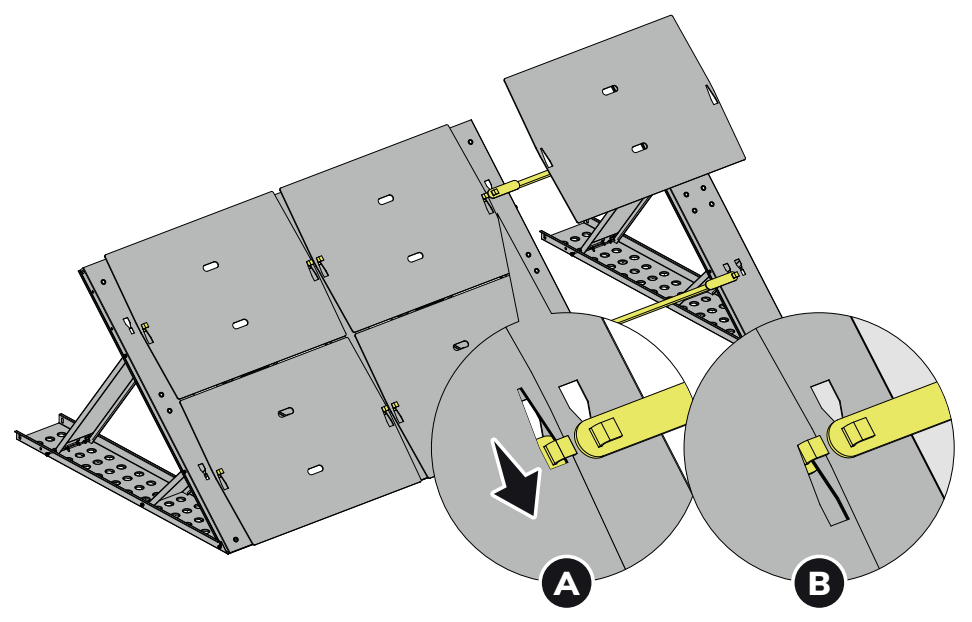
Mount the alu panels 860 by sliding the triangular cutout over the link bar (A). Lower it until the alu panel hangs on the protruding part (B).
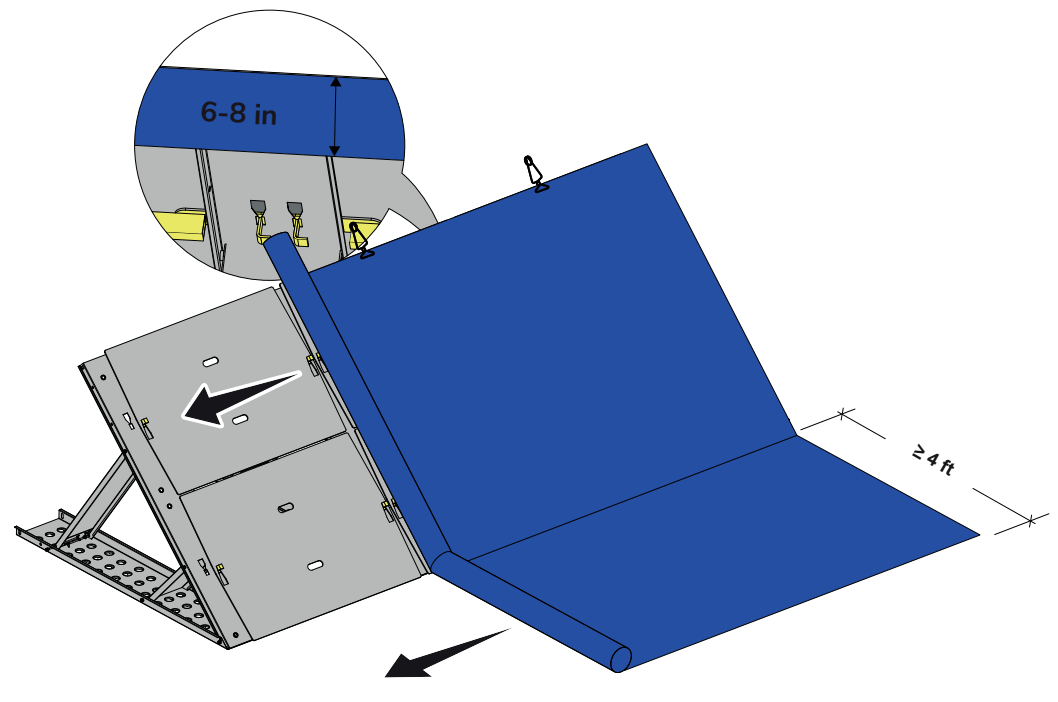
Roll out the 4.5 m wide poly membrane and secure with two sealer clip per section, along the top edge. Ensure that there is between 15-20 cm overlap at the back of the barrier.
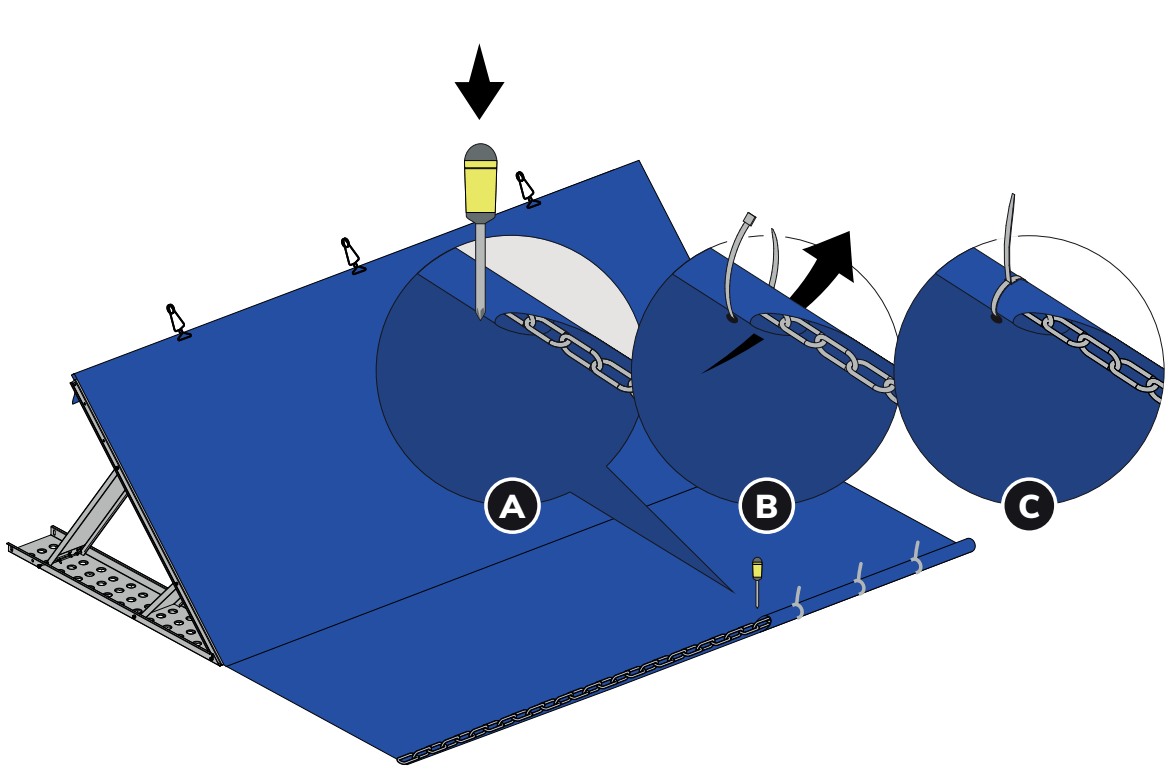
Connect the chain lengths with karabiners and place them along the membrane's outer edge. Wrap or lay the chain on the membrane (A), thread a cable tie through the pre-punched holes (B), and secure the chain (C).
If installed on concrete
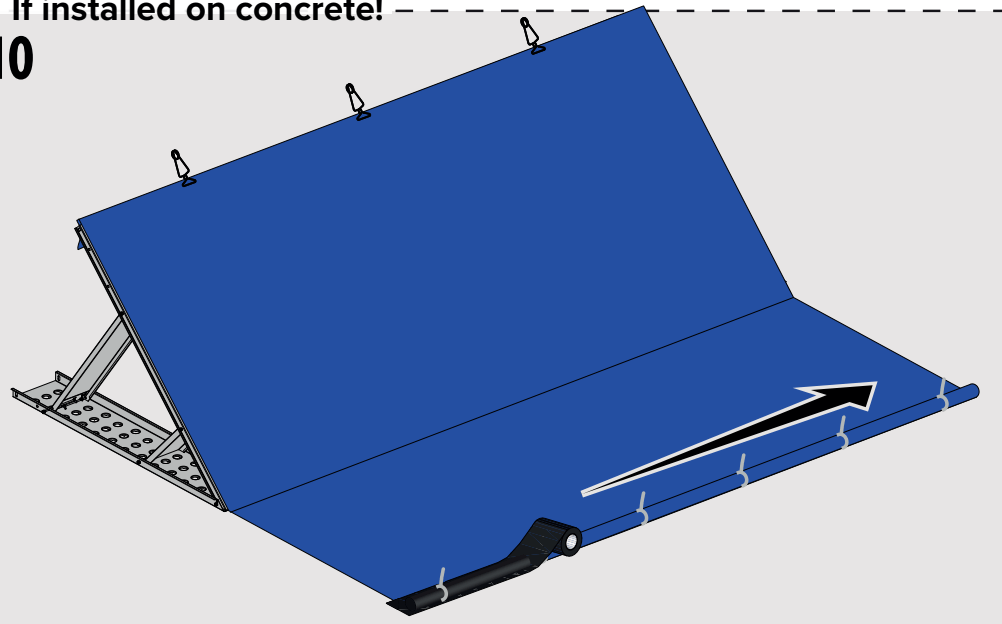
Seal the poly membrane to the ground by applying 20 cm wide sealing tape over both the chain and the poly membrane edge.
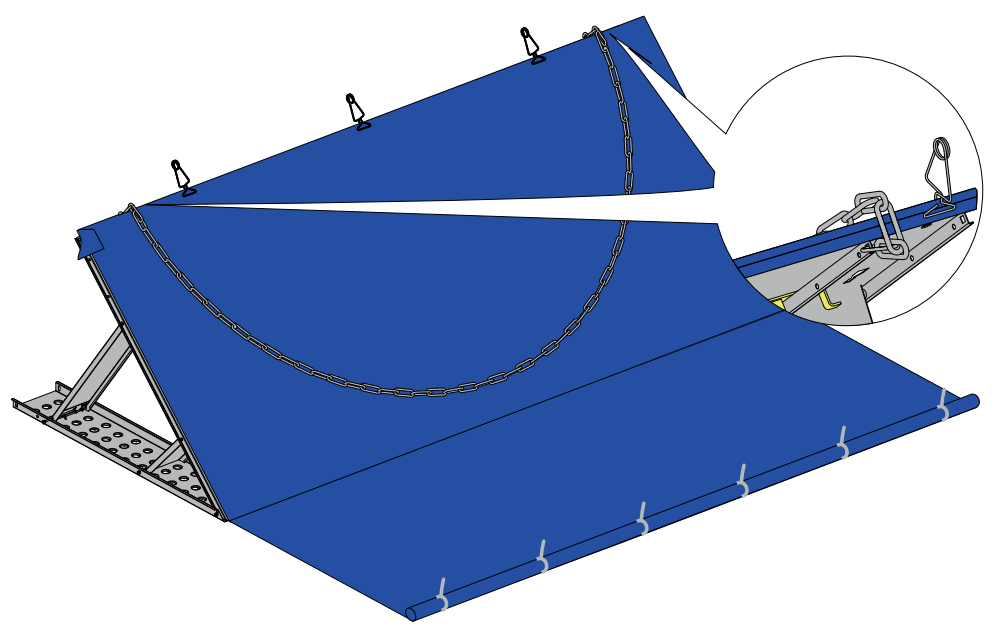
Hang the garland chain on the inclined part of the barriers. Fasten the chain to the C122 barrier supports using the carabiner hook.
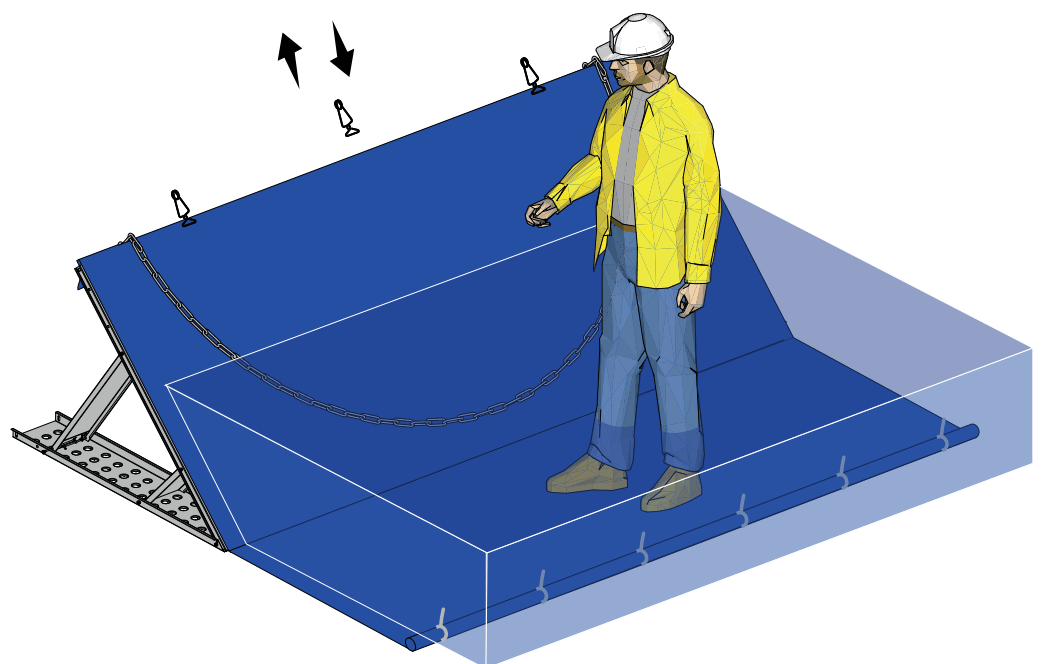
Adjust the sealer clips as water enters the barrier to relax the poly membrane. Gently step on the ploy membrane to squeeze out air pockets.
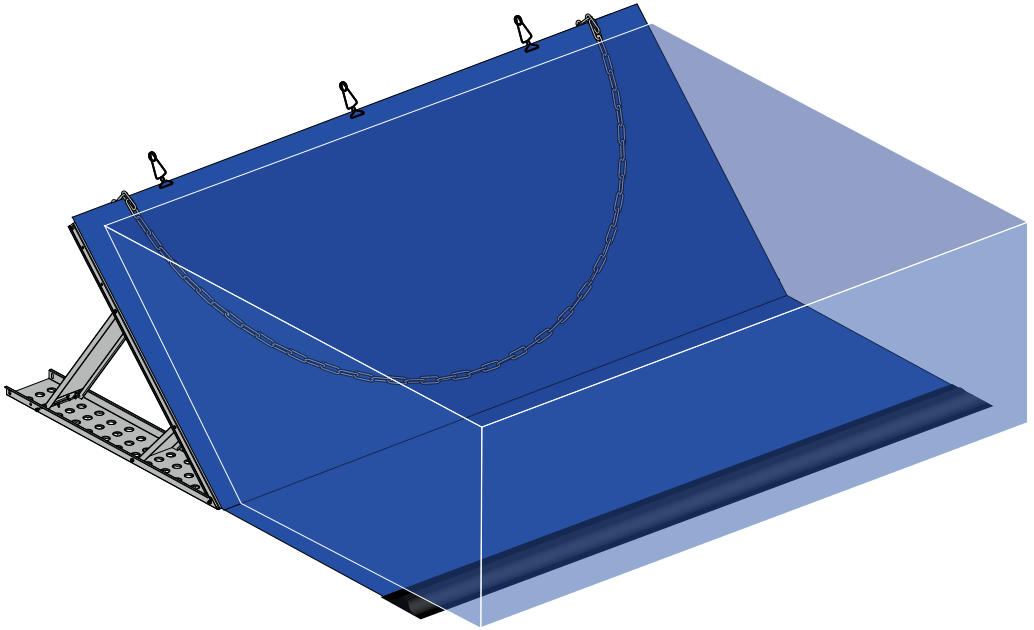
Installed and self-anchored as rising water presses the barriers to the ground.
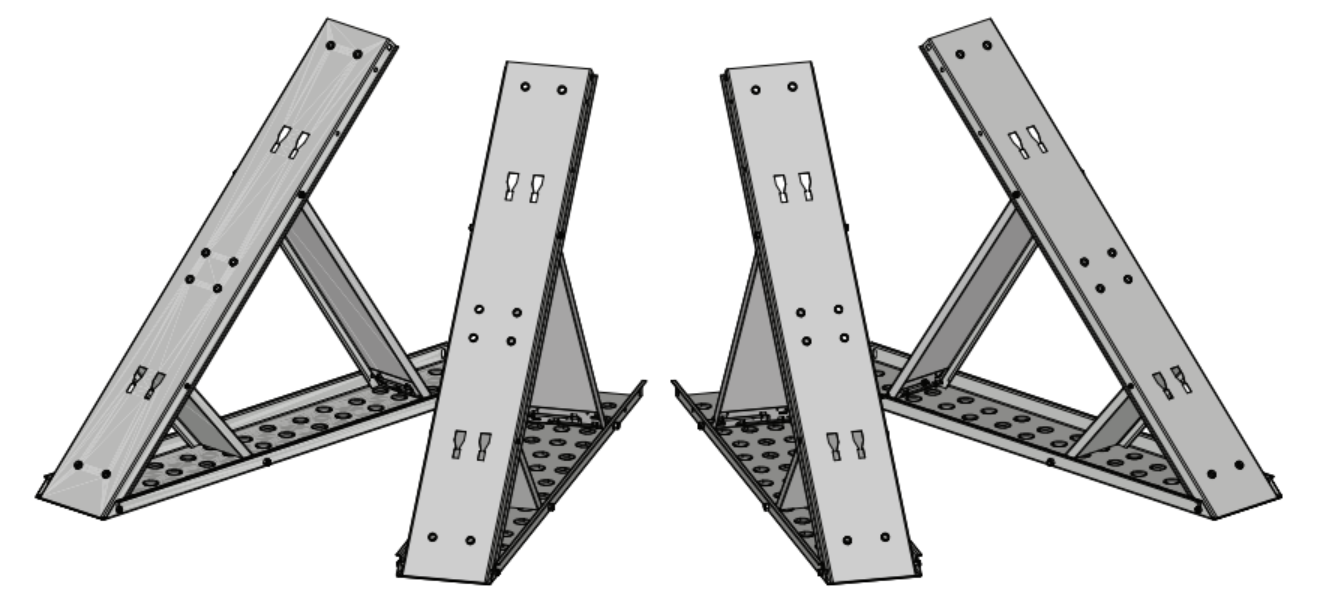
Place four unfolded and secured C122 metal supports in a 90° arc, approximately 1 m apart. The outermost supports should be at a 90 degree angle to each other.
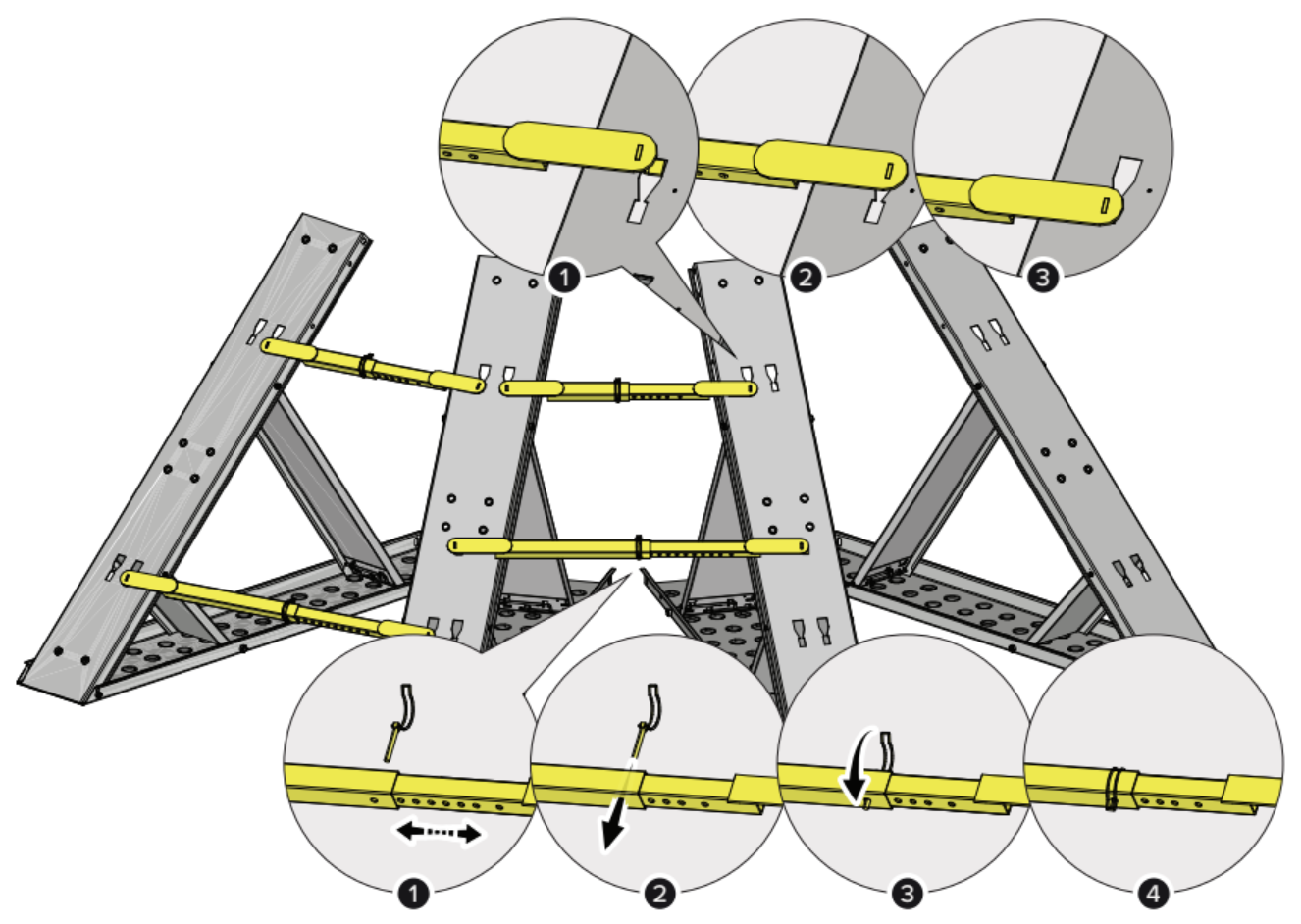
Begin by connecting the C122 barrier supports using adjustable link bars (ALB). Attach ALBs through keyhole cut on the front beam and slide down to lock. Fix and adapt the ALBs to suitable lengths using their D-clips.
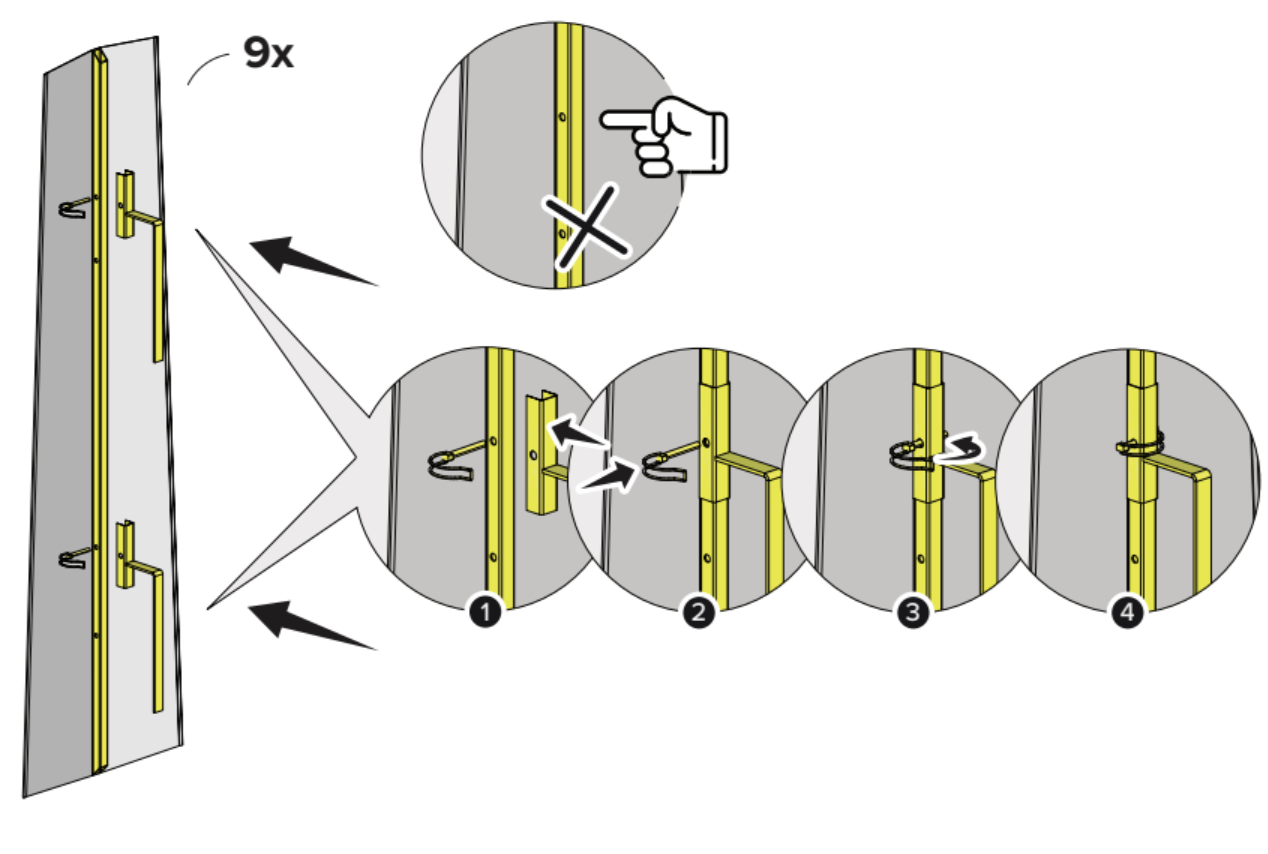
Prepare the corner elements (CE) – hold them up, wide part down. Attach two handles – one in each top hole of the CE, as shown. Fix the handles using their D-clips.
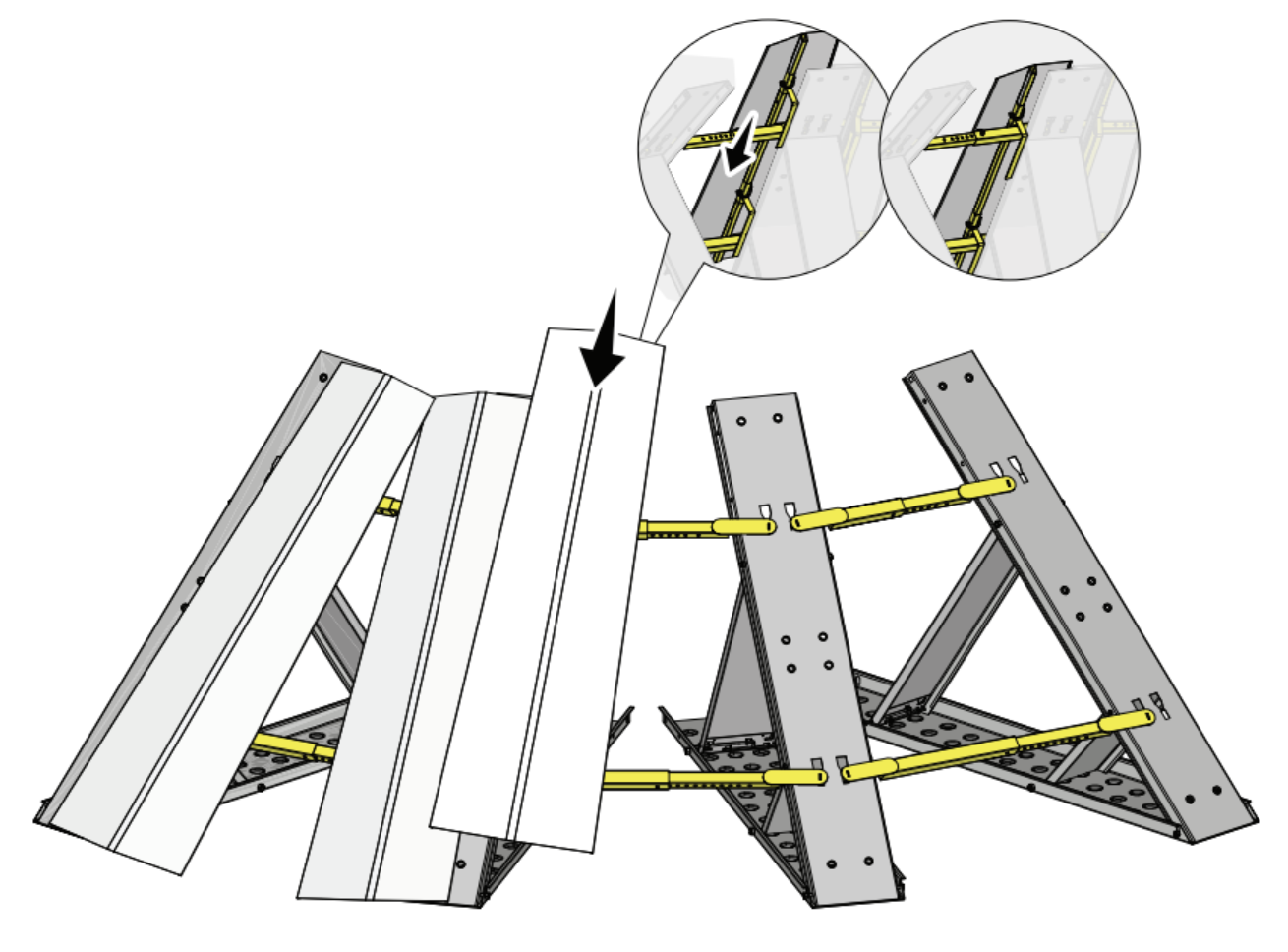
Place two CEs per section onto the ALBs. Slide them down into position ensuring the handles hook onto the ALBs. One to the right and one to the left of each section – leave a gap in between.
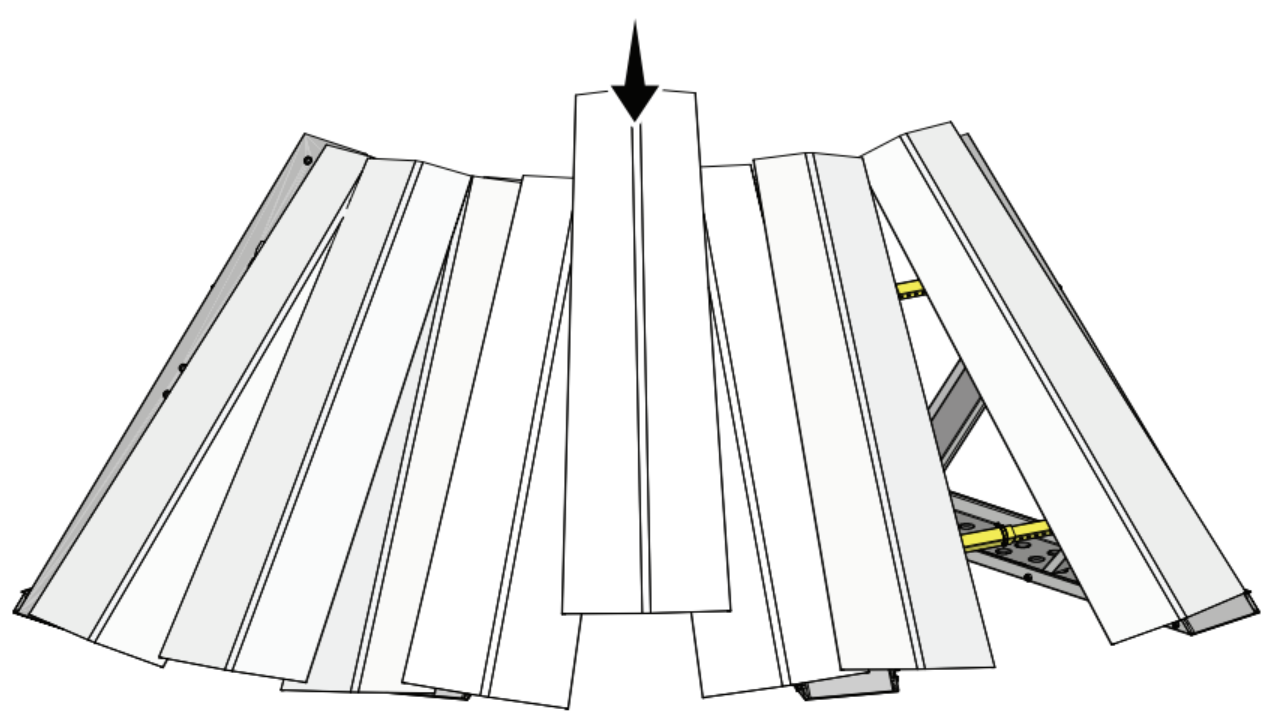
Fill the gap by sliding a third CE on top of the other two in the same way.
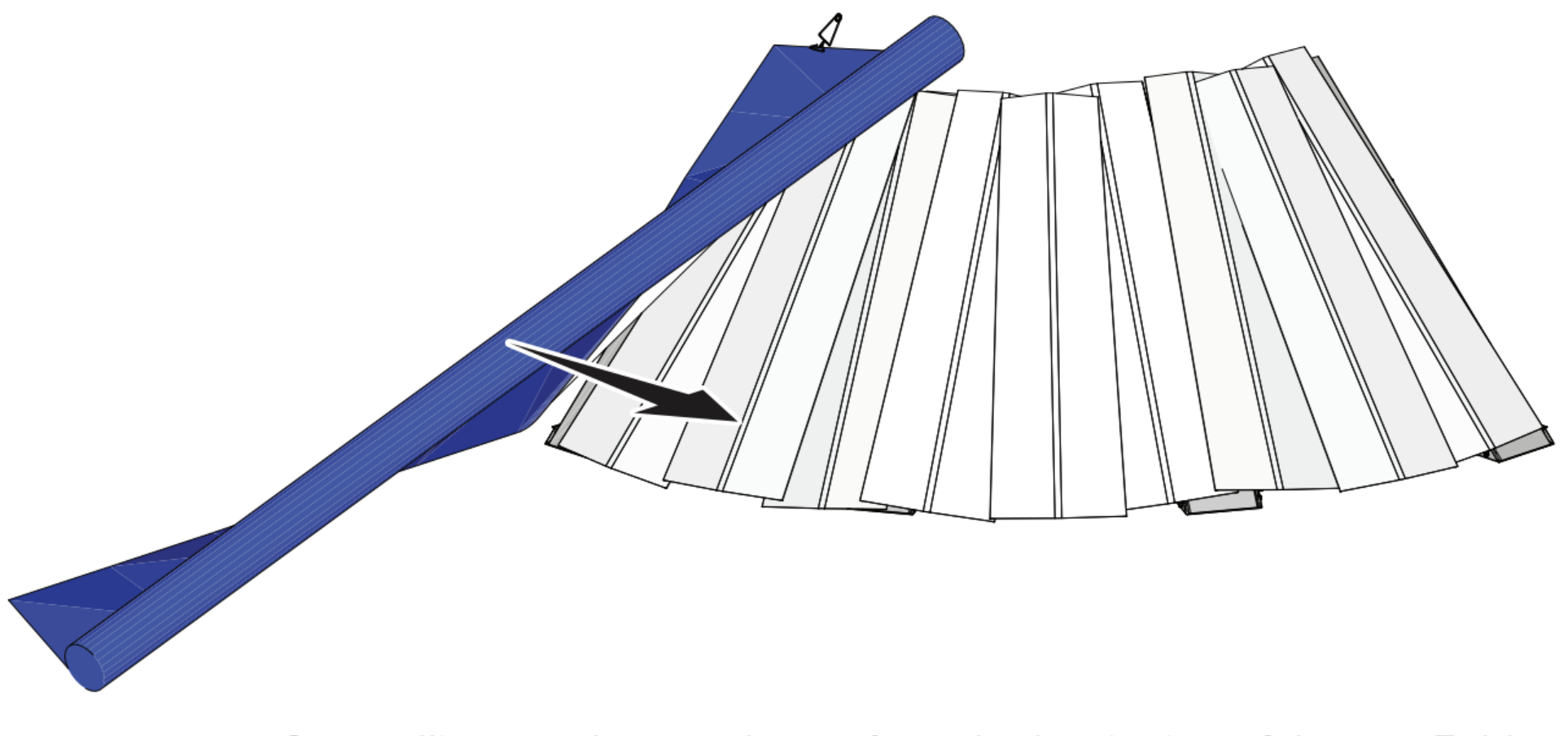
Start rolling out the membrane from the beginning of the arc. Fold over the top of the barrier between 20 - 25 cm. Fix the position of the membrane to the C122 outer corner section with a sealer clip.
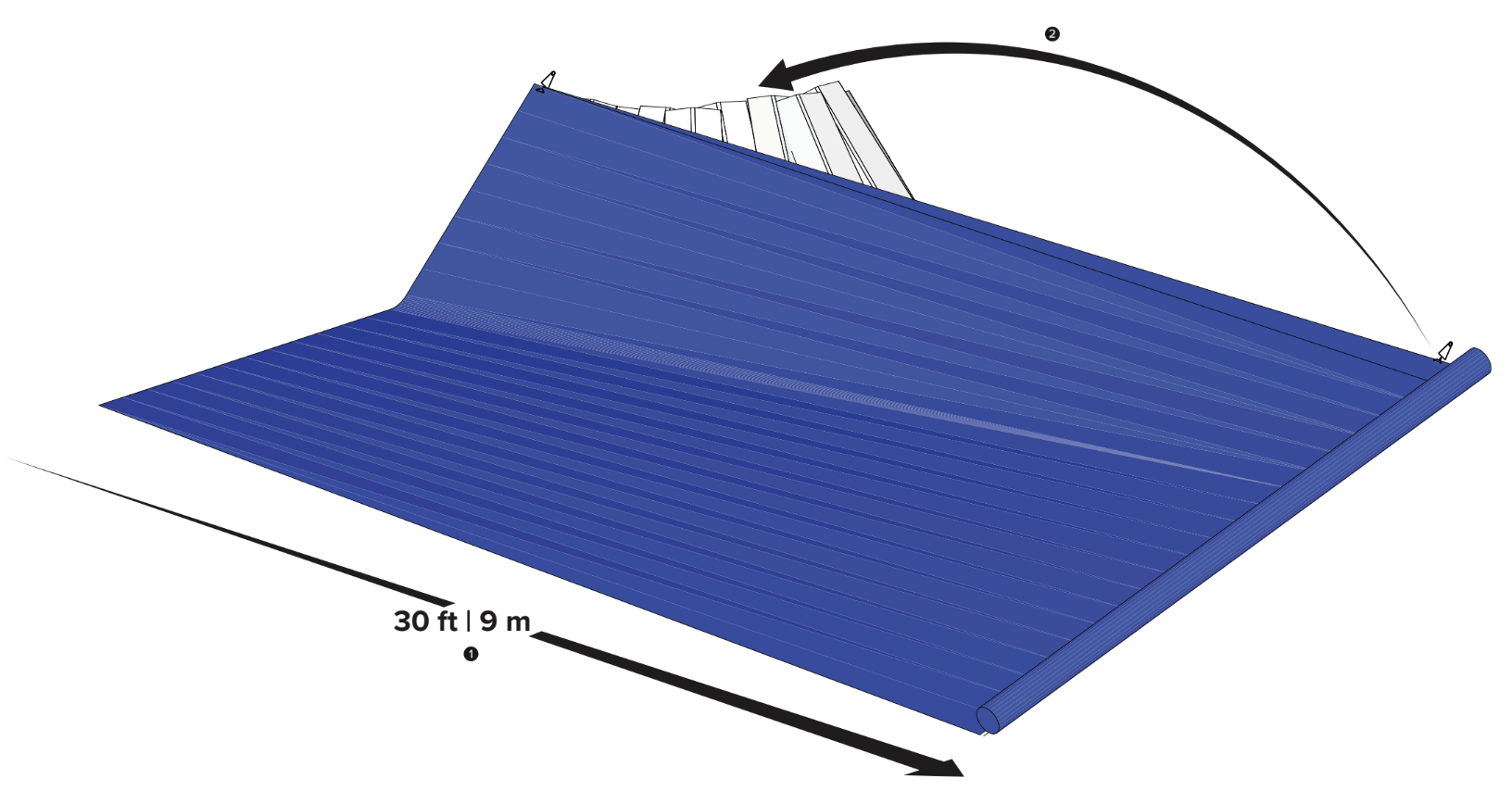
Extend the membrane 9 m out from the C122 outer corner.
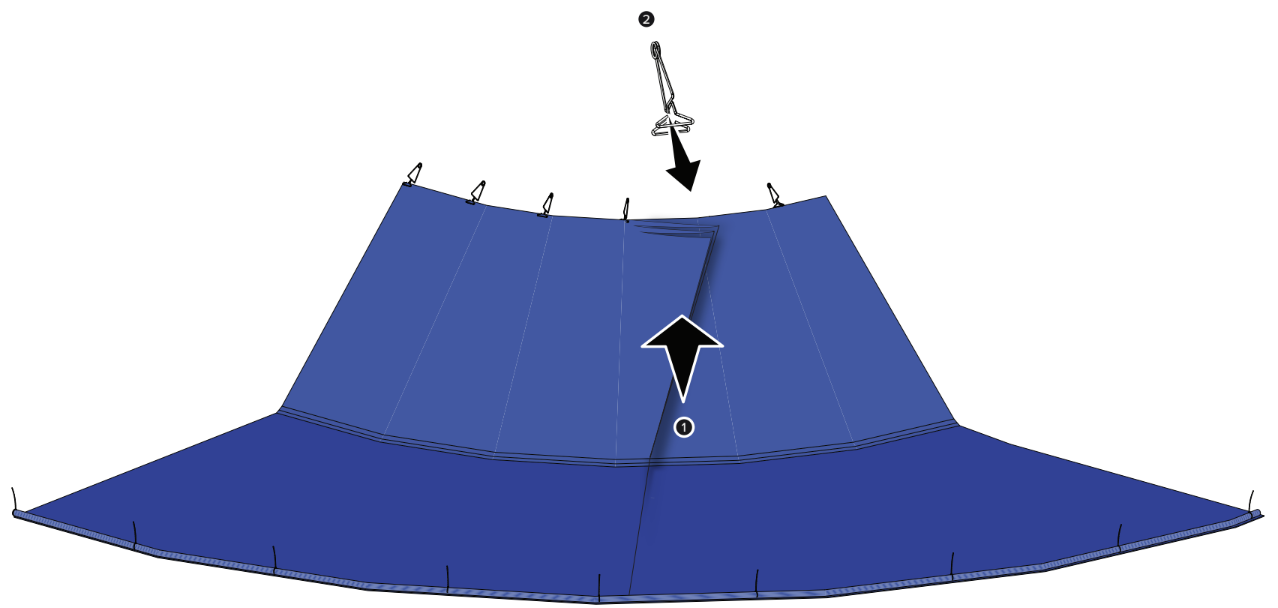
Fold the extended membrane back (1) and seal the folded poly membrane to the barrier with sealer clips (2).
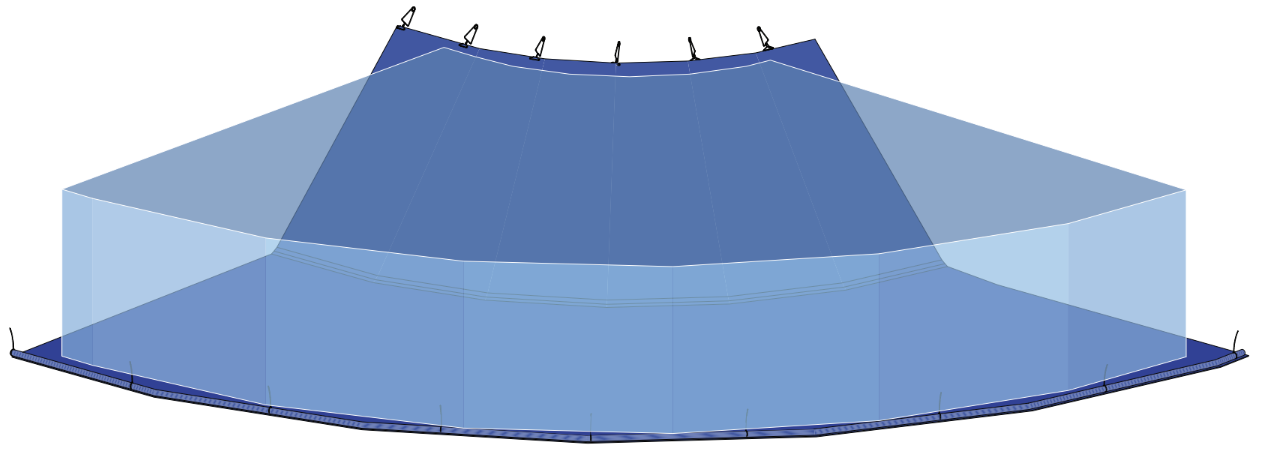
Installed and self-anchored as rising water presses the barriers to the ground.
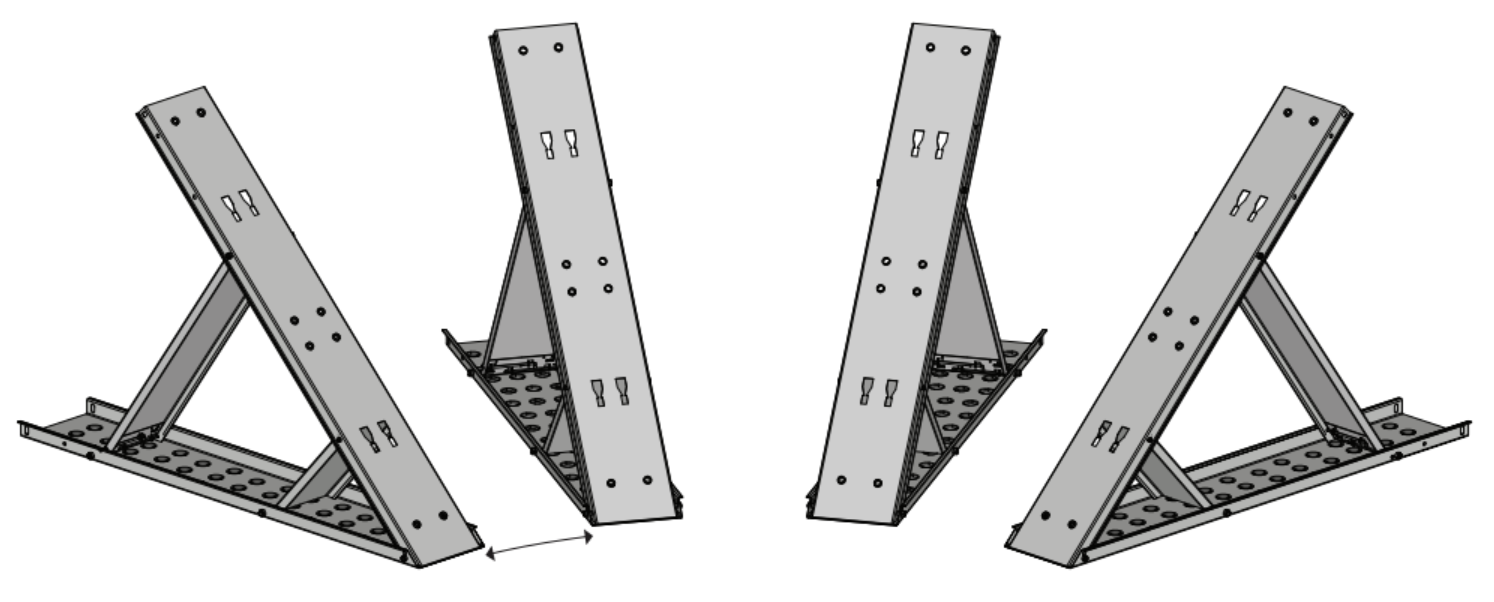
Place four unfolded and secured C122 barrier supports in a 90° arc, approximately 0.4 m apart. The outermost supports should be at a 90 degree angle to each other.
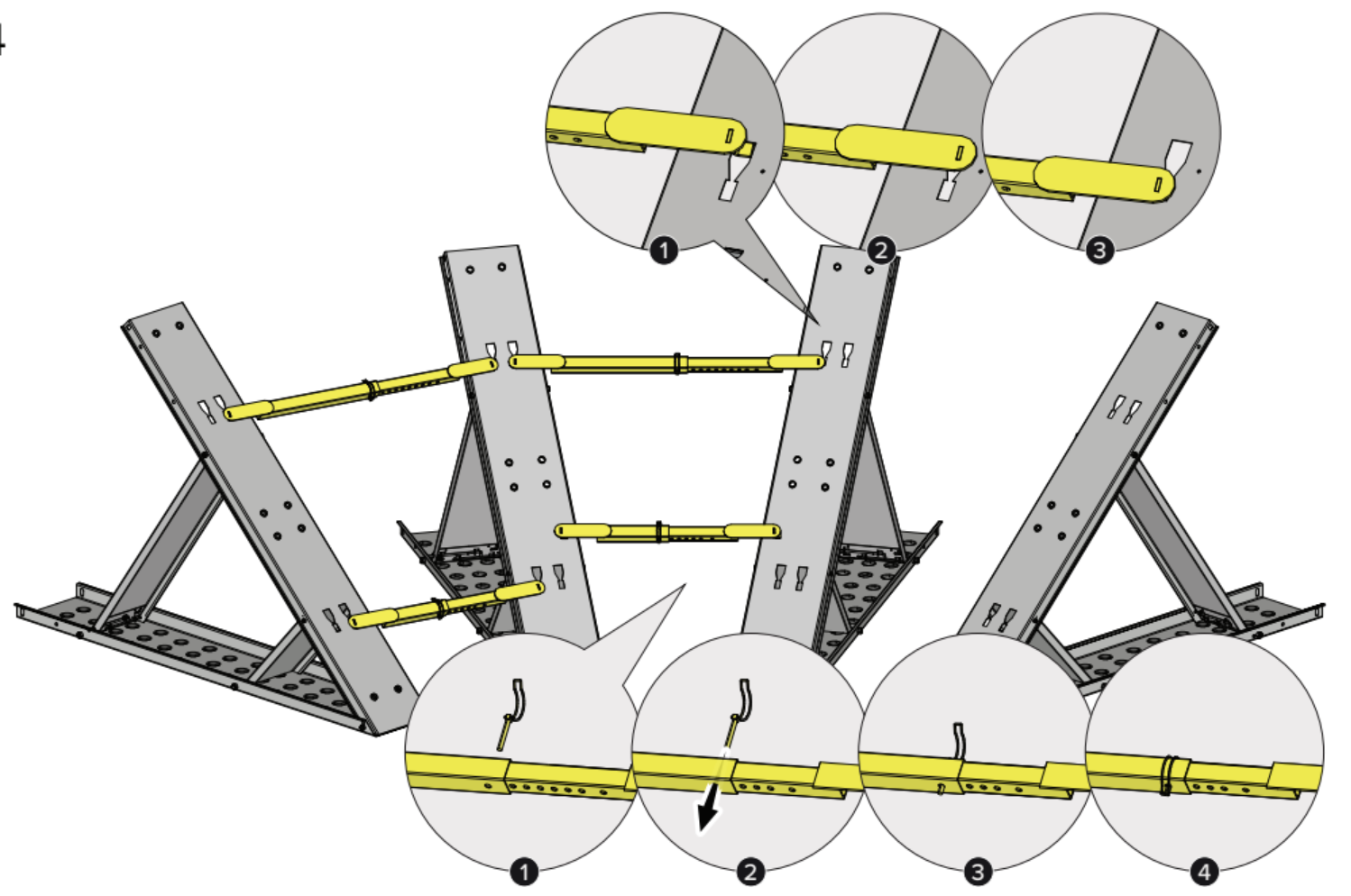
Begin by connecting the C122 barrier supports using adjustable link bars (ALB). Attach ALBs through keyhole cut on the front beam and slide down to lock. Fix and adapt the ALBs to suitable lengths using their D-clips.
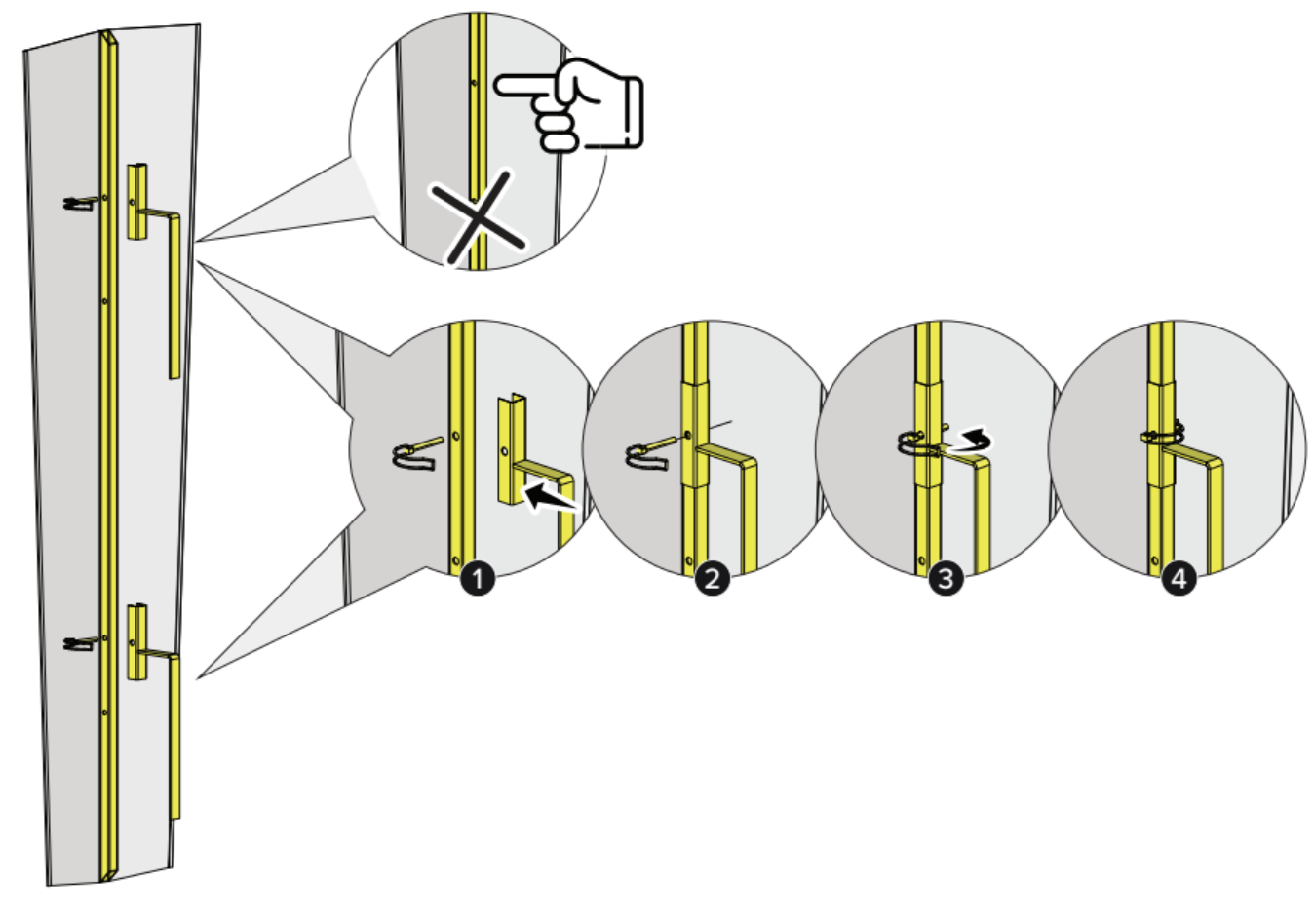
Prepare the corner elements (CE) – hold them up, narrow part down. Attach two handles – one in each top hole of the CE, as shown. Fix the handles using their D-clips.
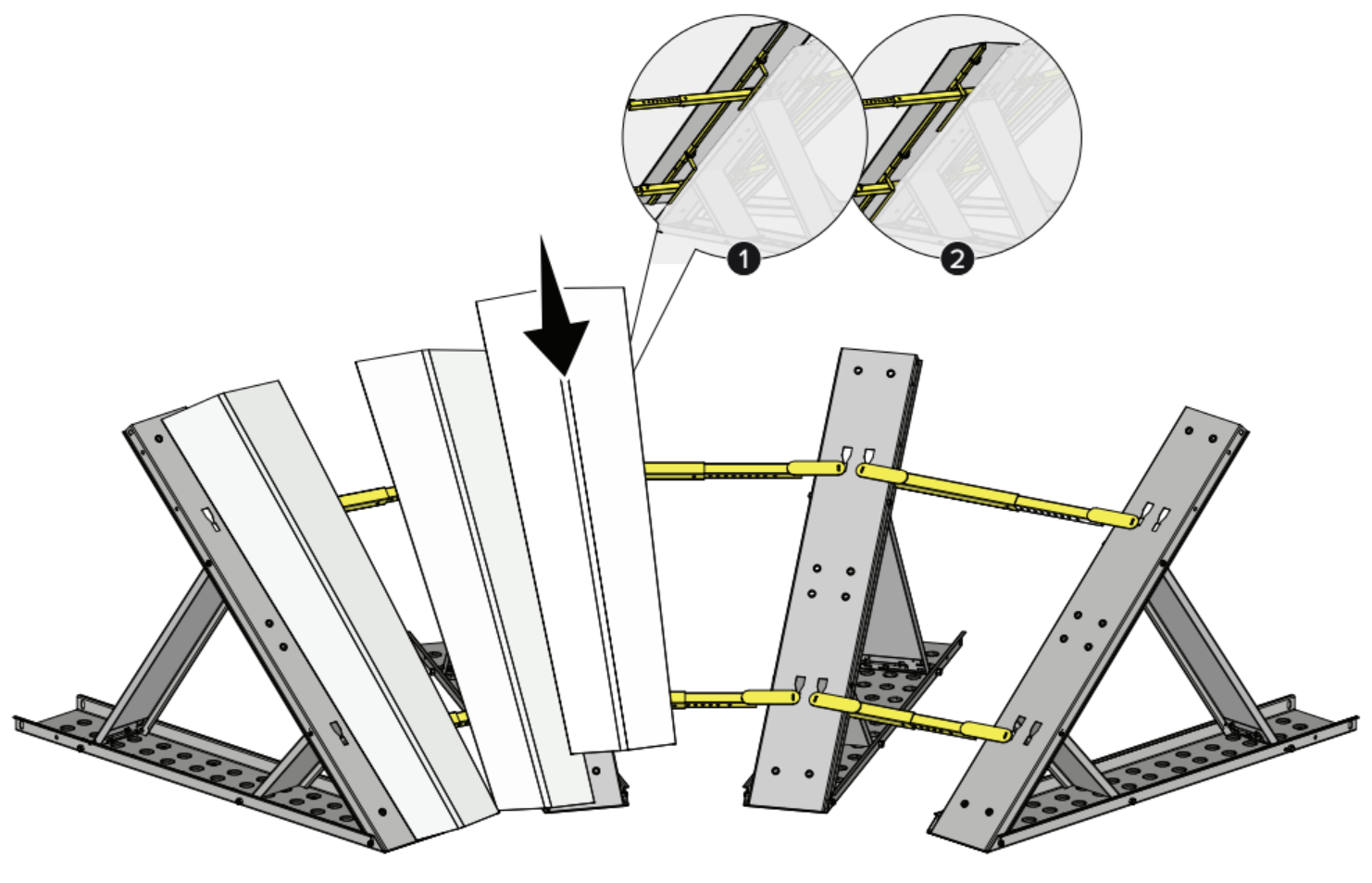
Place two CEs per section onto the ALBs. Slide them down into position ensuring the handles hook onto the ALBs. One to the right and one to the left of each section – leave a gap in between.
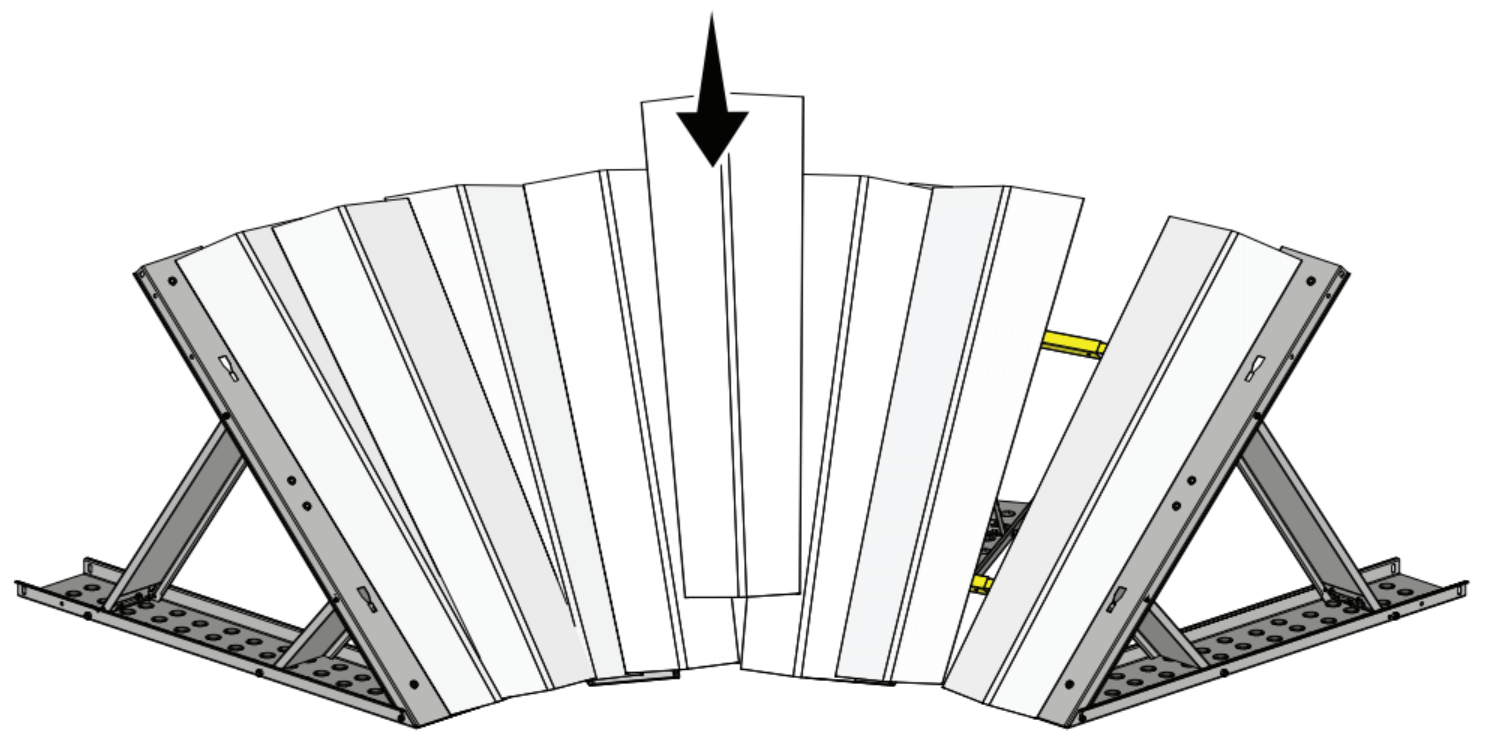
Fill the gap by sliding a third CE on top of the other two in the same way.
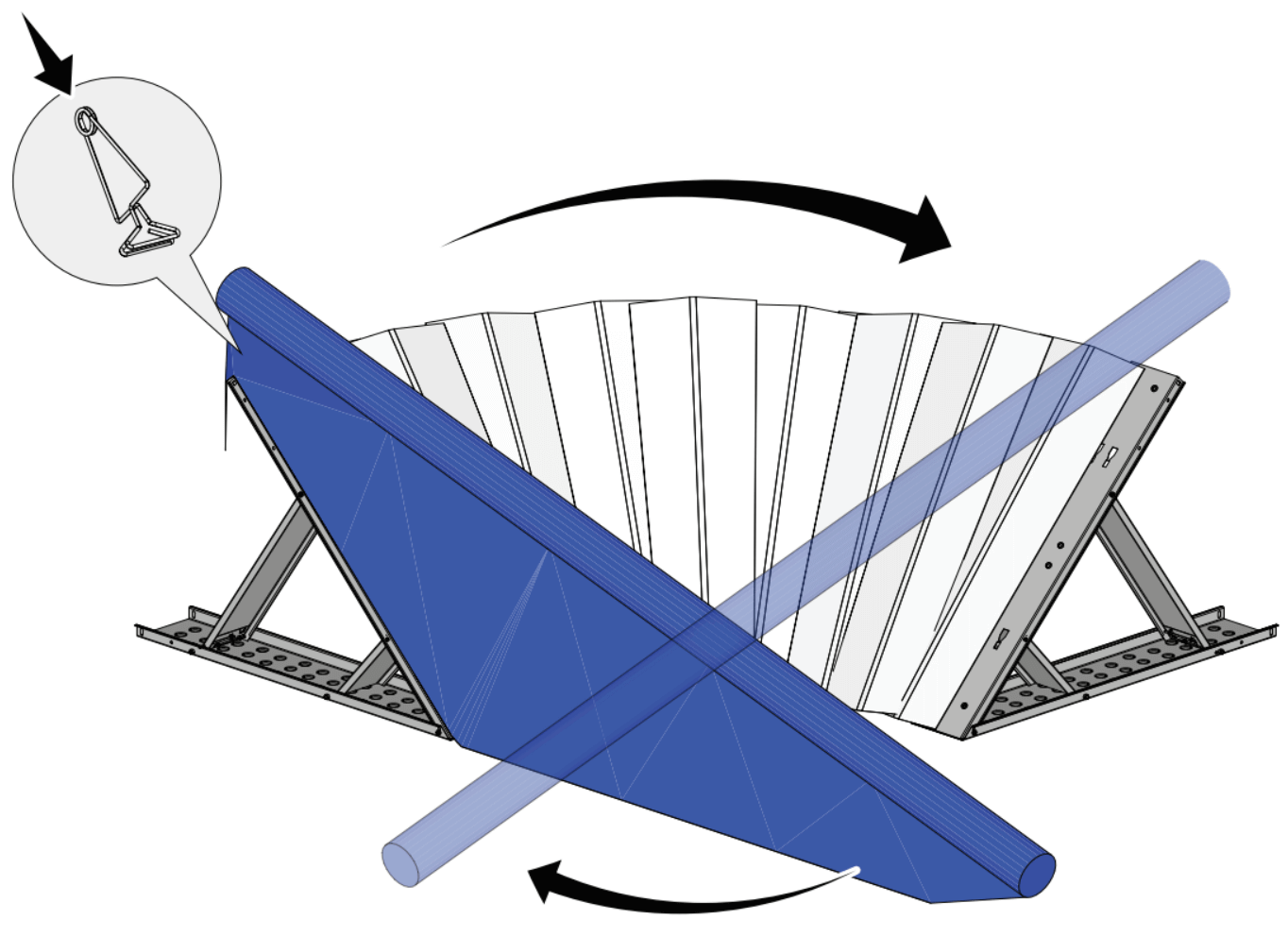
Fix the position of the membrane to the C122 inner corner with a sealer clip. Start rolling out the membrane from the beginning of the arc. Fold over the top of the barrier by 20 - 25 cm. Rotate the membrane roll 90° to cover the inner corner.
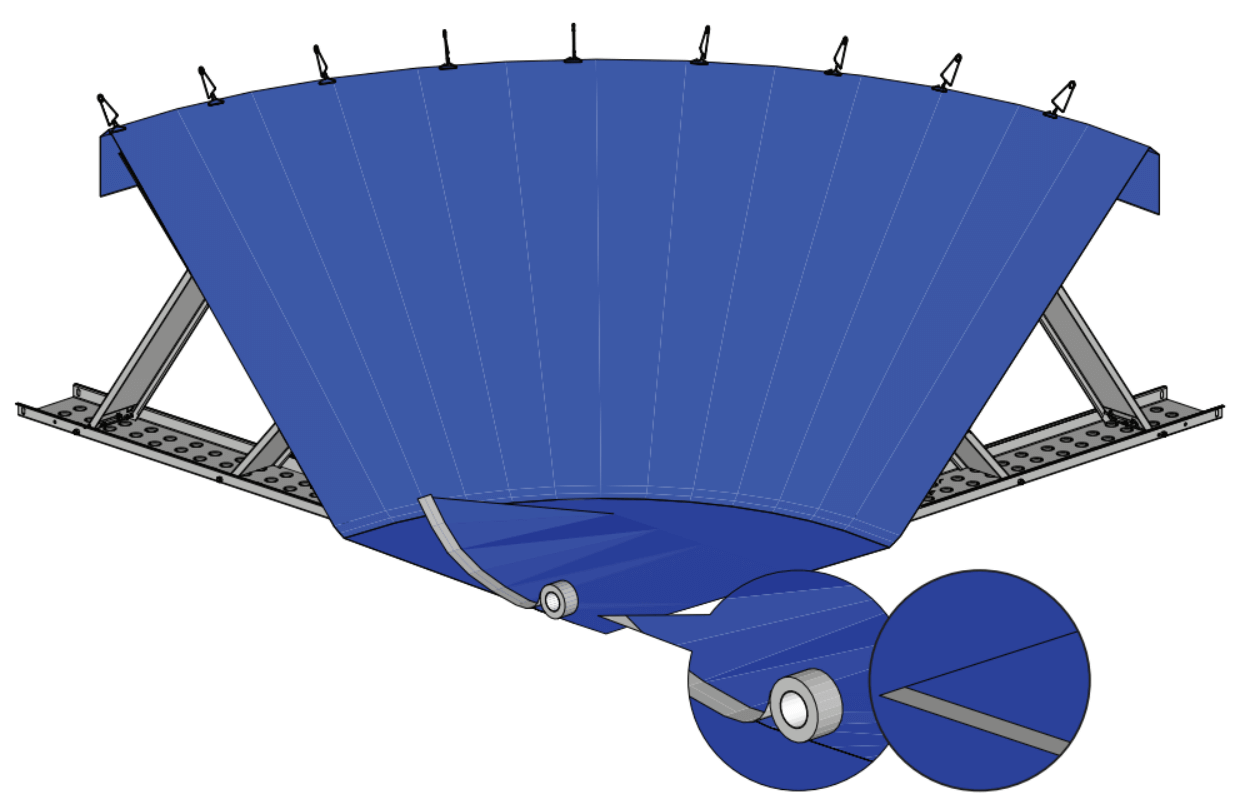
Secure the membrane with three sealer clips per section – in total 9 clips for the whole corner – along the top edge. Fold the surplus plastic neatly and close the openings using duct tape.
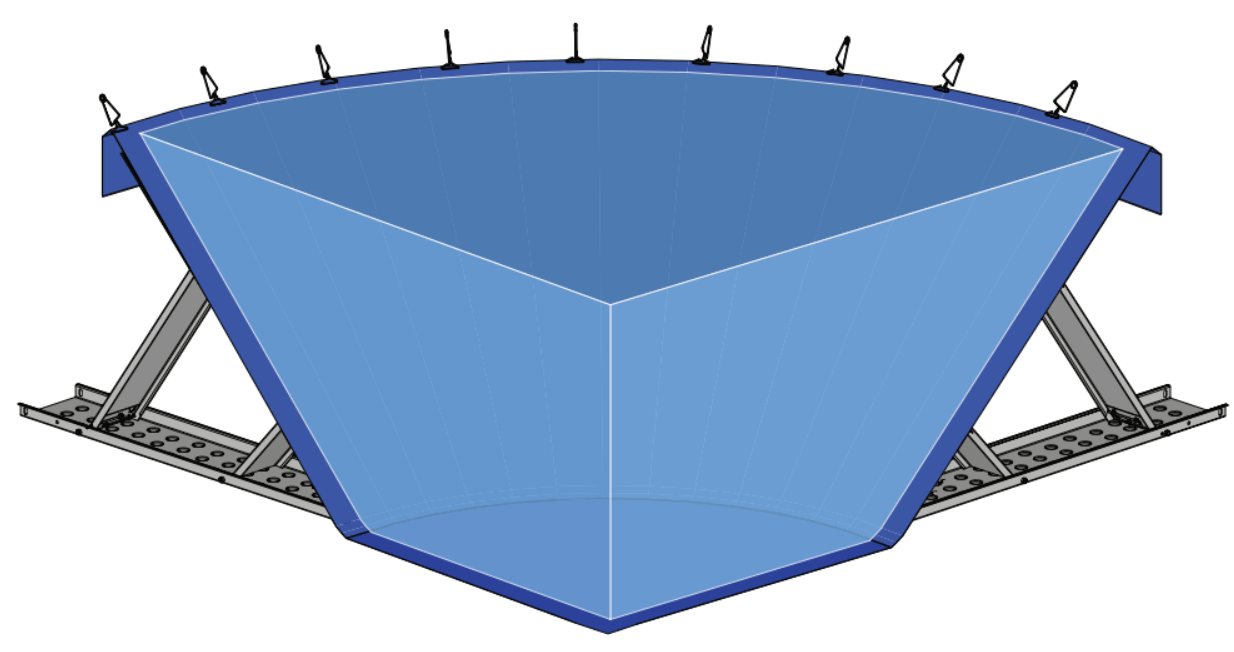
Installed and self-anchored as rising water presses the barriers to the ground.
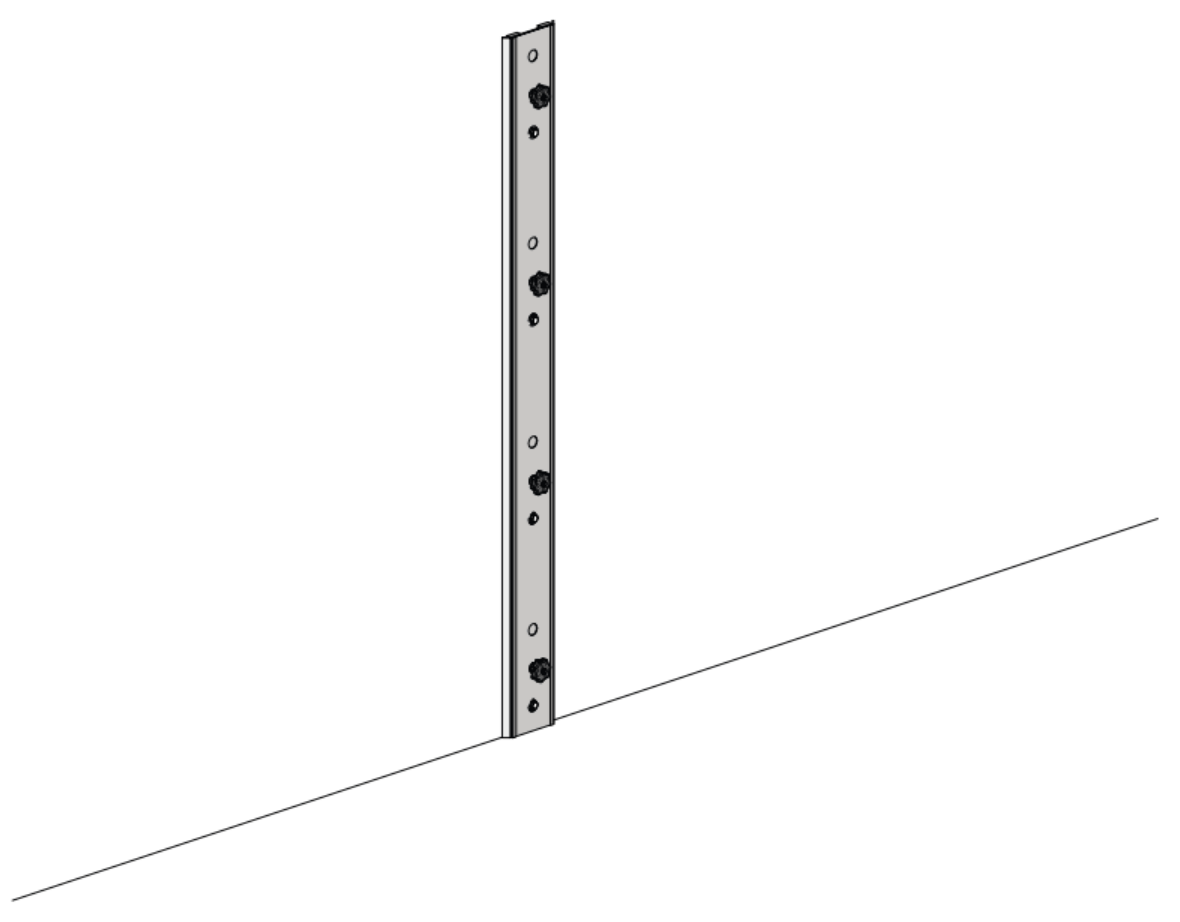
Hold the wall batten up against the wall in the desired position.
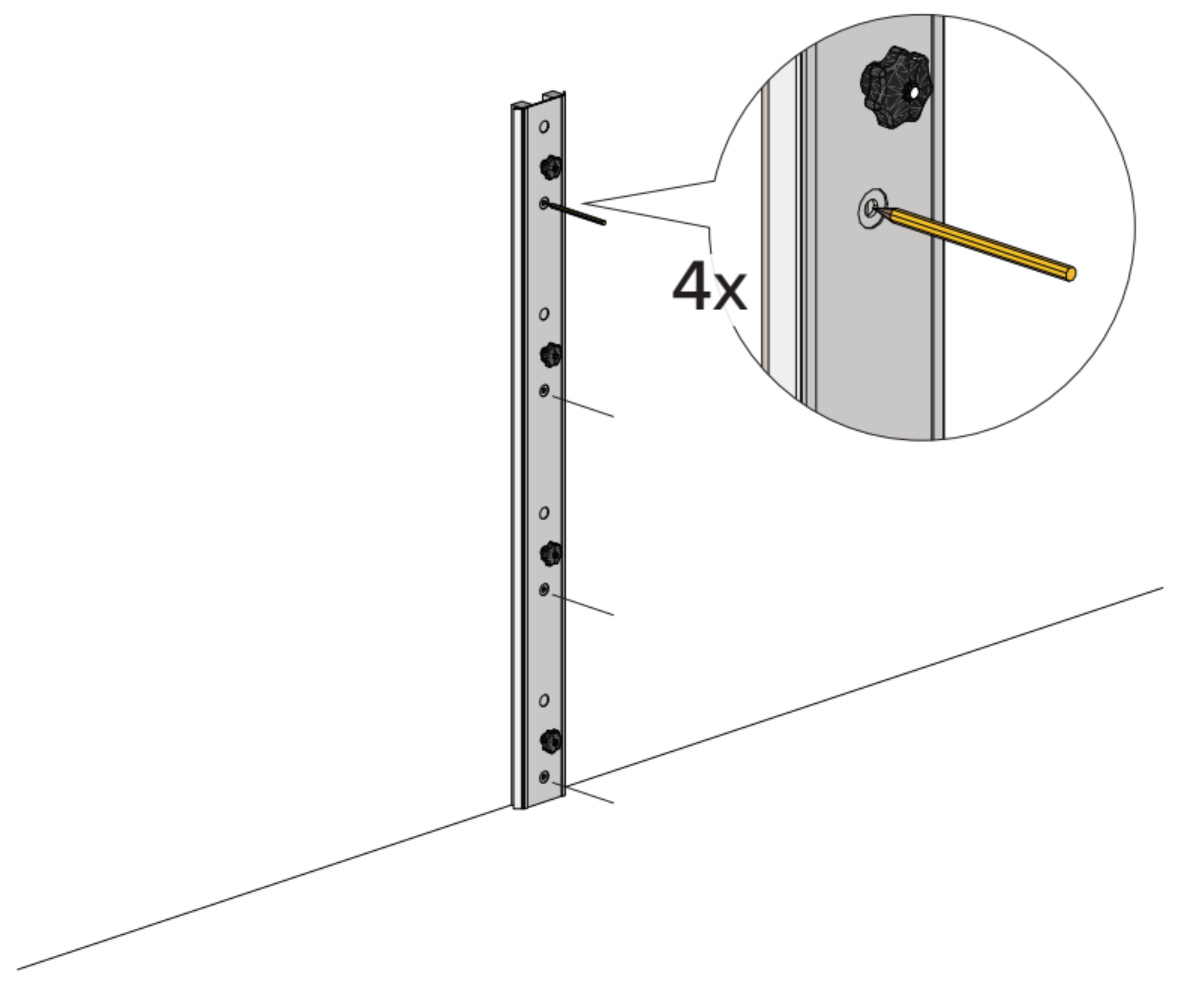
Use a pen to make markings on the wall where the holes in the wall batten are located.
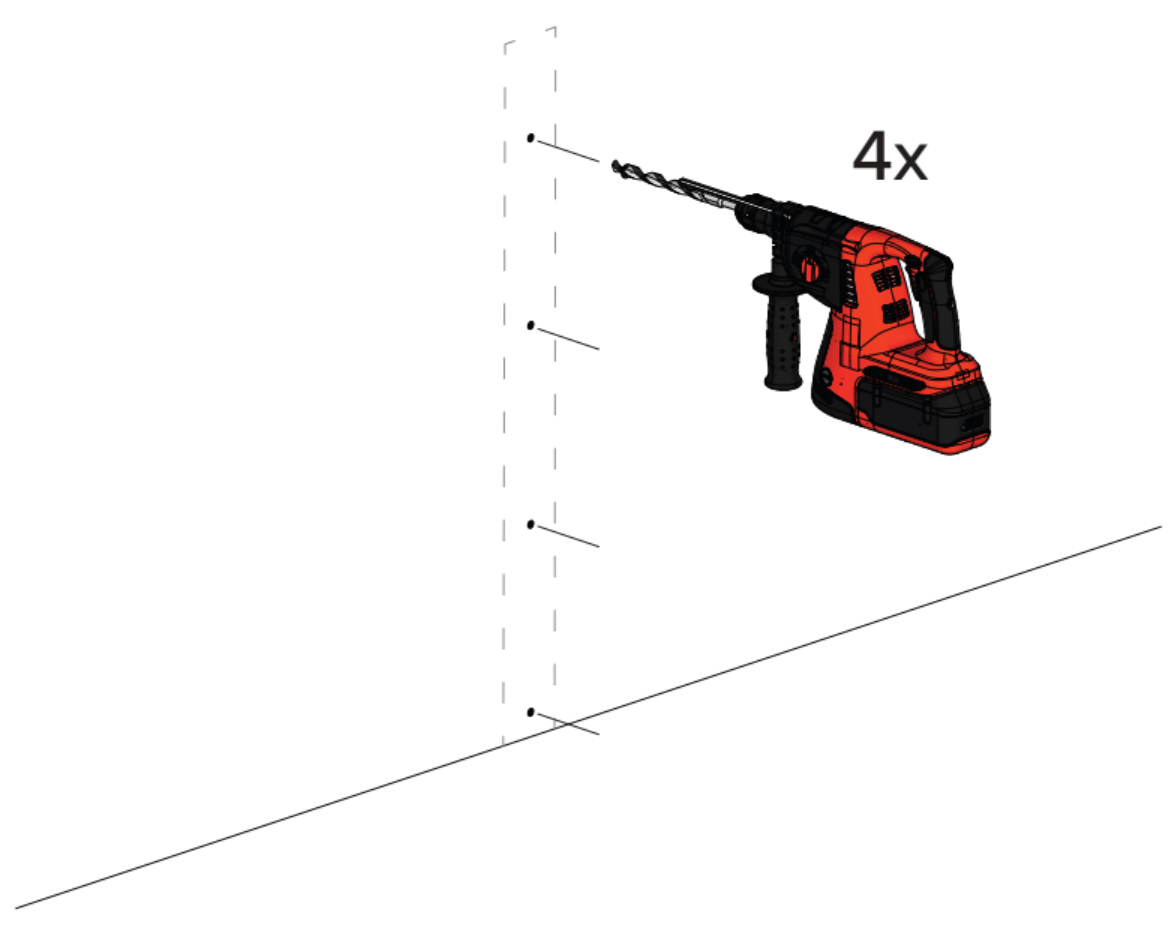
Drill holes in the wall and install suitable anchors.
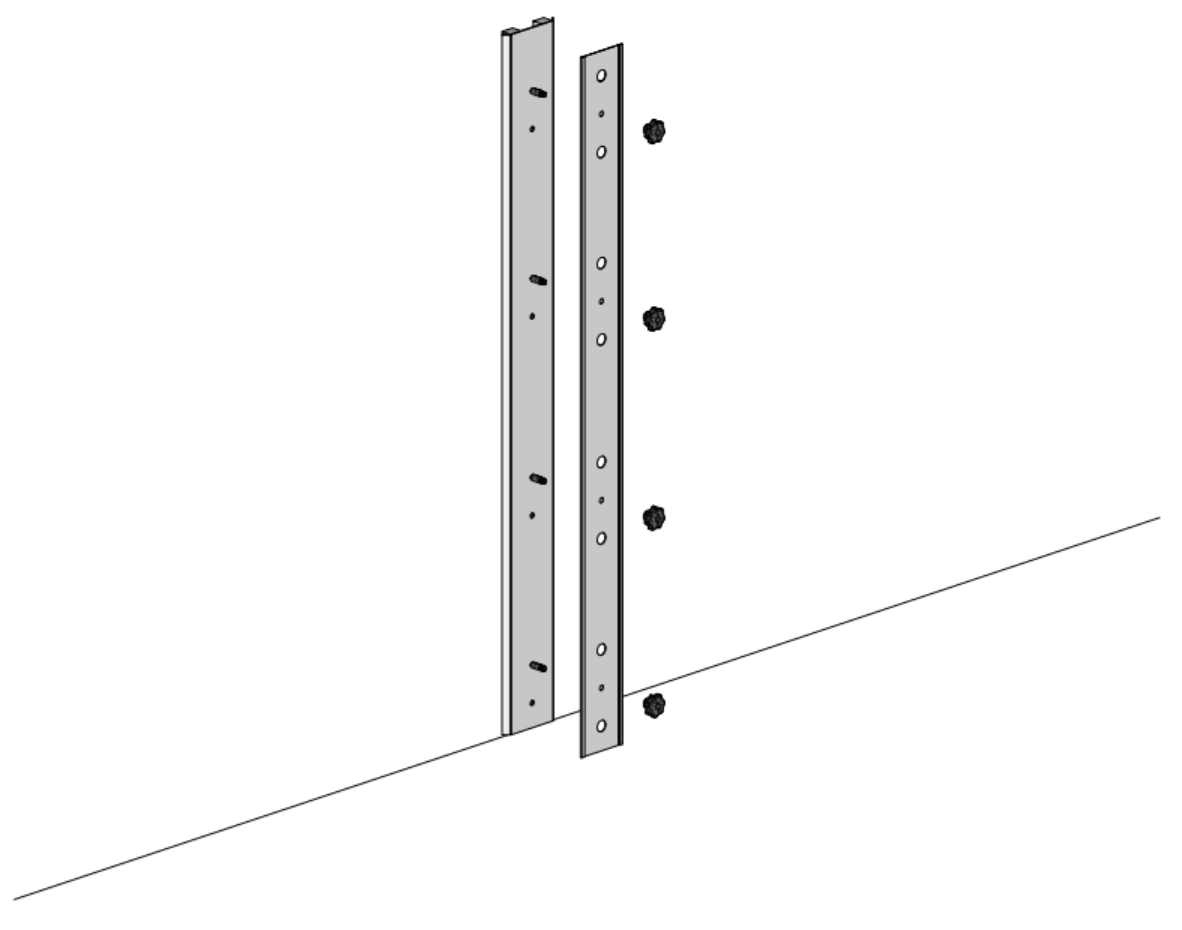
Unscrew the four tightening knobs and remove the top plate from the wall batten.
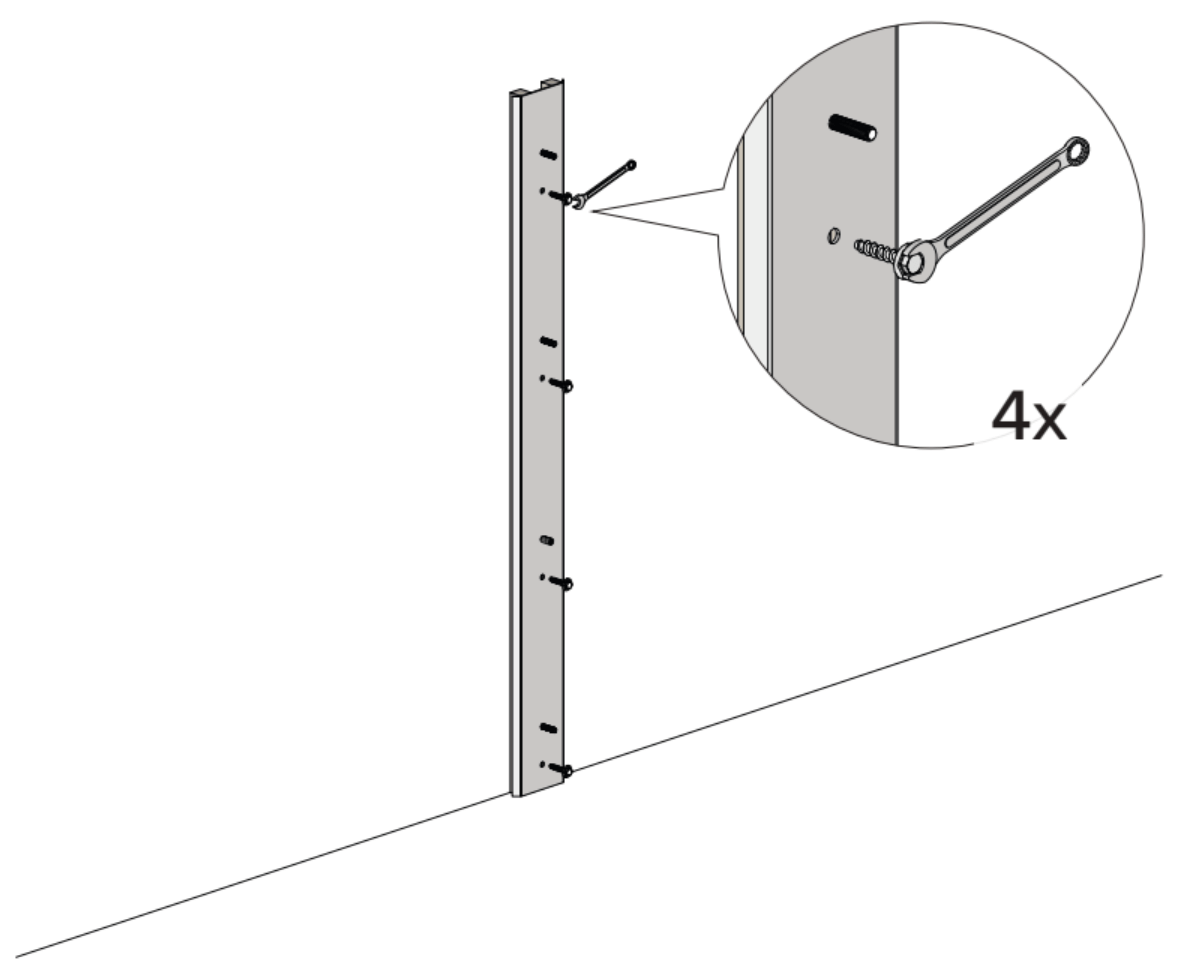
Mount the base batten to the pre drilled holes in the wall using screws, washers, nuts and bolts (not included).
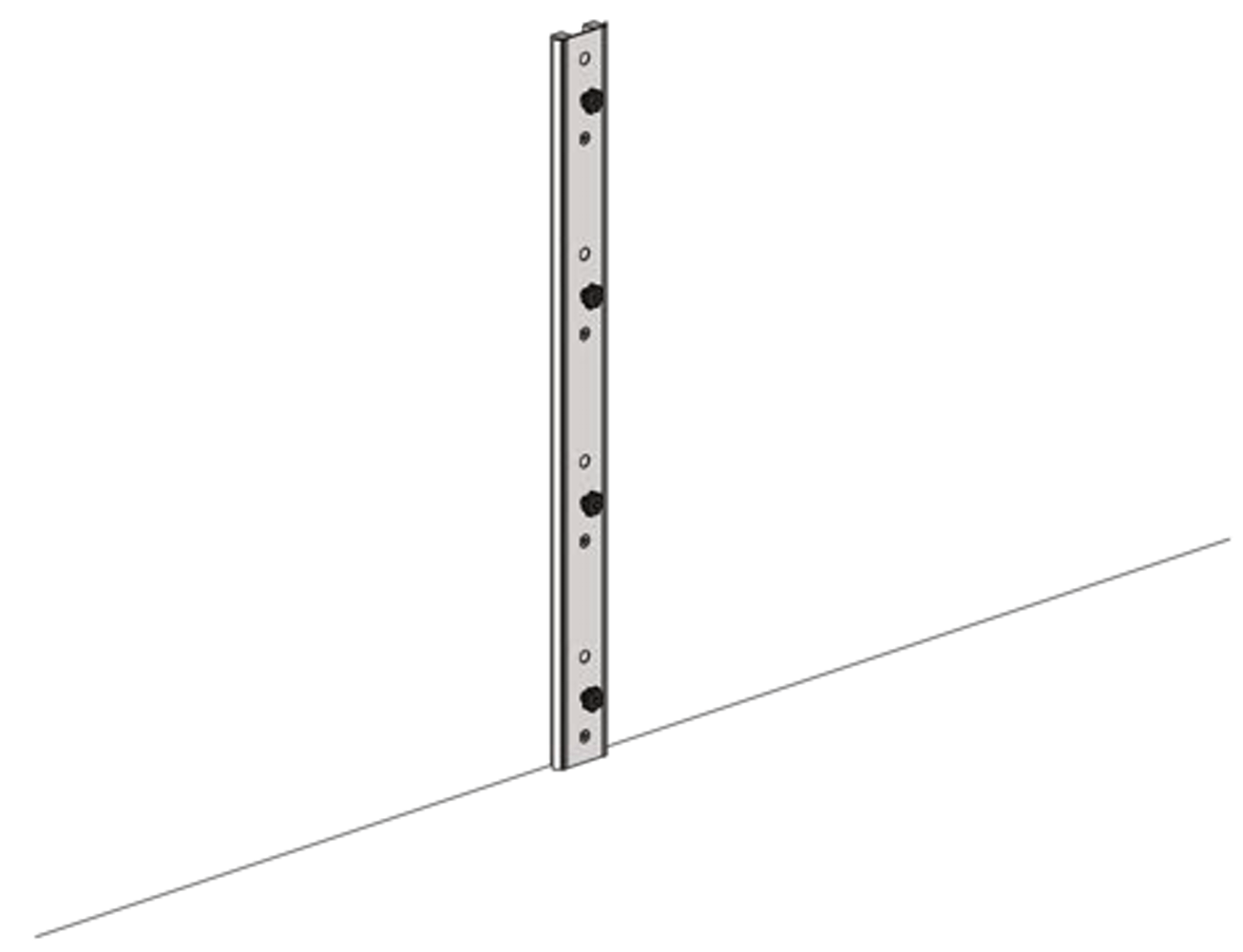
Put the top plate and the four tightening knobs back. C122 wall batten installed.
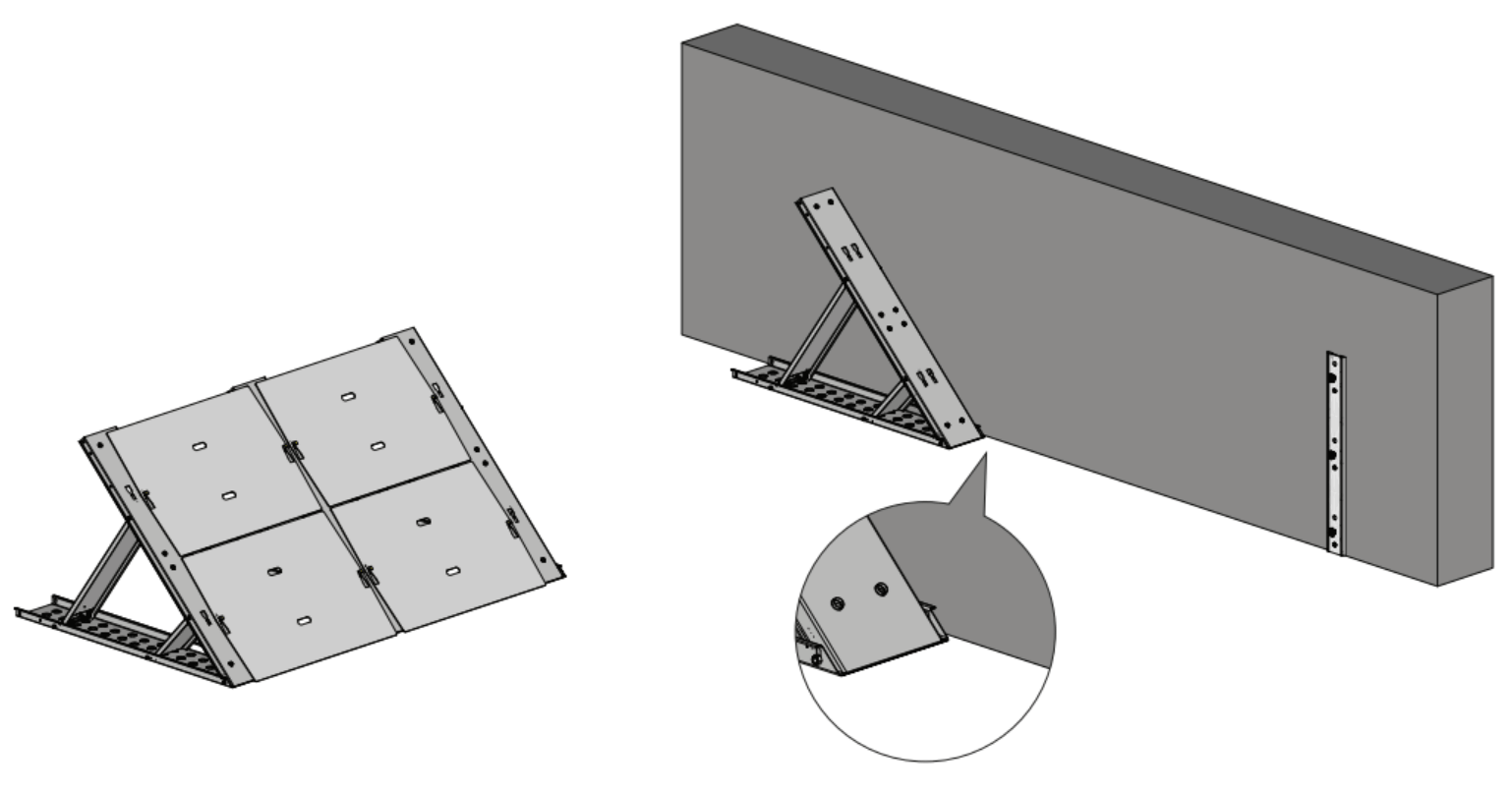
As the barrier line approaches the wall, stop at a distance of a few sections' lengths from the wall. Place the support in line with the barrier, parallel to the wall, as close to it as possible.
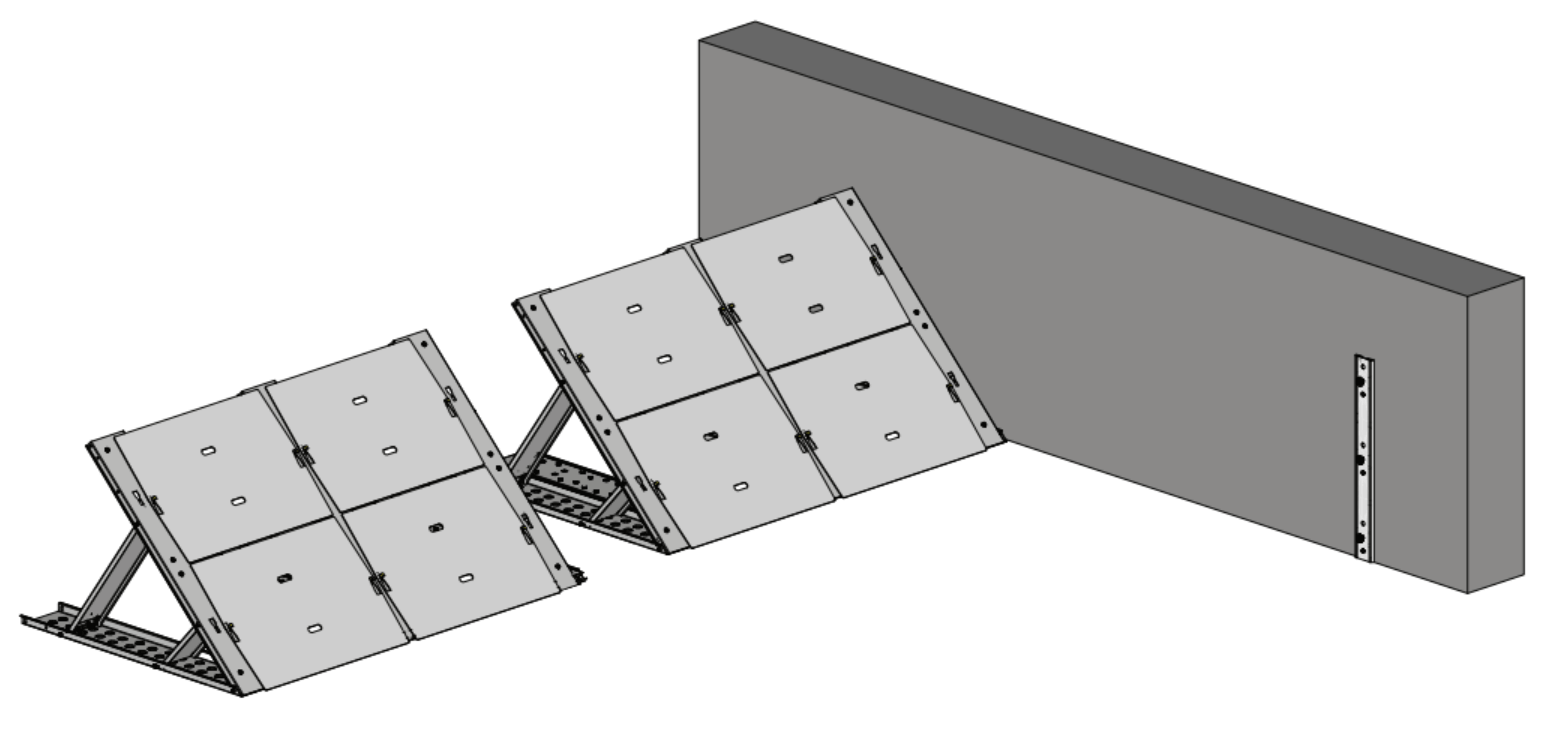
Start assembling the barrier from the wall towards the already assembled barrier leading up to the wall.
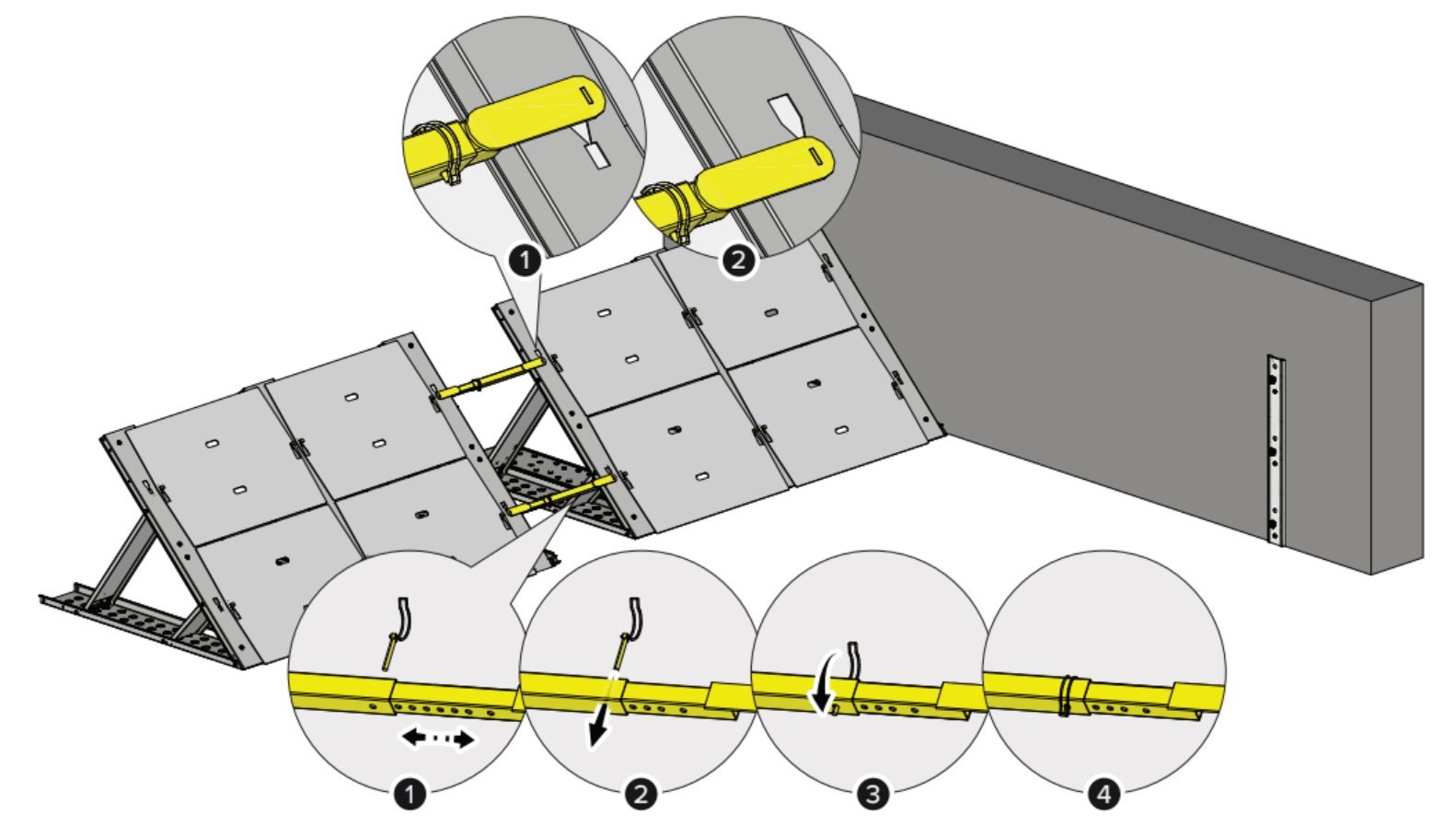
Patch the section where the two barrier lines meet using adjustable link bars (ALB). Attach ALBs through keyhole cut on the front beam and slide down to lock. Fix and adapt the ALBs to suitable lengths using their D-clips.
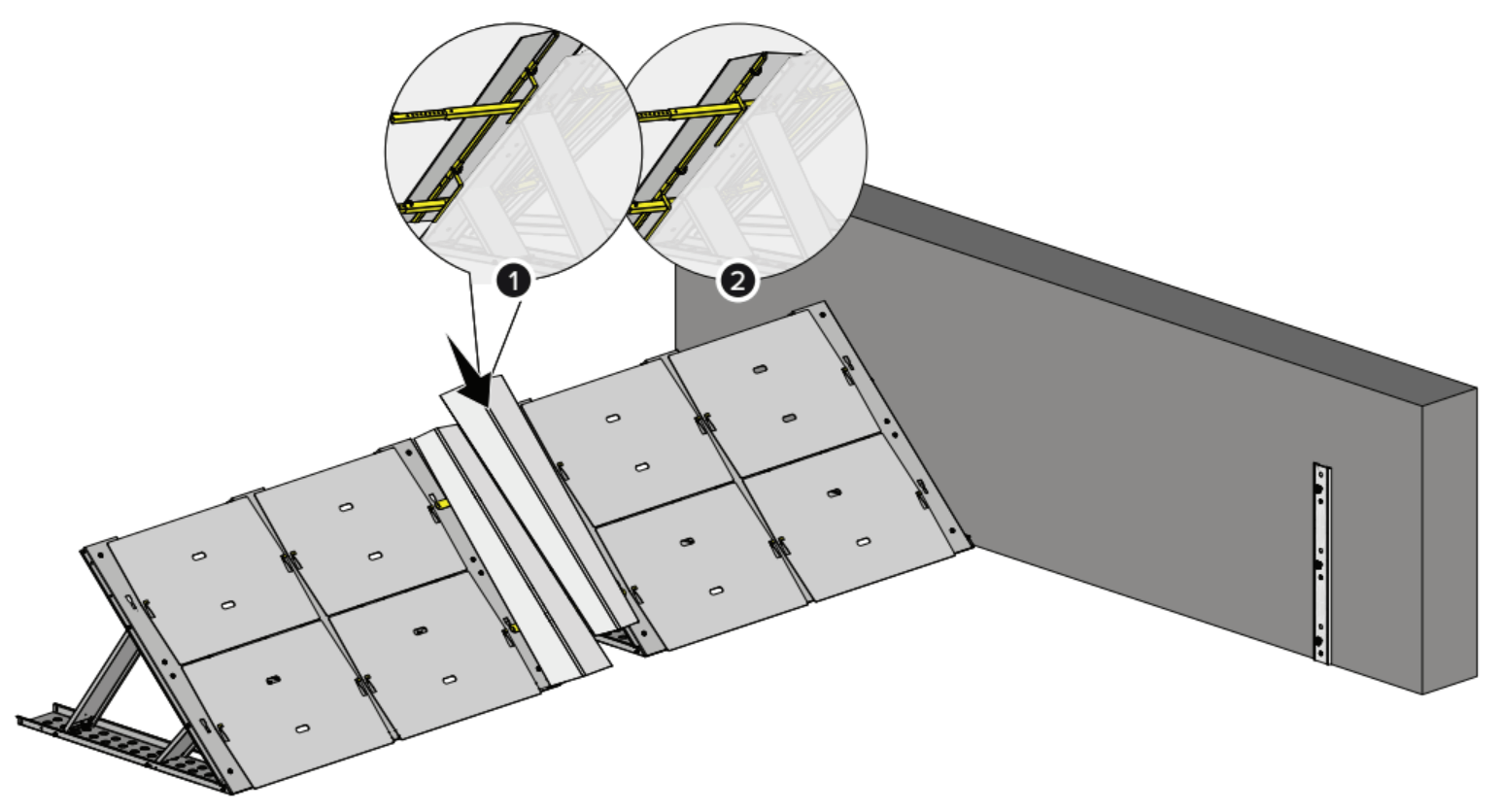
Start covering the adjustable section with corner elements. Place them onto the ALB. Slide them down into position (one up, one down) ensuring the handles hook onto the ALBs. More detailed instructions can be found in the "C122 Adjustable section - Setup manual”.
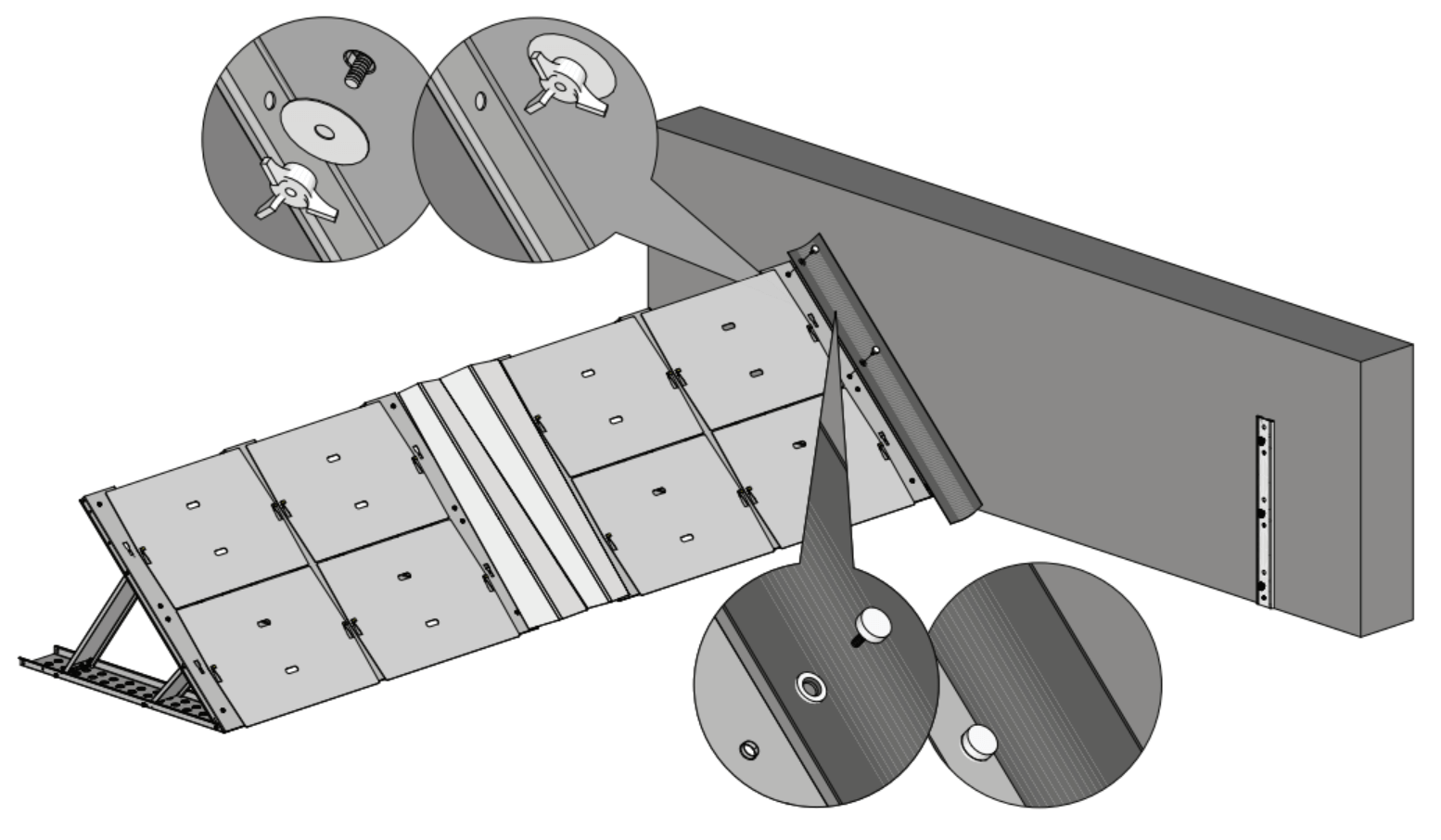
Mount the wall connection pad to the front of the C122 support to bridge the gap to the wall. Align the holes in the pad with the round collared holes on the support and secure with the three armed wing nuts.
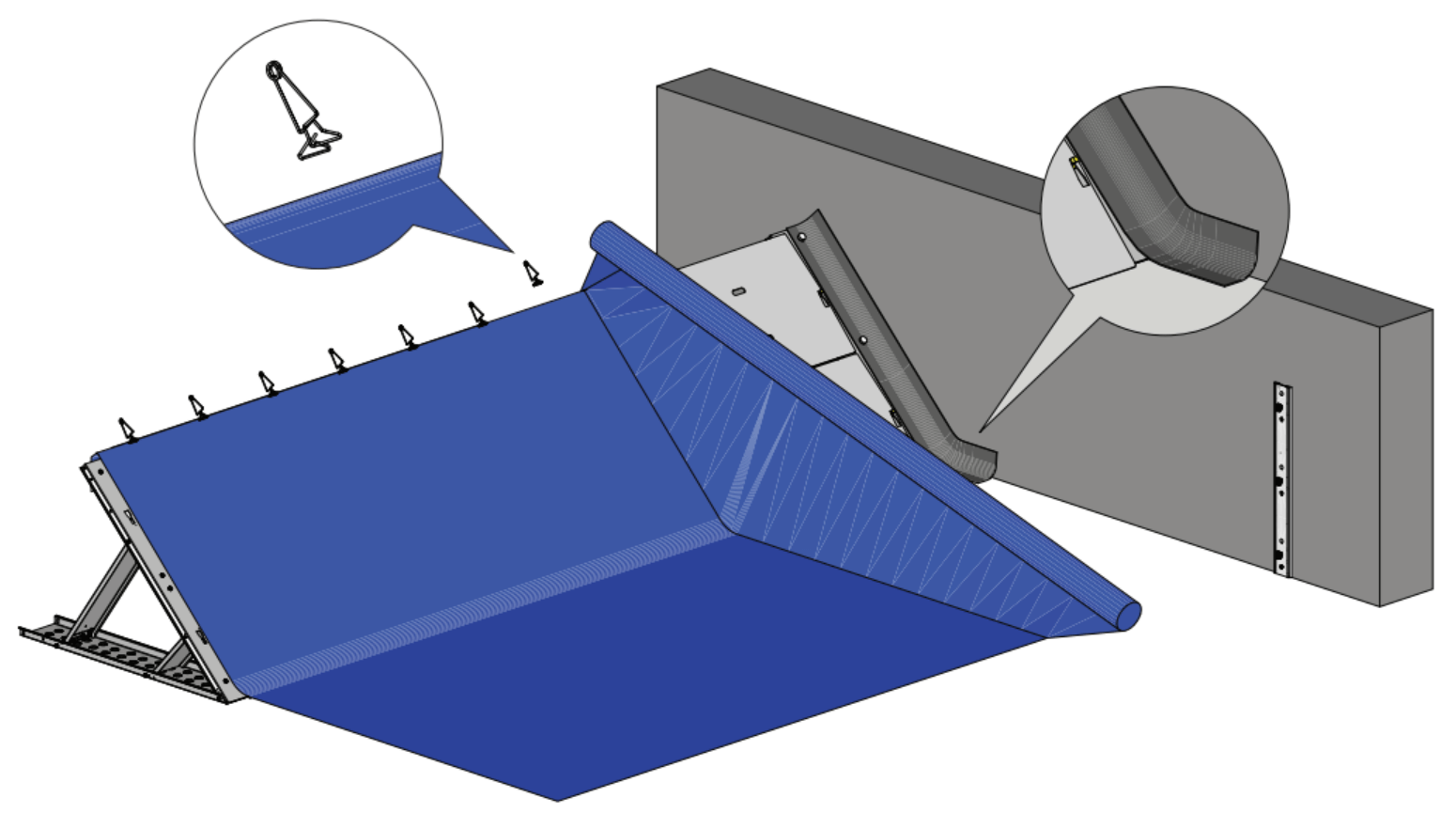
Align the bottom part of wall connection pad to the ground. Roll out the membrane over the barrier and secure with two sealer clips per section, along the top edge. Ensure that there is 20 - 25 cm overlap at the back of the barrier.
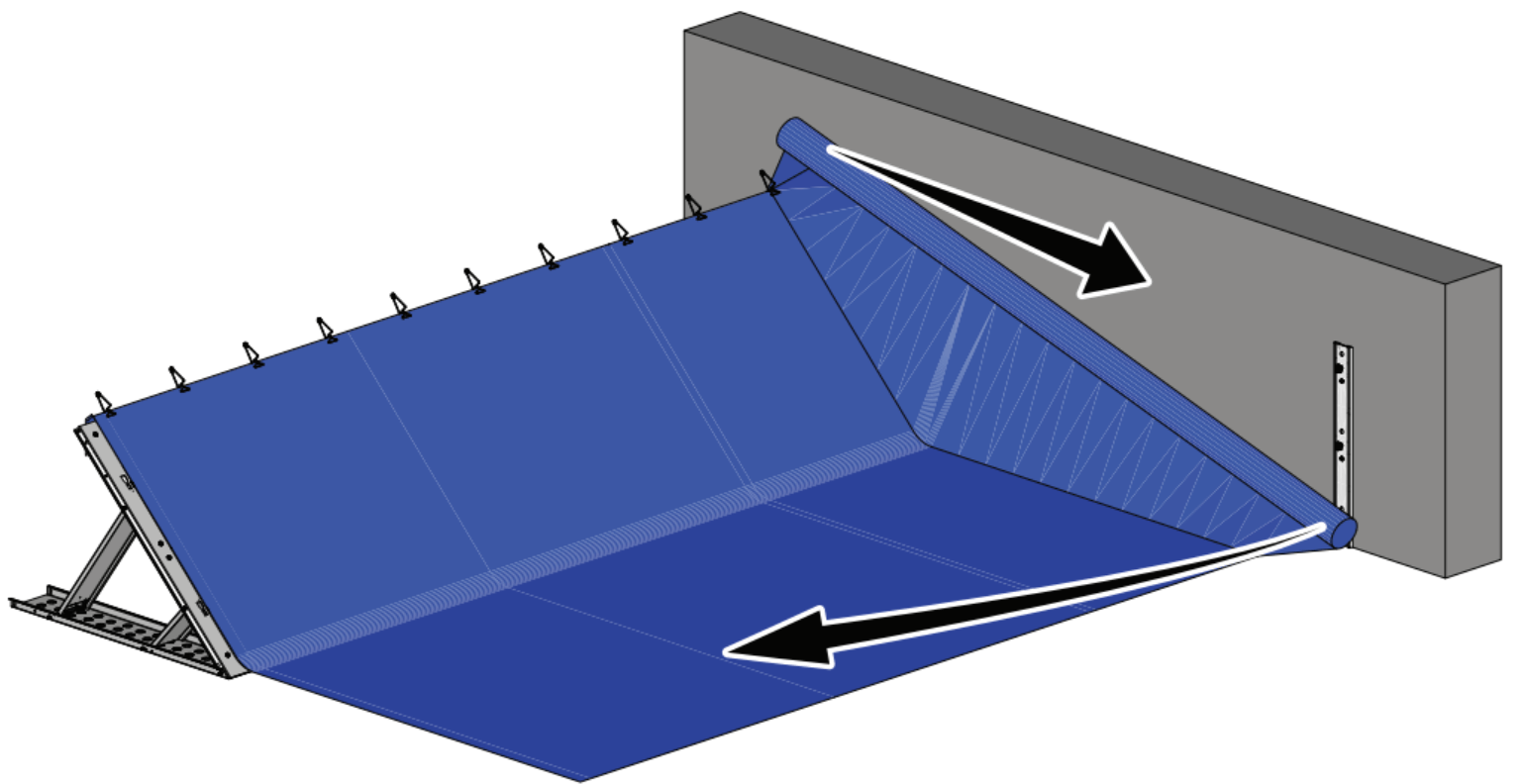
Continue to cover the barrier. Stop close to the wall. Make a 90 degree turn with the membrane to cover the the wall.
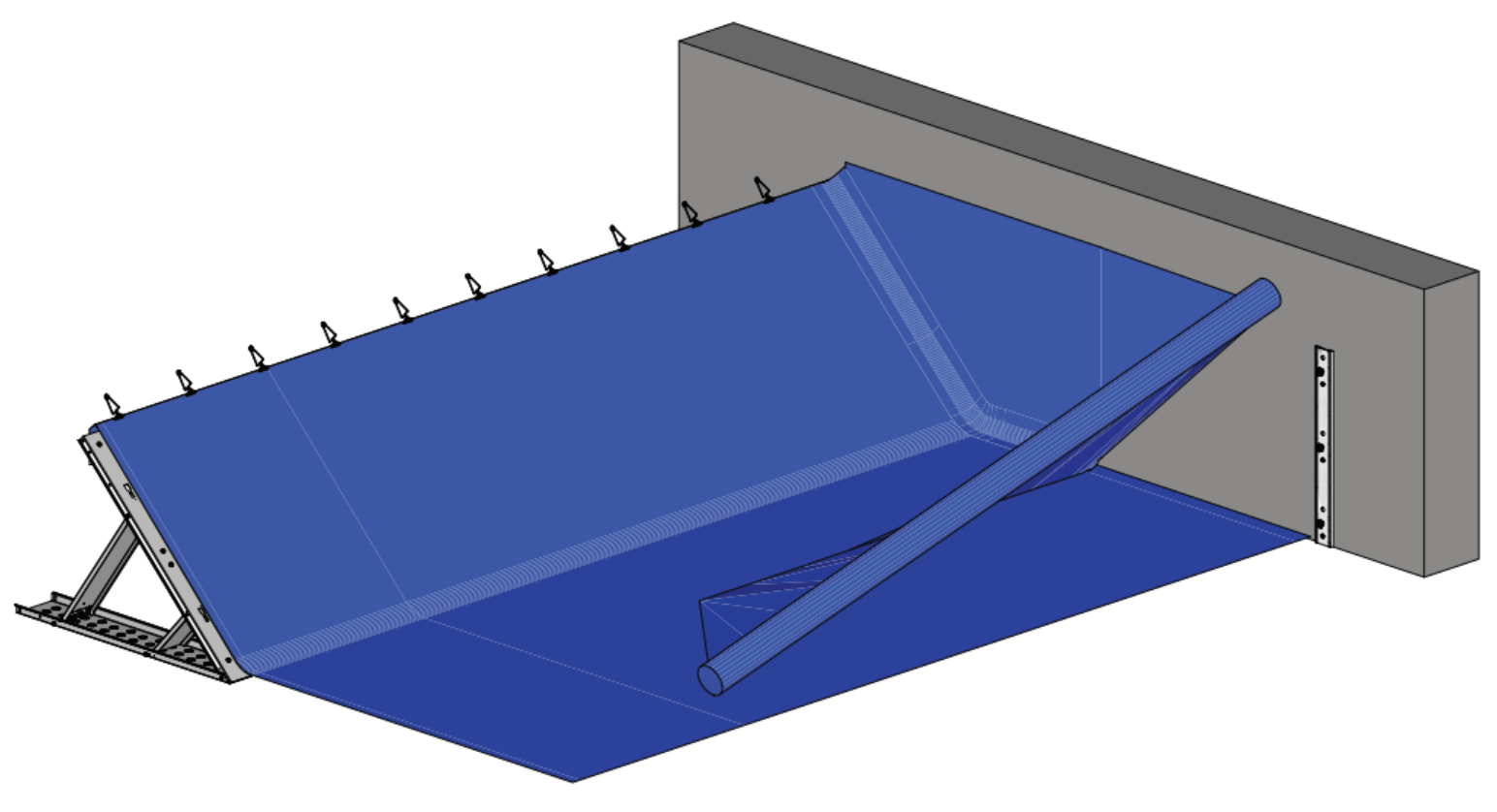
Make sure the membrane covers the wall all the way to the previously attached 122 wall batten.
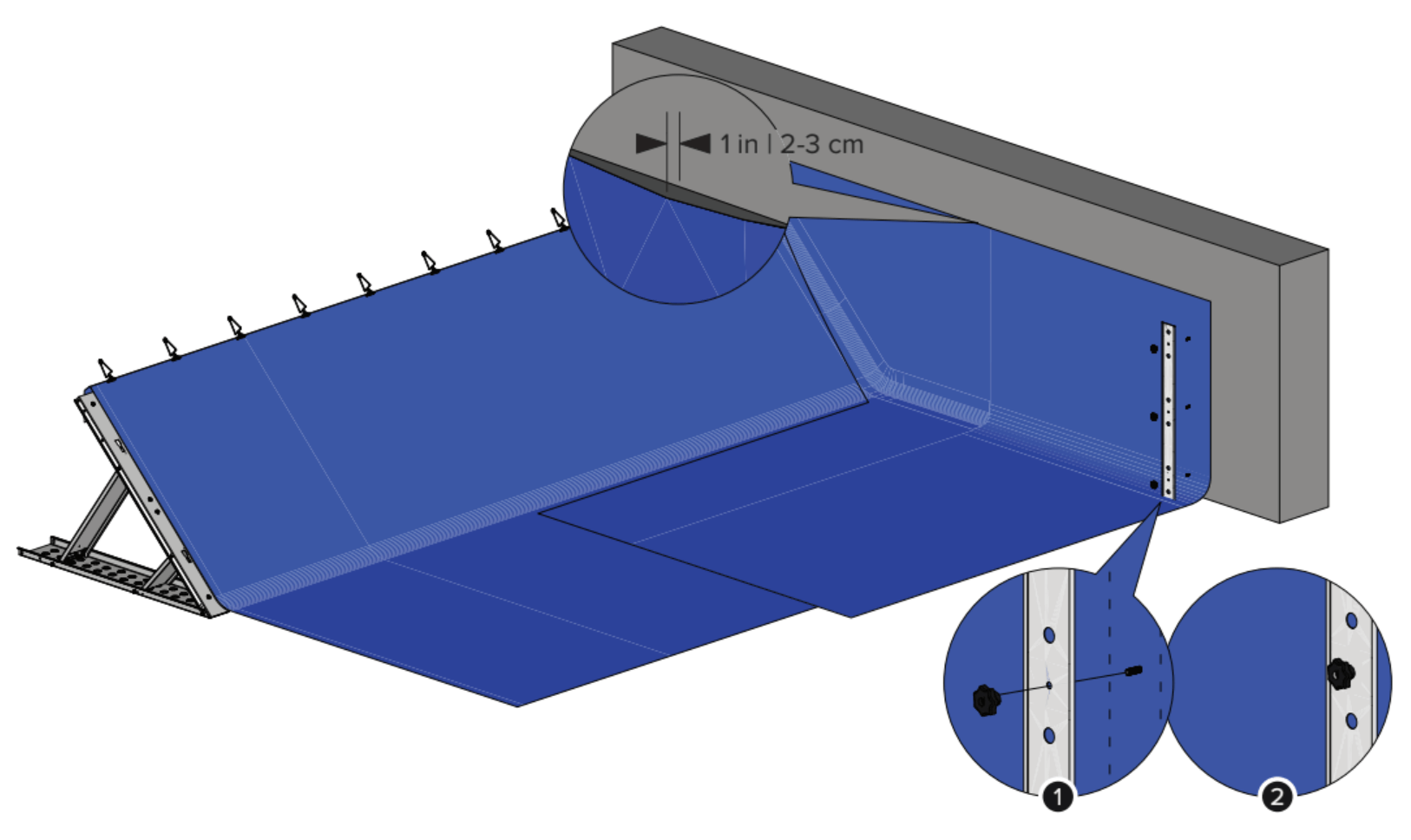
Give the membrane some slack, leaving a 2-3 cm gap to the wall. Remove the front plate from the 122 wall batten and feed the membrane in – sandwiched between the two plates. Put the front plate back, puncture the membrane and lock with the screws.
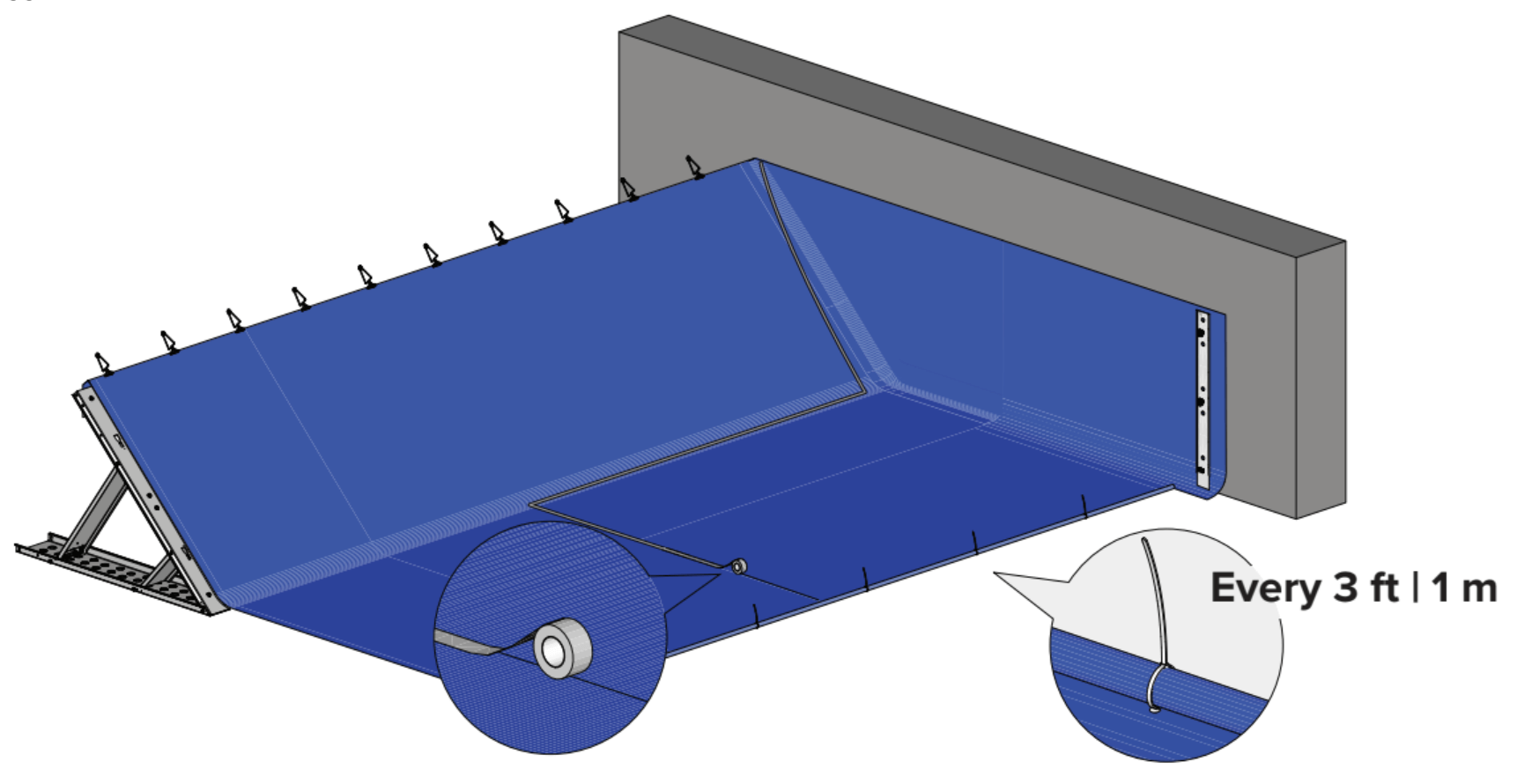
Use duct tape to seal the open parts of the membrane. Place the chain on the outer edge of the membrane and wrap it. Secure the embedded chain using cable ties – one every meter. More detailed instructions can be found in the "C122 Straight sections - Setup manual”.
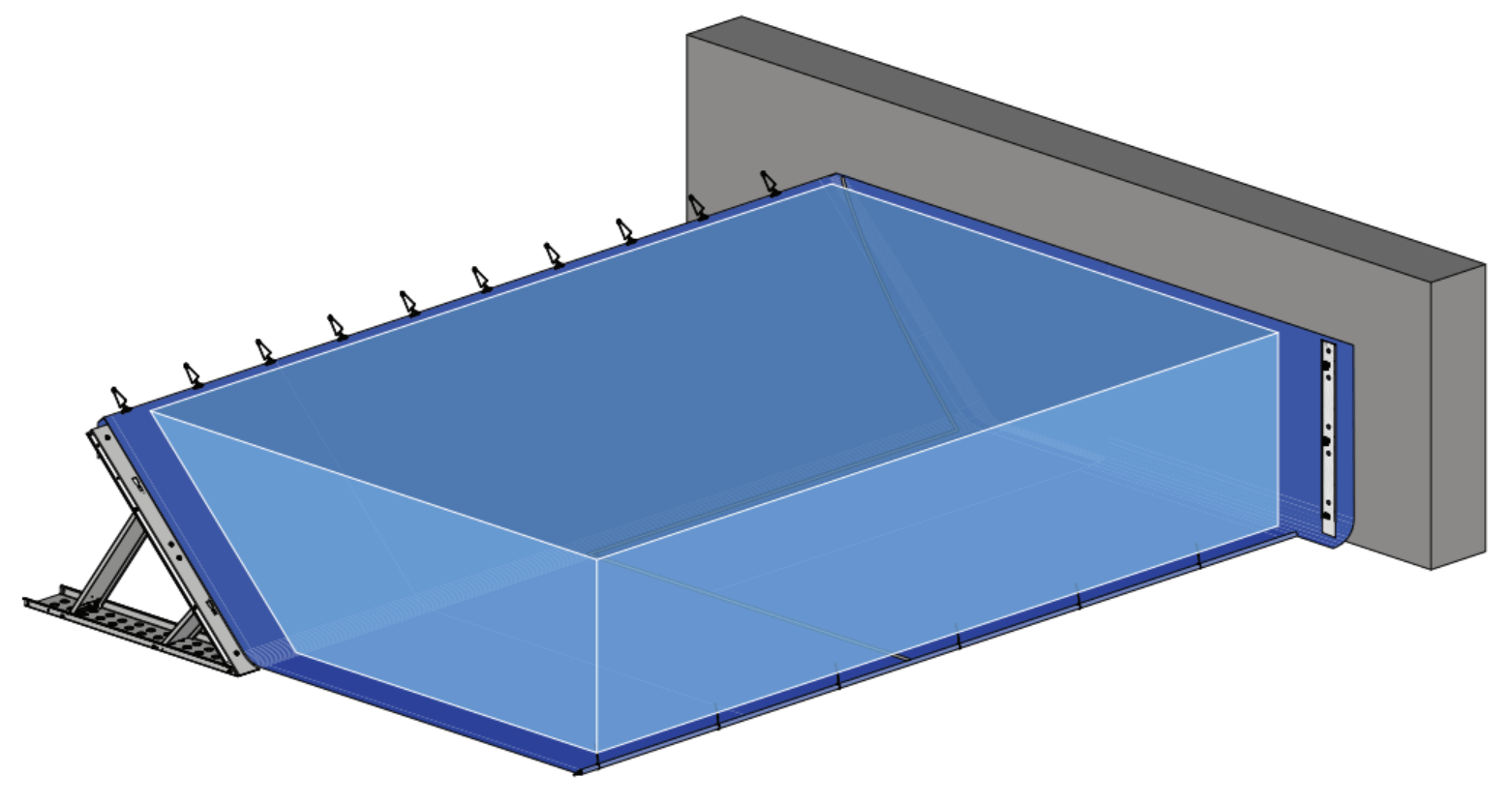
Installed.
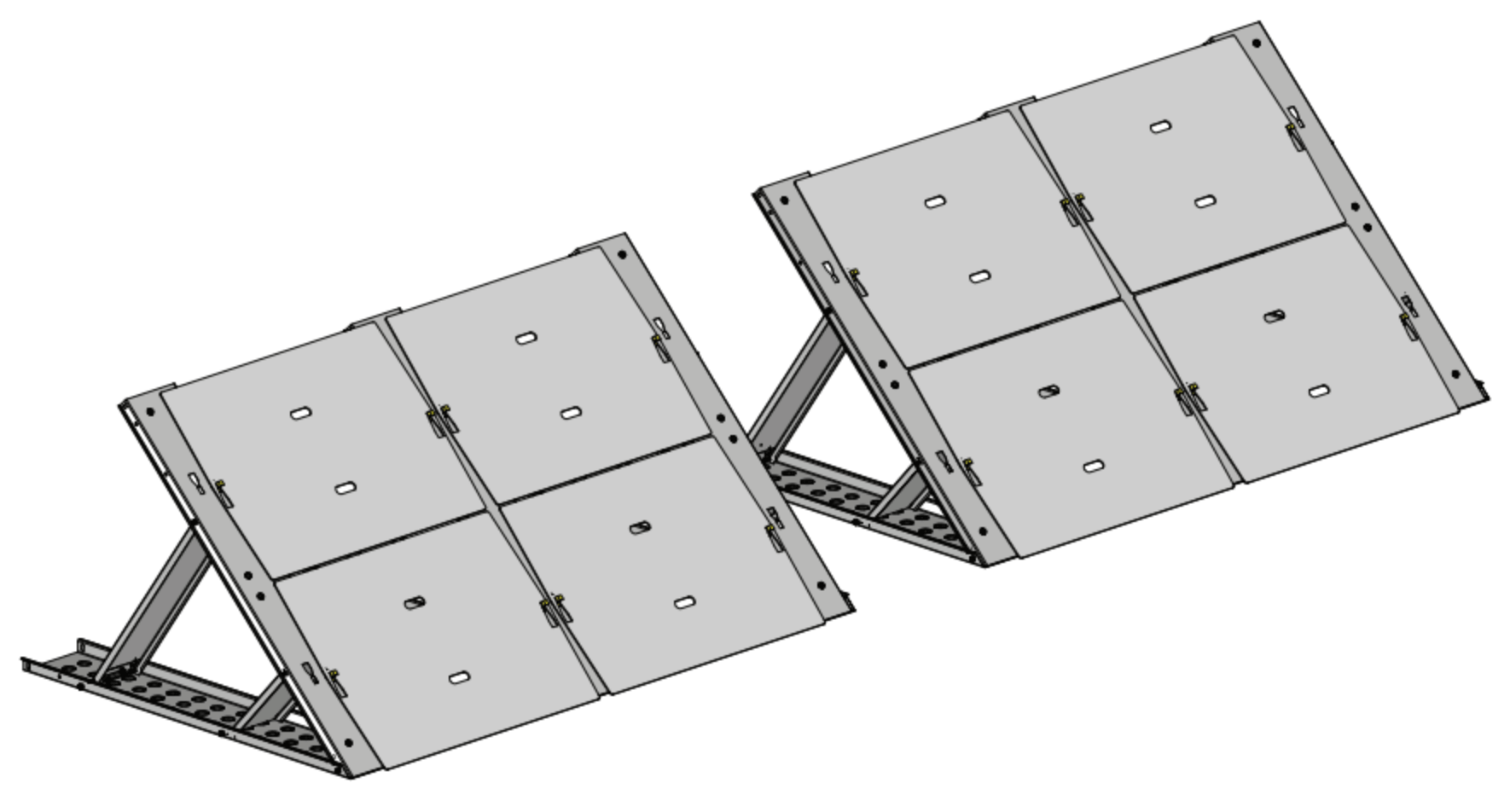
Build two approaching C122 barriers in a line. Stop when the distance between the barriers is smaller than one full section 1.2 m.
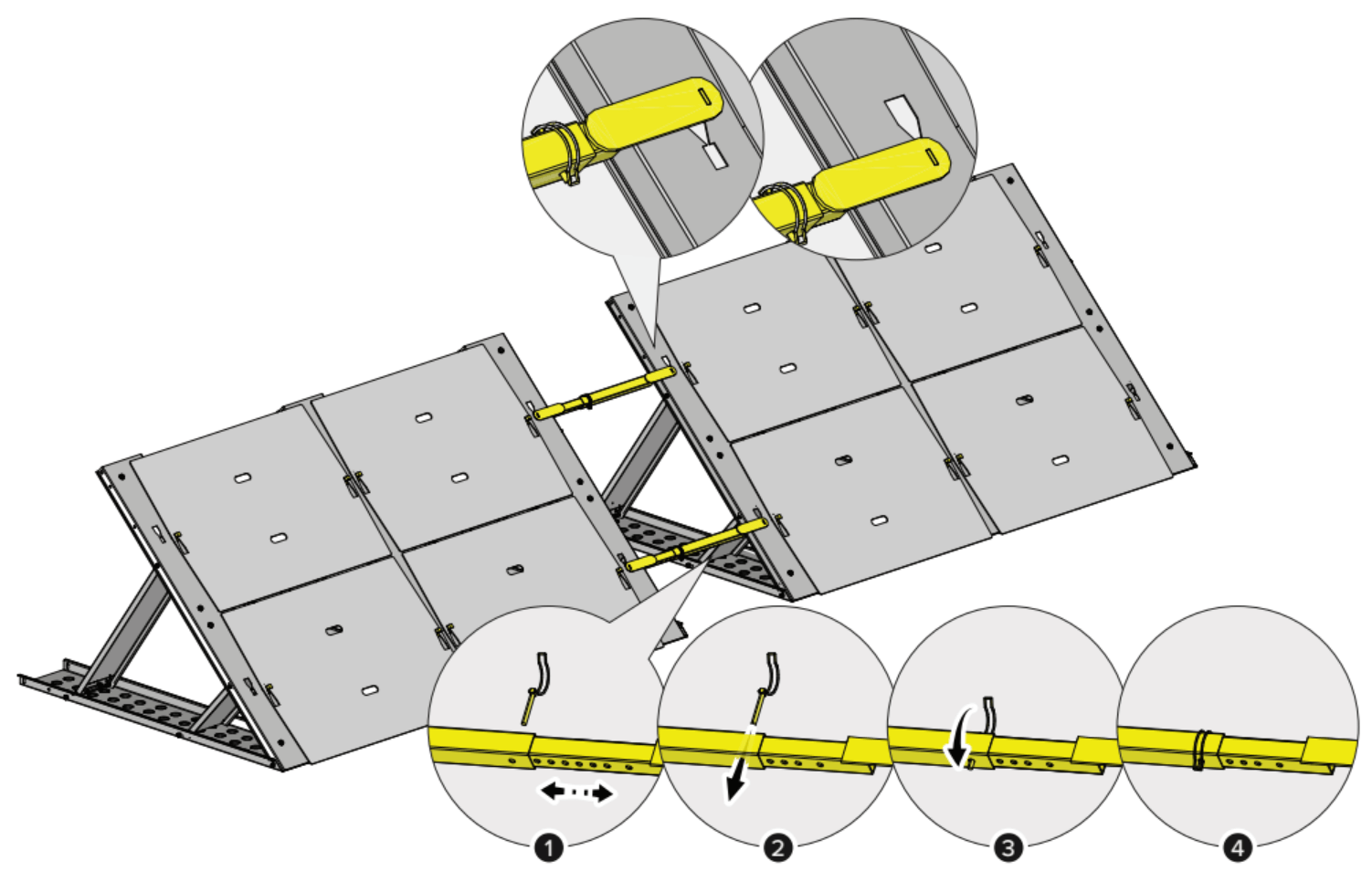
Patch the section where the two barrier lines meet using adjustable link bars (ALB). Attach ALBs through keyhole cut on the front beam and slide down to lock. Fix and adapt the ALBs to suitable lengths using their D-clips.
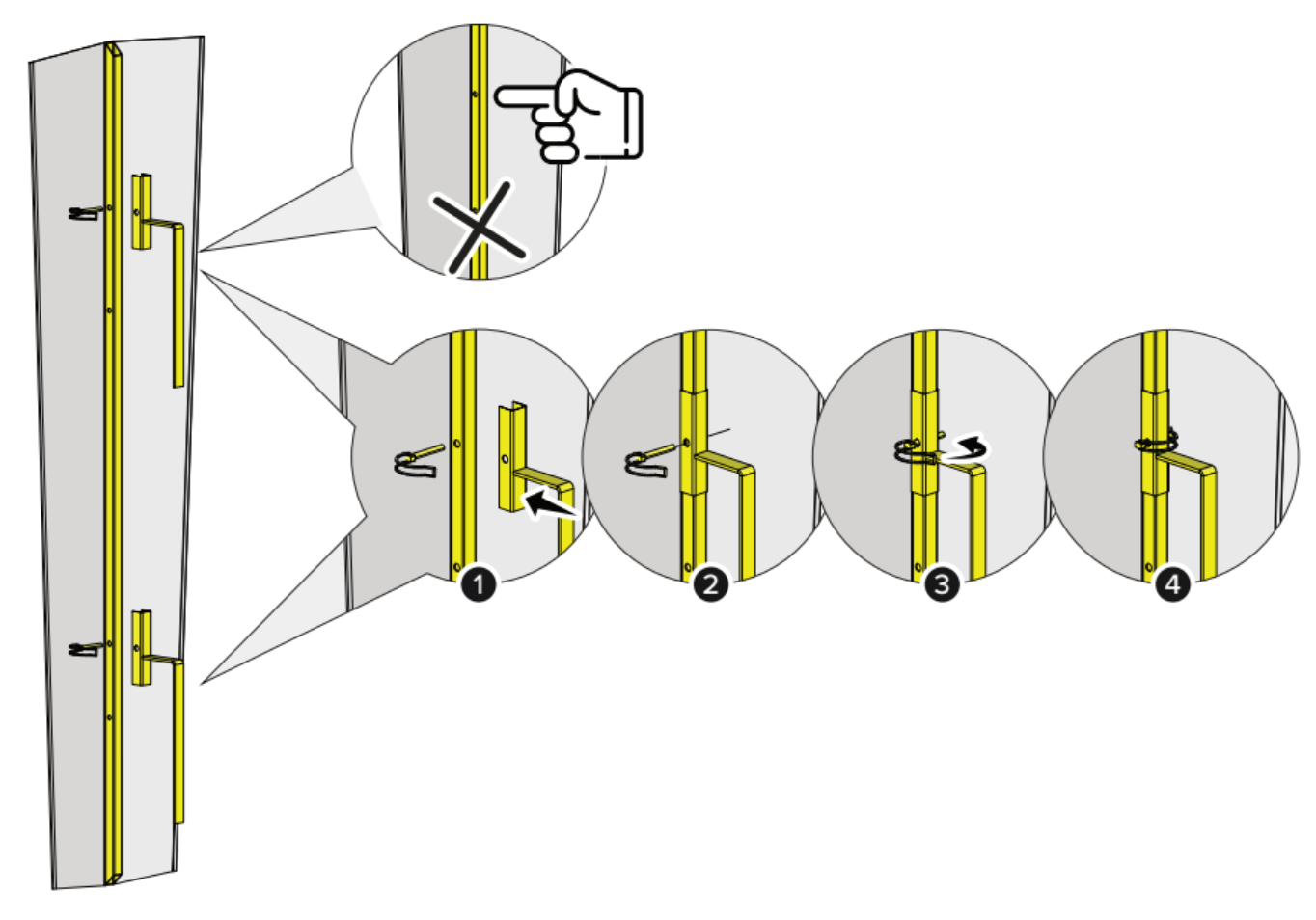
Prepare the corner element (CE) – hold it up, narrow part down. Attach two handles – one in each top hole of the CE, as shown. Fix the handles using their D-clips.
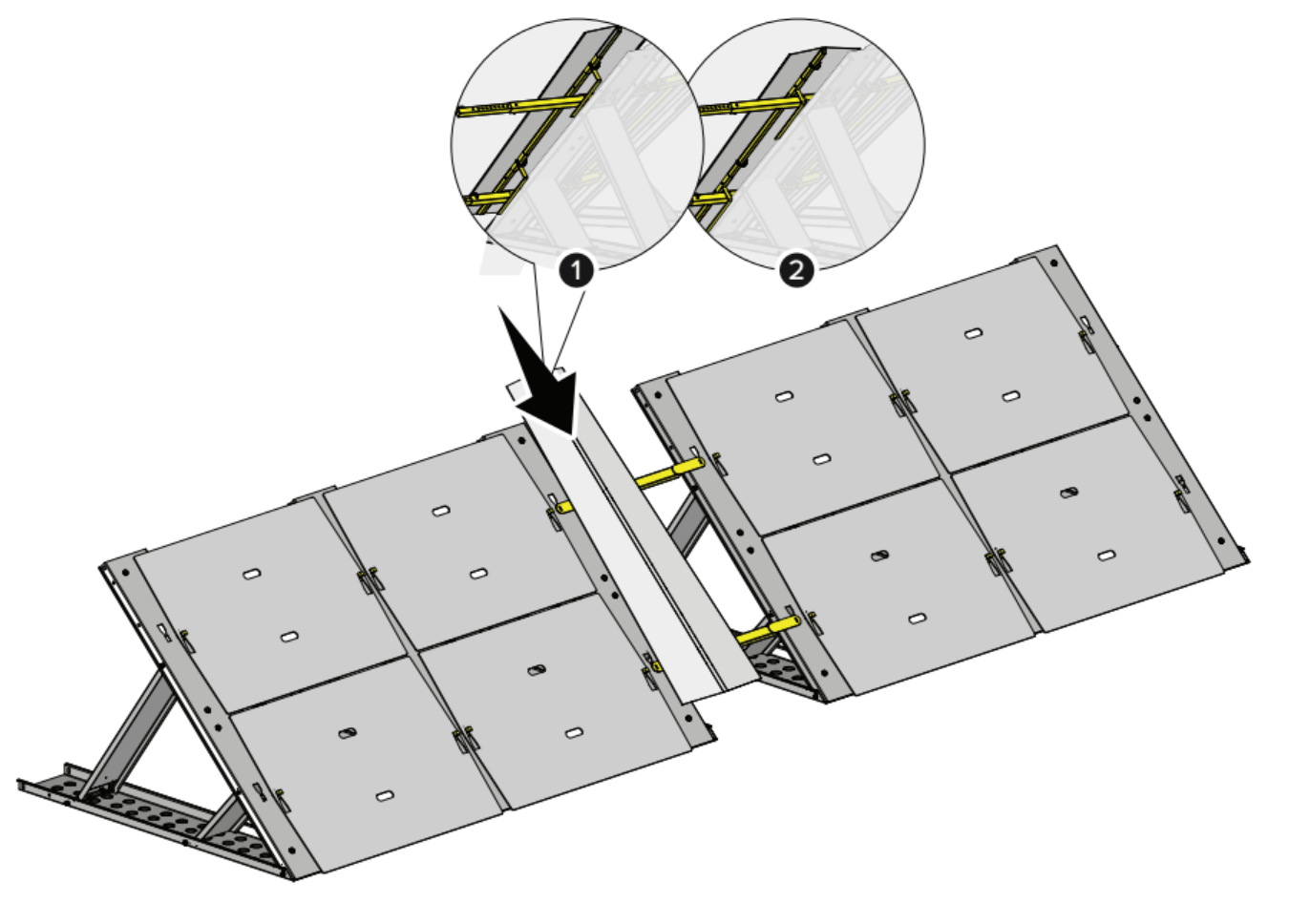
Start covering the adjustable section with the CE. Place it onto the ALB. Slide it into position ensuring the handles hook onto the ALBs.
Prepare another (CE) – hold it up, wide part down. Attach two handles – one in each top hole of the CE, as shown. Fix the handles using their D-clips.
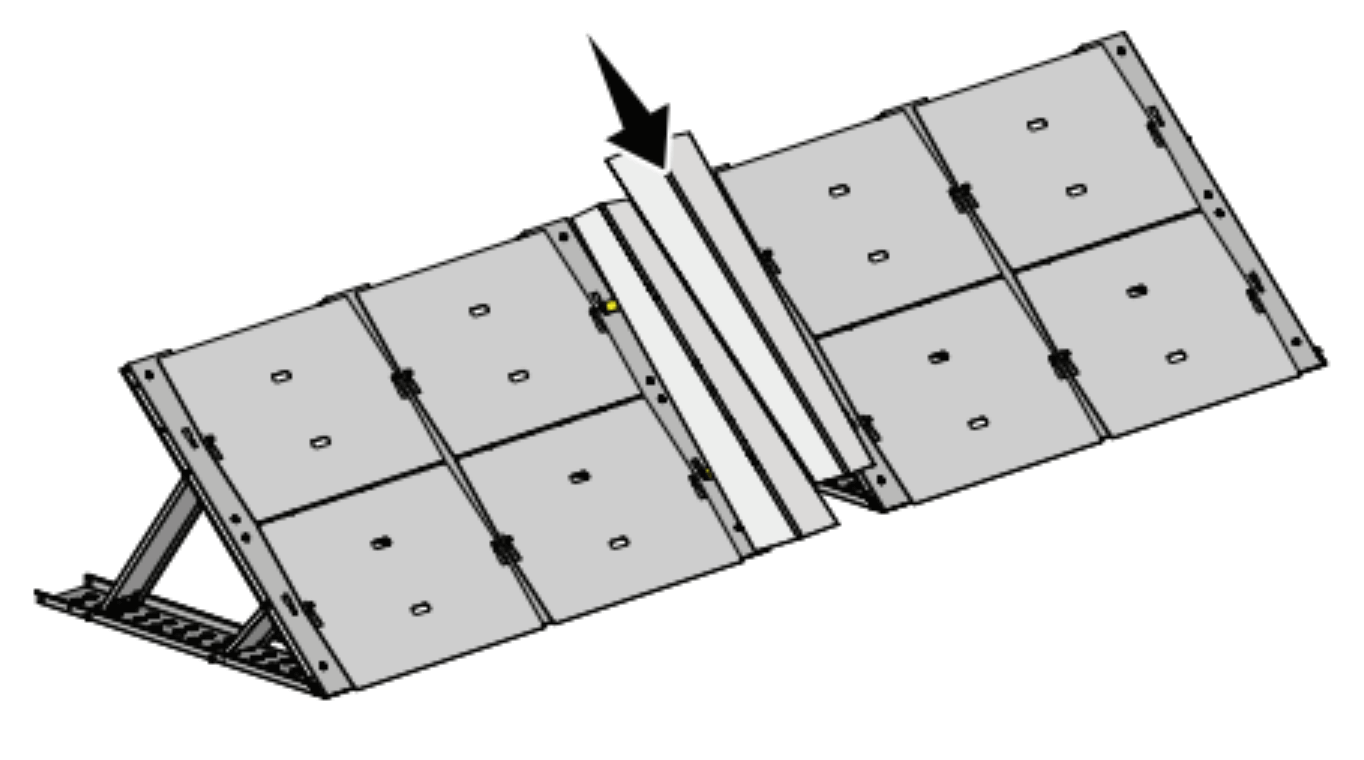
Continue covering the adjustable section with the CE. Place it onto the ALB. Slide it down into position ensuring the handles hook onto the ALB. If needed, continue with a third and fourth CE to complete the distance.
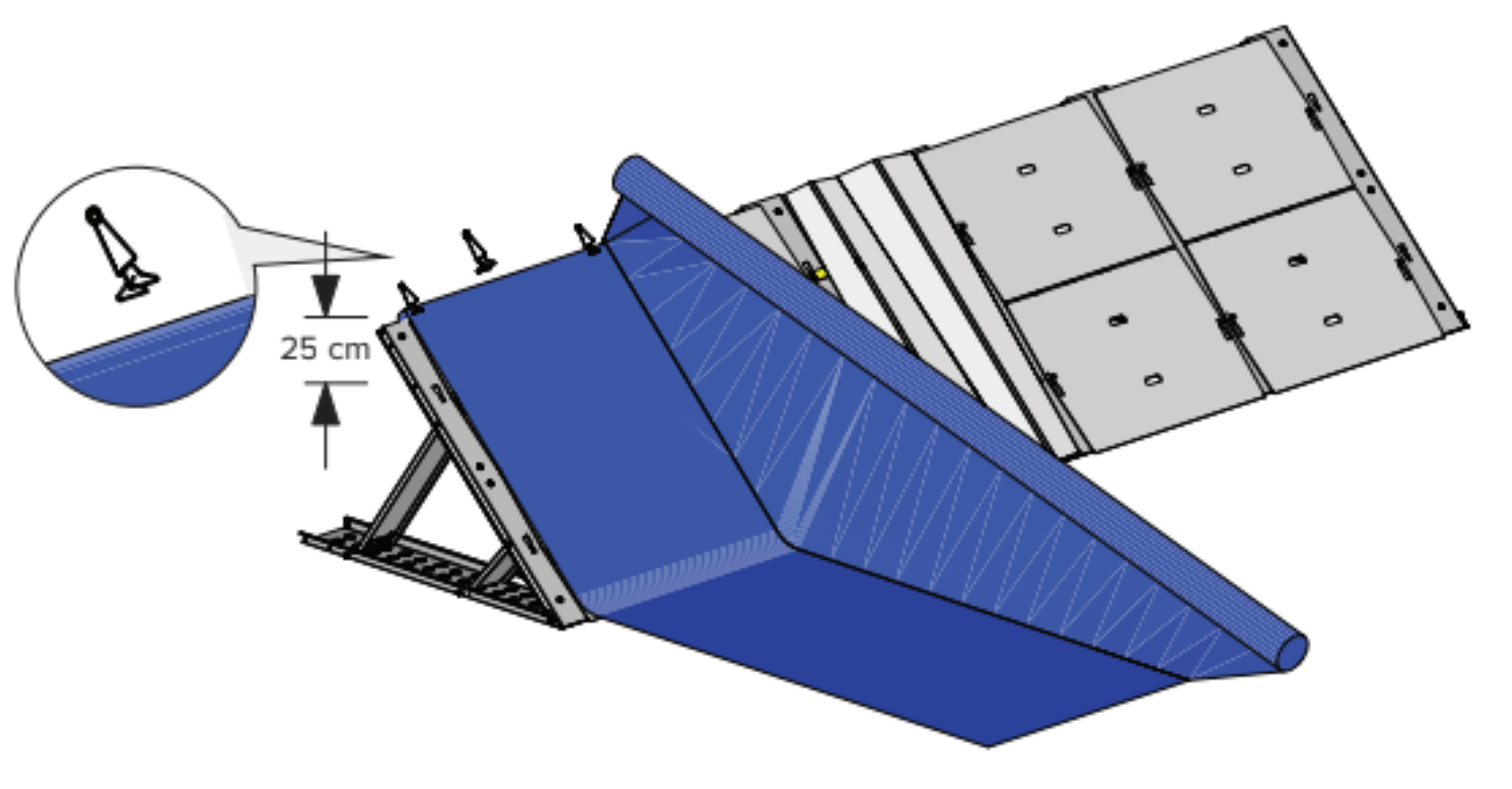
Roll out the poly membrane and secure with two sealer clips per section, along the top edge. Ensure that there is 20 - 25 cm overlap at the back of the barrier.
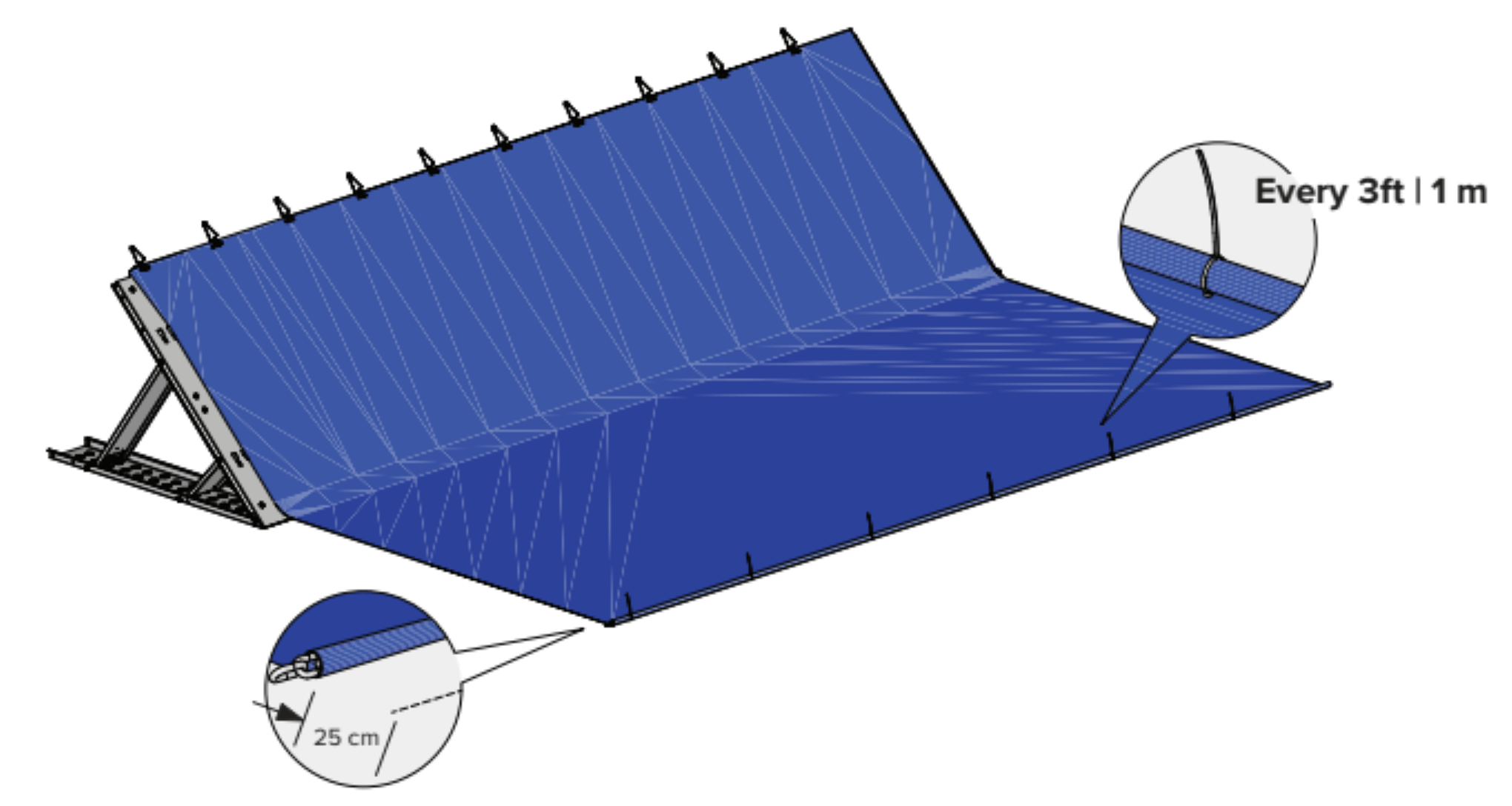
Connect the chain lengths with the karabiners and place them along the outer edge of the poly membrane. Wrap the chain in the membrane – no more than 2 turns. Secure the chain with cable ties, one per meter.
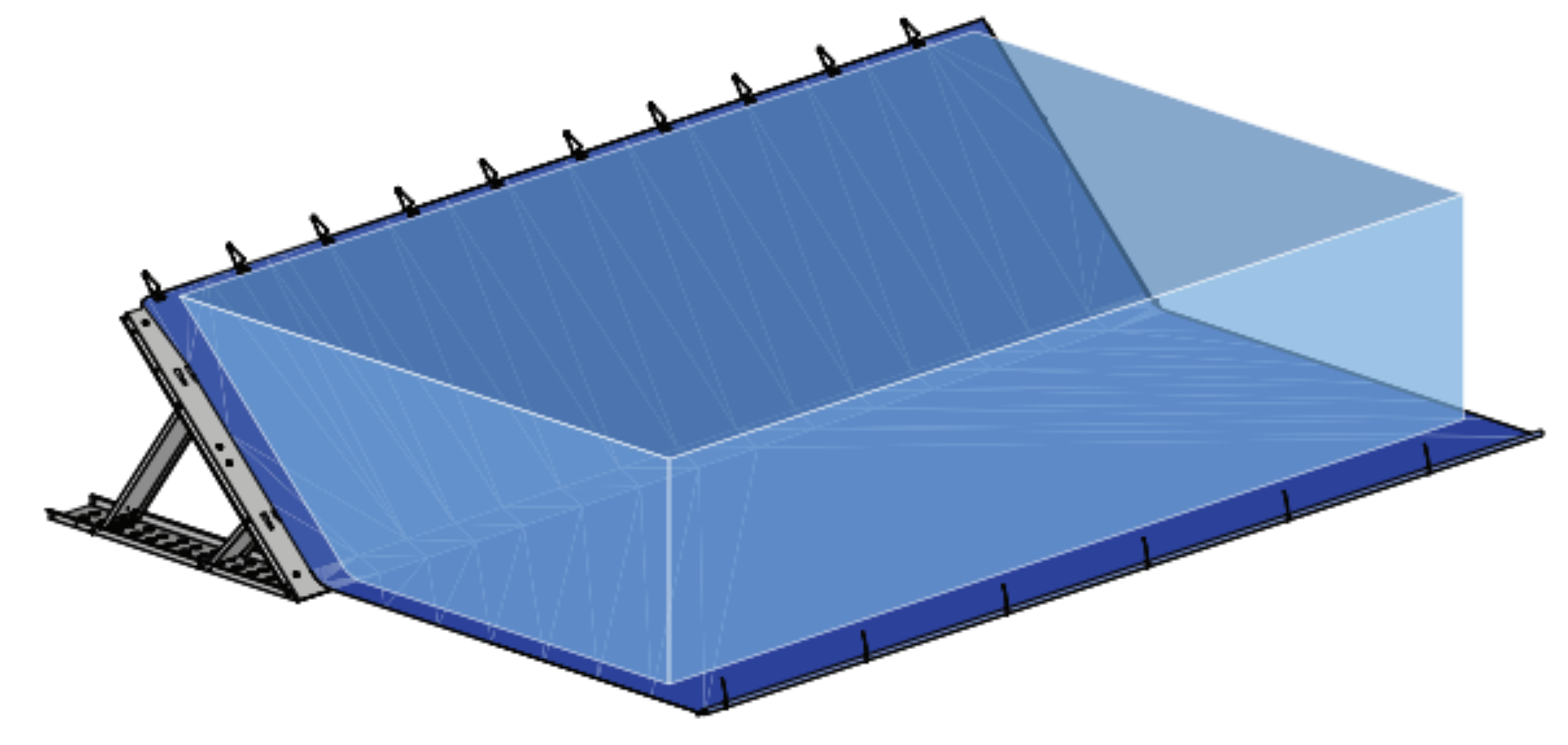
Installed.
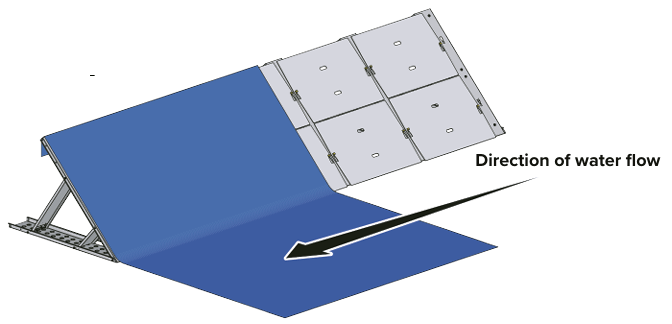
Roll out the the previous poly membrane completely.
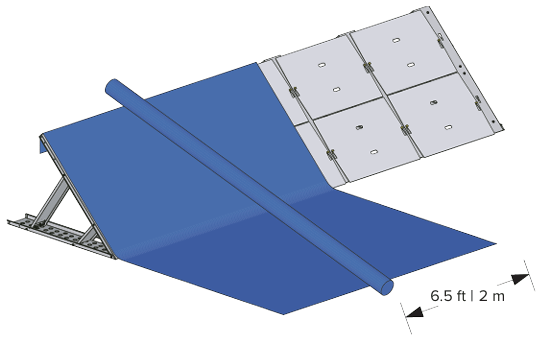
Start to roll out the new poly membrane in the same direction. The two membranes should overlap with at least 6.5 ft | 2 m.
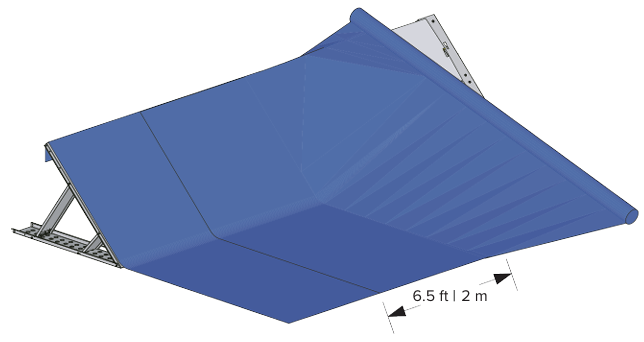
Continue to roll out the poly membrane. Make sure the overlap stays 6.5 ft | 2m.
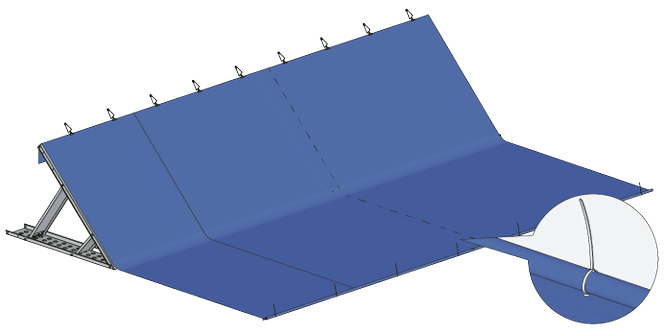
Place sealer clips at the top edge of the barrier. Place the chain on the outer edge of the poly membrane and wrap it. Secure the embedded chain using cable ties – one every 3 ft | 1 m. More detailed instructions can be found in the Setup Manual for Straight Sections.
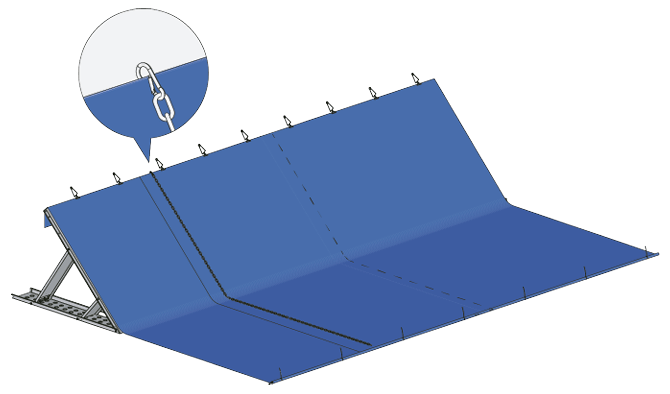
Place a vertical loading chain at the beginning of the new poly membrane to keep it down. Hang it on to the top edge of the barrier using the carabiner.
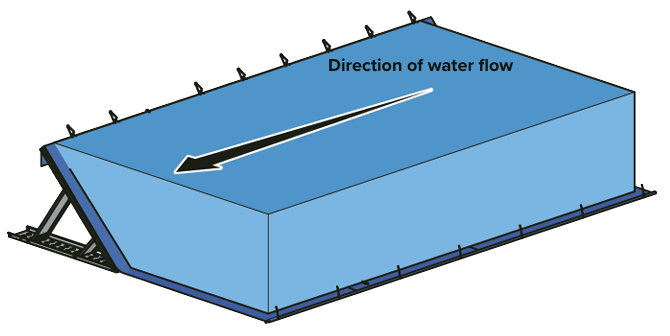
Installed!
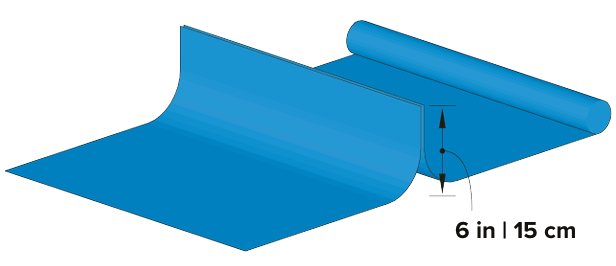
Lift up the ends of both poly membranes approximately 6 in | 15 cm.
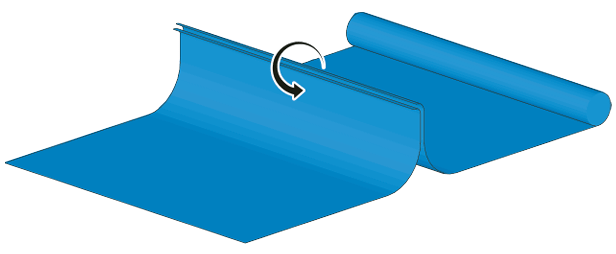
Hold the membranes together and align the edges. Seam the membranes by rolling them down.
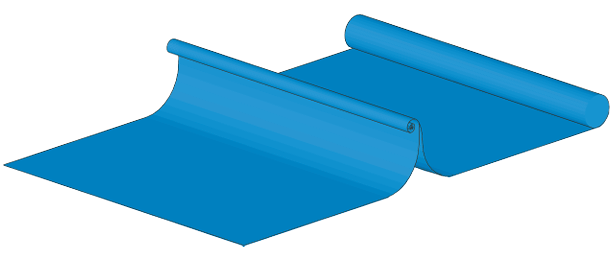
Continue creating a roll. Make it as tight as possible.
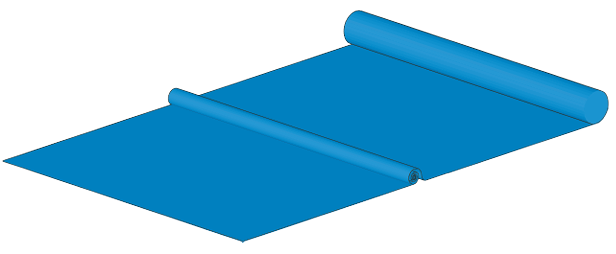
Roll it all the way down to the ground.
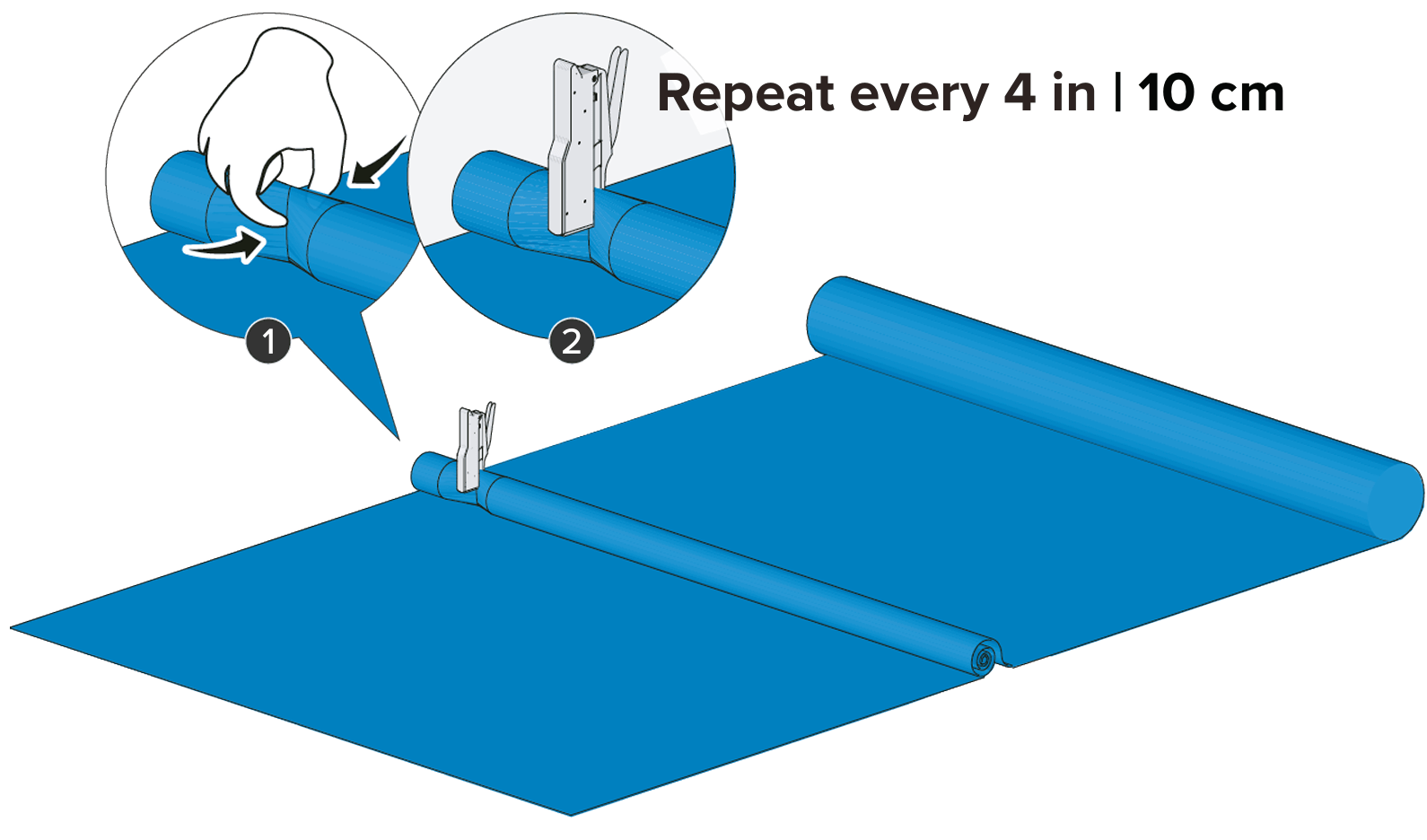
Pinch the roll with your fingers. Slide the stapler around it and staple the roll together. Repeat every 4 in | 10 cm along the roll.
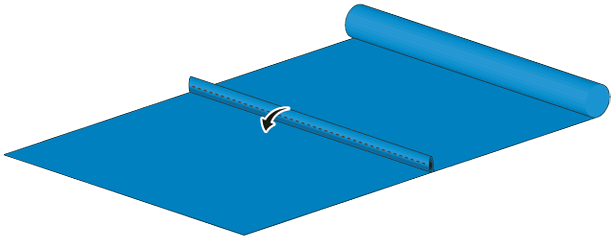
Optional: Fold down the stapled roll.
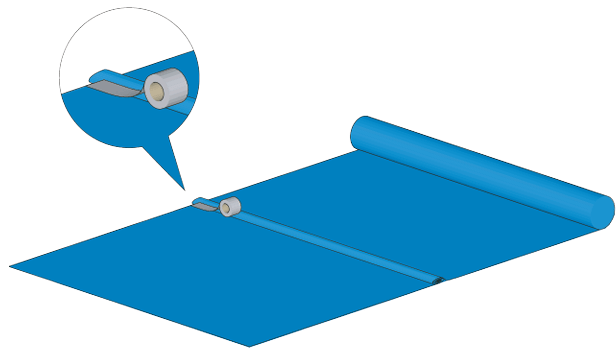
Optional: Tape the roll down to minimize seepage. Tape a second parallel line if necessary.
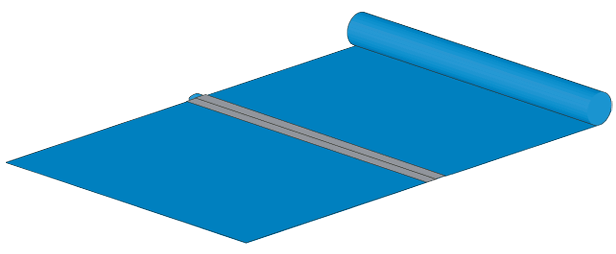
Done!
The C152 Heavy Duty System is shipped in durable, weatherproof metal crates designed for both delivery and long-term storage. Each crate is covered with a PVC hood to keep the contents dry and dust-free. These stackable crates are designed for space-efficient storage and can be easily moved with a manual forklift, offering flexible handling on-site.
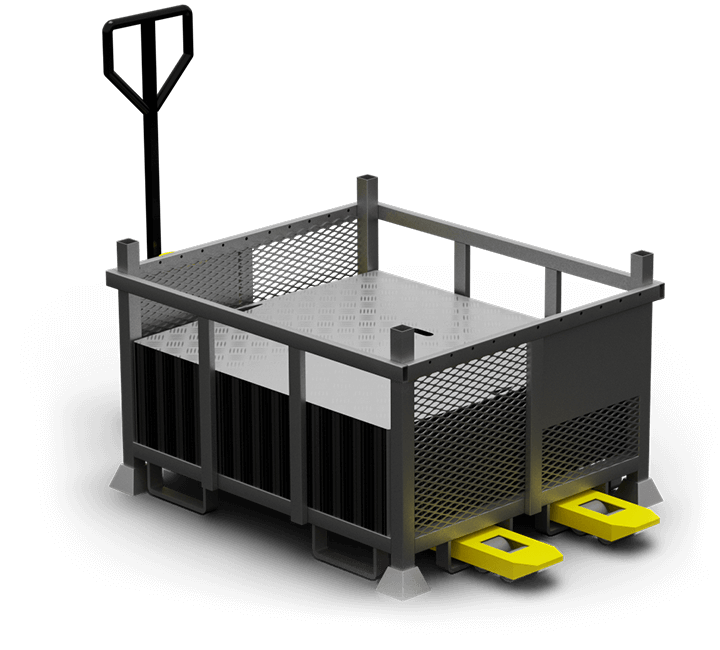
| Material | Galvanized steel |
| Dimensions | L 1,4 x W 1,15 x H 0,88 m |
| Weight | 1189 kg |
| Quantity / crate |
80 alu sheets |
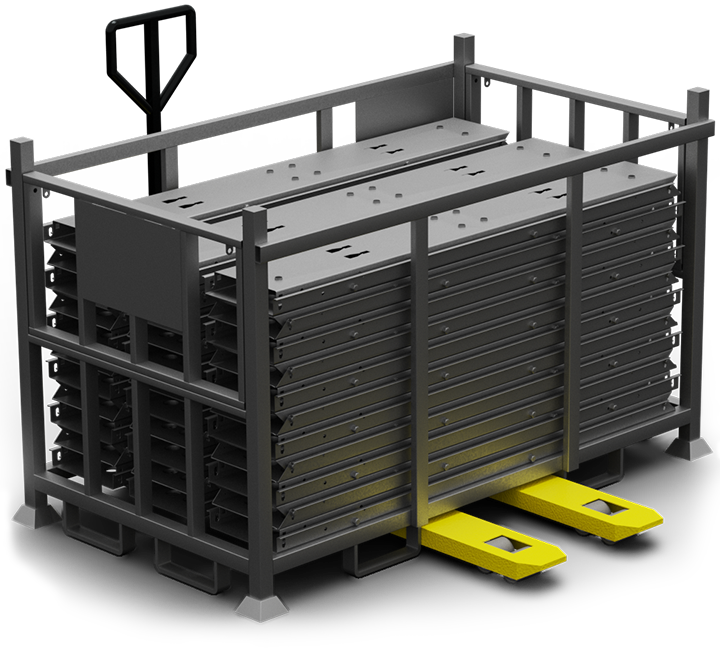
| Material | Galvanized steel |
| Dimensions | L 2,4 x W 1,15 x H 1,2 m |
| Weight | 1011 kg |
| Quantity / crate |
39 supports |
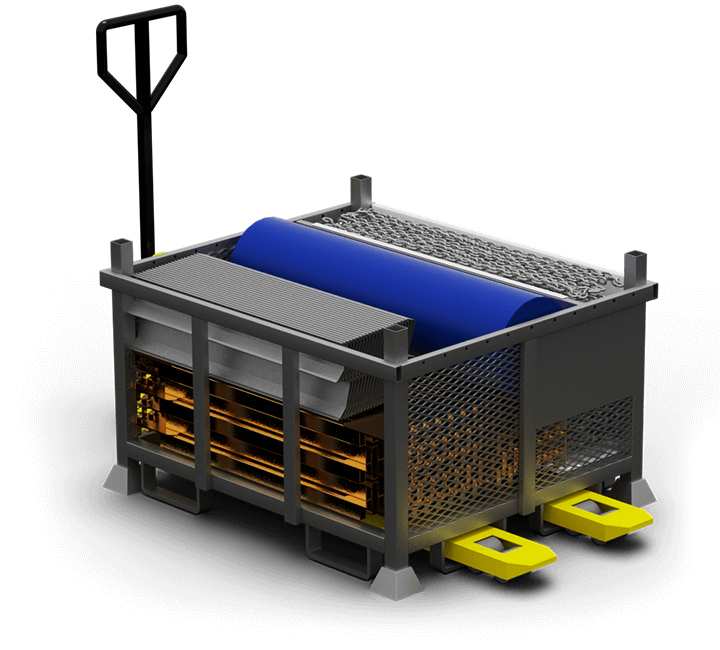
| Material | Galvanized steel |
| Dimensions | L 1,4 x W 1,15 x H 0,88 m |
| Weight | 750 kg |
| Quantity / crate |
Remaining components |
The C122 Heavy Duty system is packed in robust, stackable metal crates that fit perfectly into a single 20-foot container. This compact setup simplifies storage and positioning, providing quick access and rapid deployment whenever needed. Place the container where protection is required—no extra storage area needed.

| Multi Crate: | 10 units |
| Stackable: | up to three units |
| Weight per unit: | 970 kg |
| C152 support crate: | 6 units |
| Stackable: | up to two units |
| Weight per unit: | 1011 kg |
| Total Net weight (barriers only) |
15 766 kg |
Take control of flood protection with the C122 Heavy Duty Barrier — trusted by professionals worldwide. Contact us today for expert advice and a personalized quote tailored to your site and needs.