Ribchester flooding in 2015 and 2020
Ribchester is a village with Roman origins on the River Ribble, in Lancashire’s Ribble Valley.
The Ribble and the local brooks have flooded the village more than once in recent years.
On Boxing Day 2015, the Ribble flooded homes on Greenside and Ribblesdale Road. The Ribchester Arms on Blackburn Road, a village pub, was flooded and stayed closed for 101 days, according to the Lancashire Evening Post.
Storm Ciara floods the village again
History repeated itself on 9 February 2020. Storm Ciara pushed the Ribble to a height that had not been forecast, and around 24 properties in the same part of the village flooded. The Ribchester Arms was flooded again. The Environment Agency said the late change in the forecast had not left enough time to install its temporary defences.
A planned temporary defence for Greenside
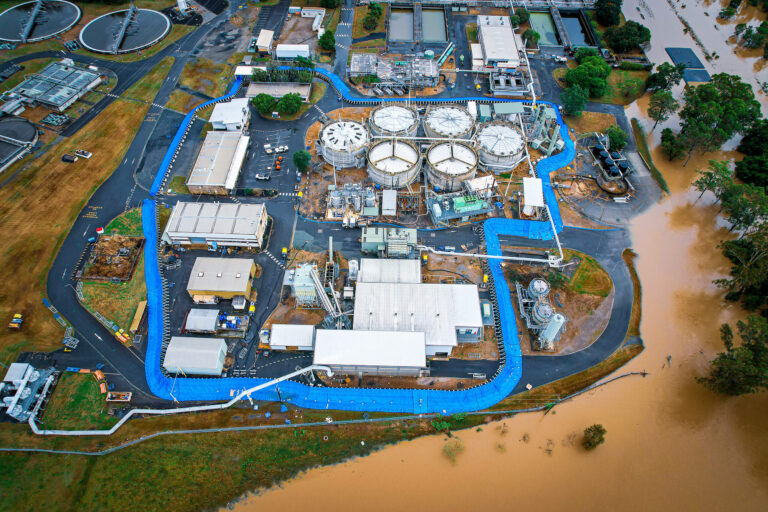
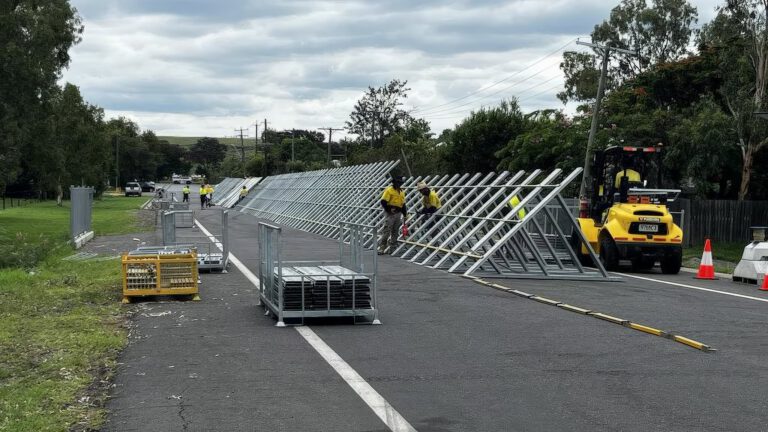
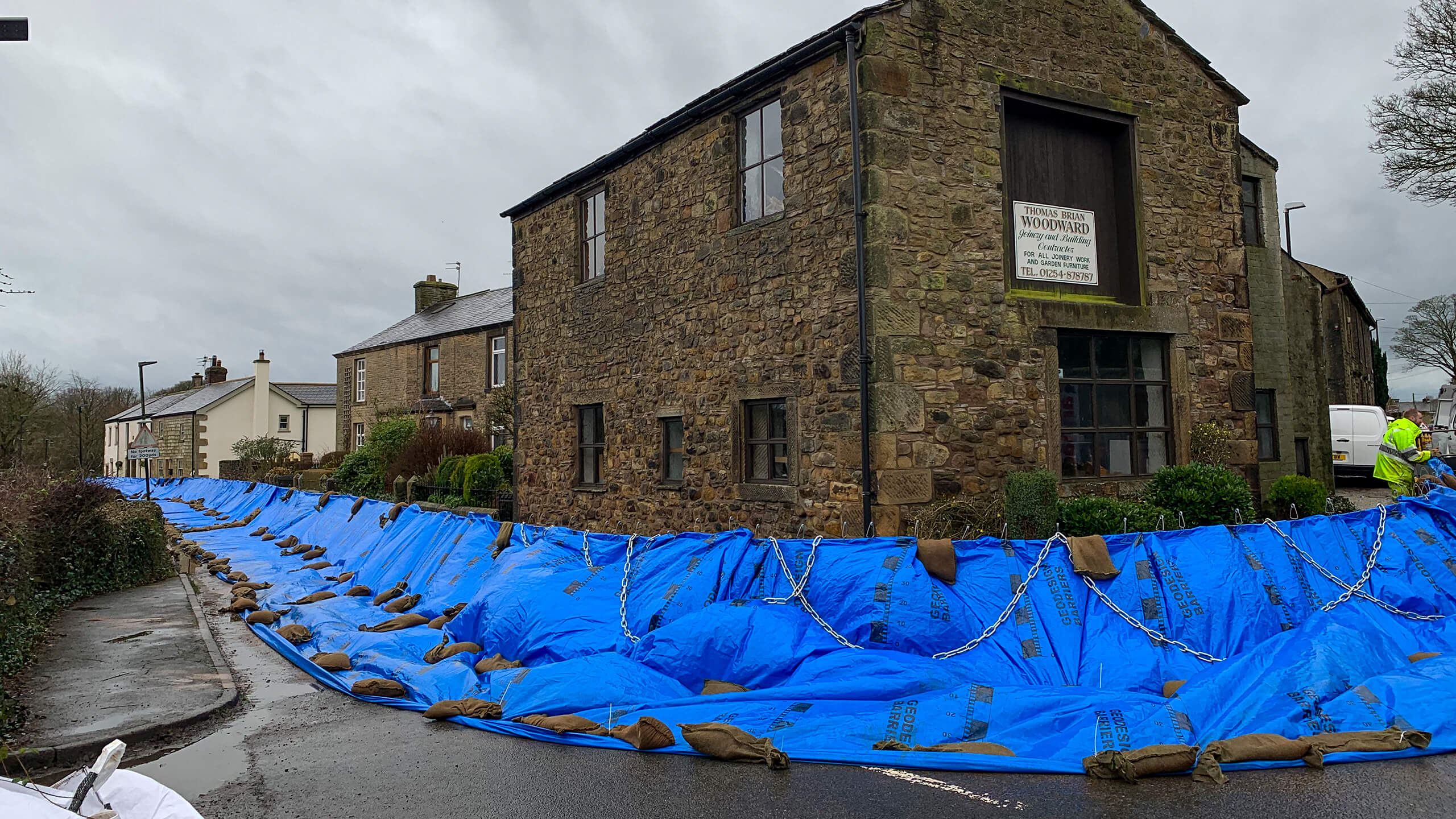
The Environment Agency had a temporary defence deployment plan for the Greenside area. It used around 200 m of metal A-frame barriers with a protective sheet. The barrier used in the village was the Industrial P101 from Geodesign, which gives 101 cm of protection height.
Barrier in place before Storm Dennis
Storm Dennis was forecast to reach the UK on 15 February. On 14 February 2020, the Environment Agency, supported by Geodesign, put up the barrier in Ribchester to protect a total of 24 properties.
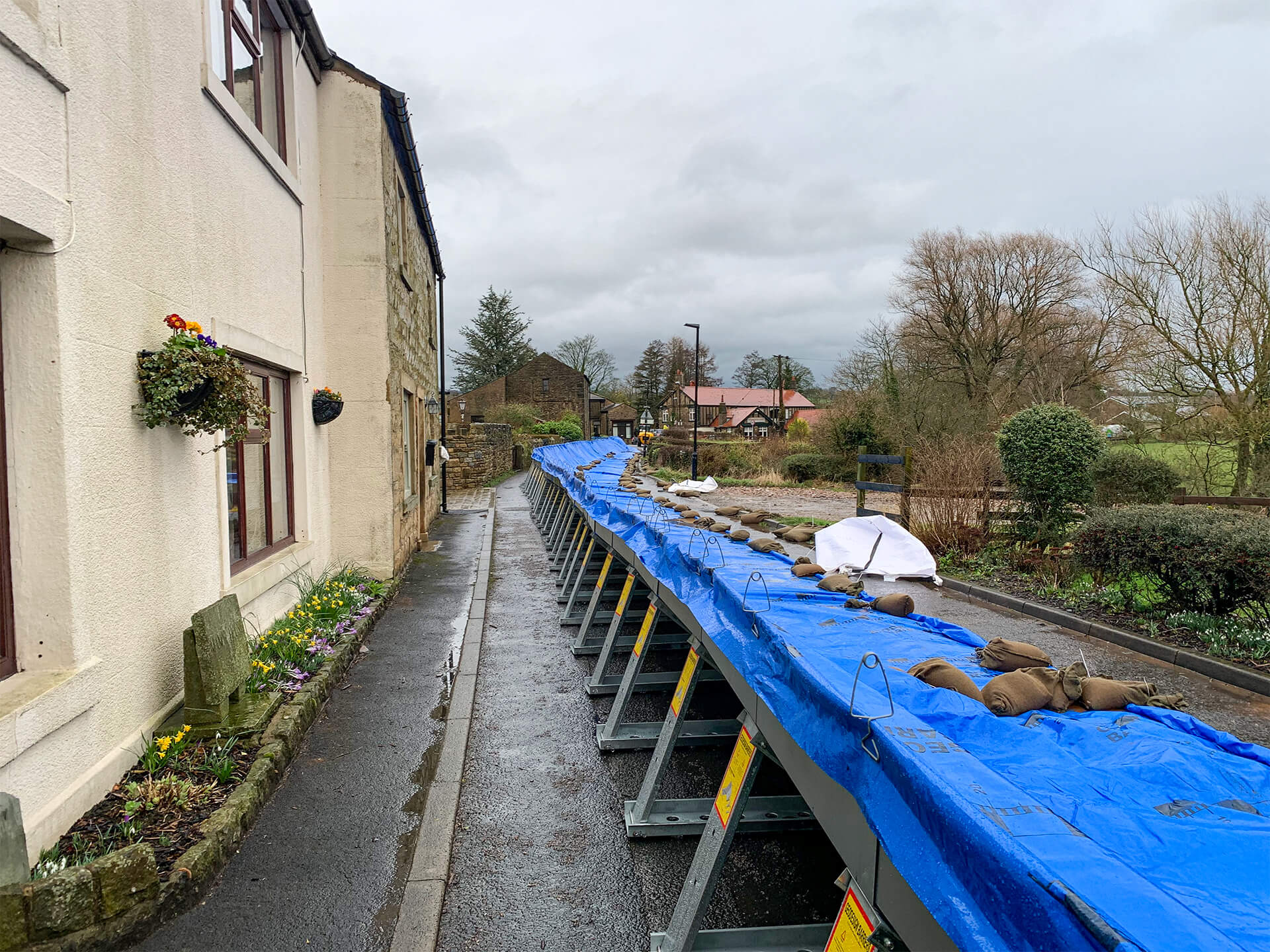
The barrier stayed dry and came down on 16 February
This time the river did not reach the barrier. It stayed dry and was taken down on 16 February.
Ribchester was far from the only community under pressure. The Environment Agency reported record levels on rivers including the Ribble, the Calder and the Derwent. Up to 1,000 of its staff a day were mobilised to operate flood defences and temporary pumps, clear debris from rivers, and inspect and repair damaged defences. By its own count, the agency put up more than 6 km of temporary flood barriers across England.
What flood planners in England can take from Ribchester
Ribchester shows how much depends on warning time. In October 2022, the Environment Agency withdrew the Ribchester deployment plan. It concluded that the 48 to 72 hours needed to deploy safely could not be achieved on such a fast-responding river. Any temporary barrier plan should therefore start with realistic flood warning and lead time. The Lancashire village of Billington, which also flooded in Storm Ciara, faced the same challenge. Record the deployment steps, trigger levels and fall-back measures in a written emergency plan.